01 / Roofs
Exposed roofs
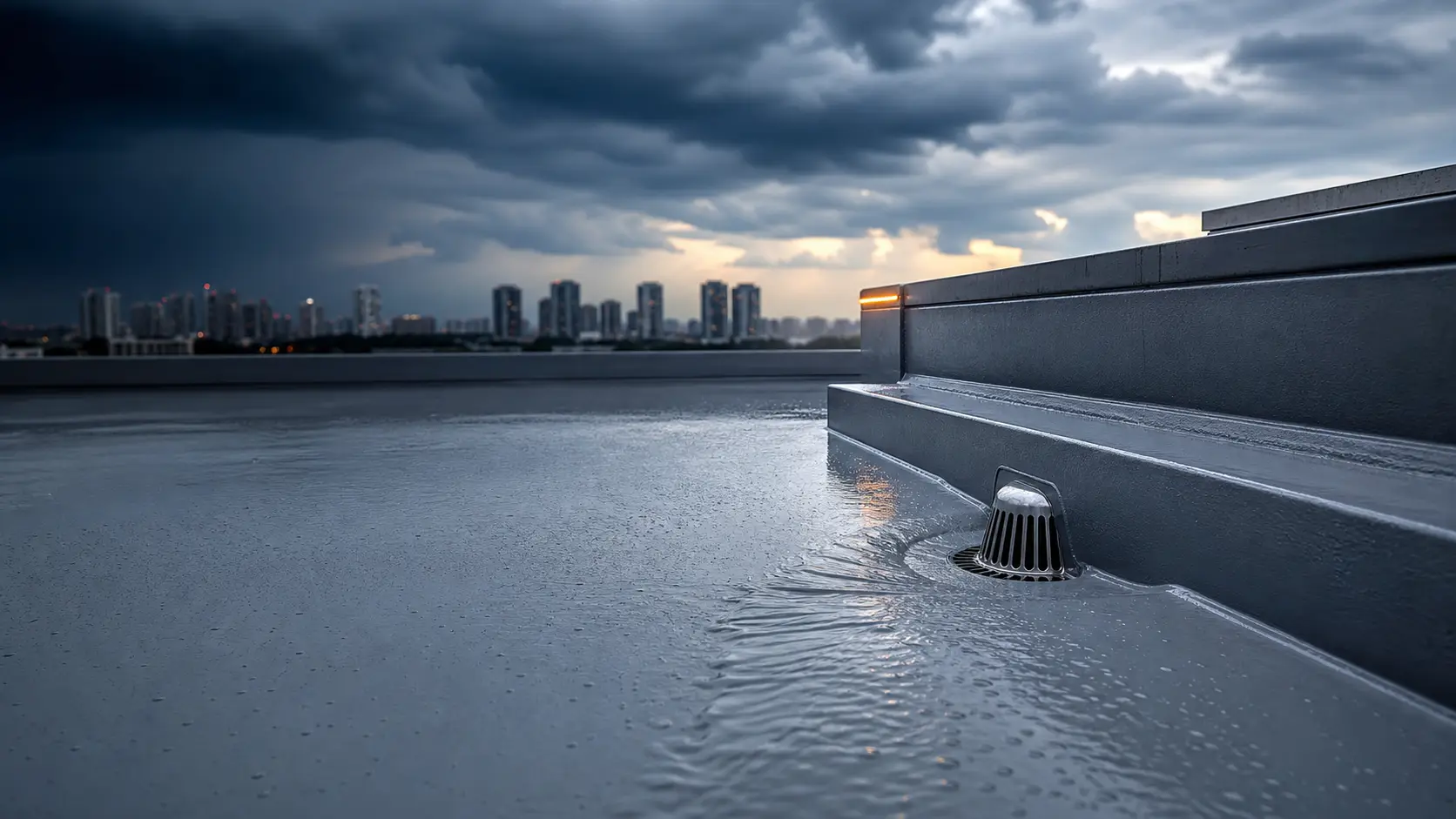
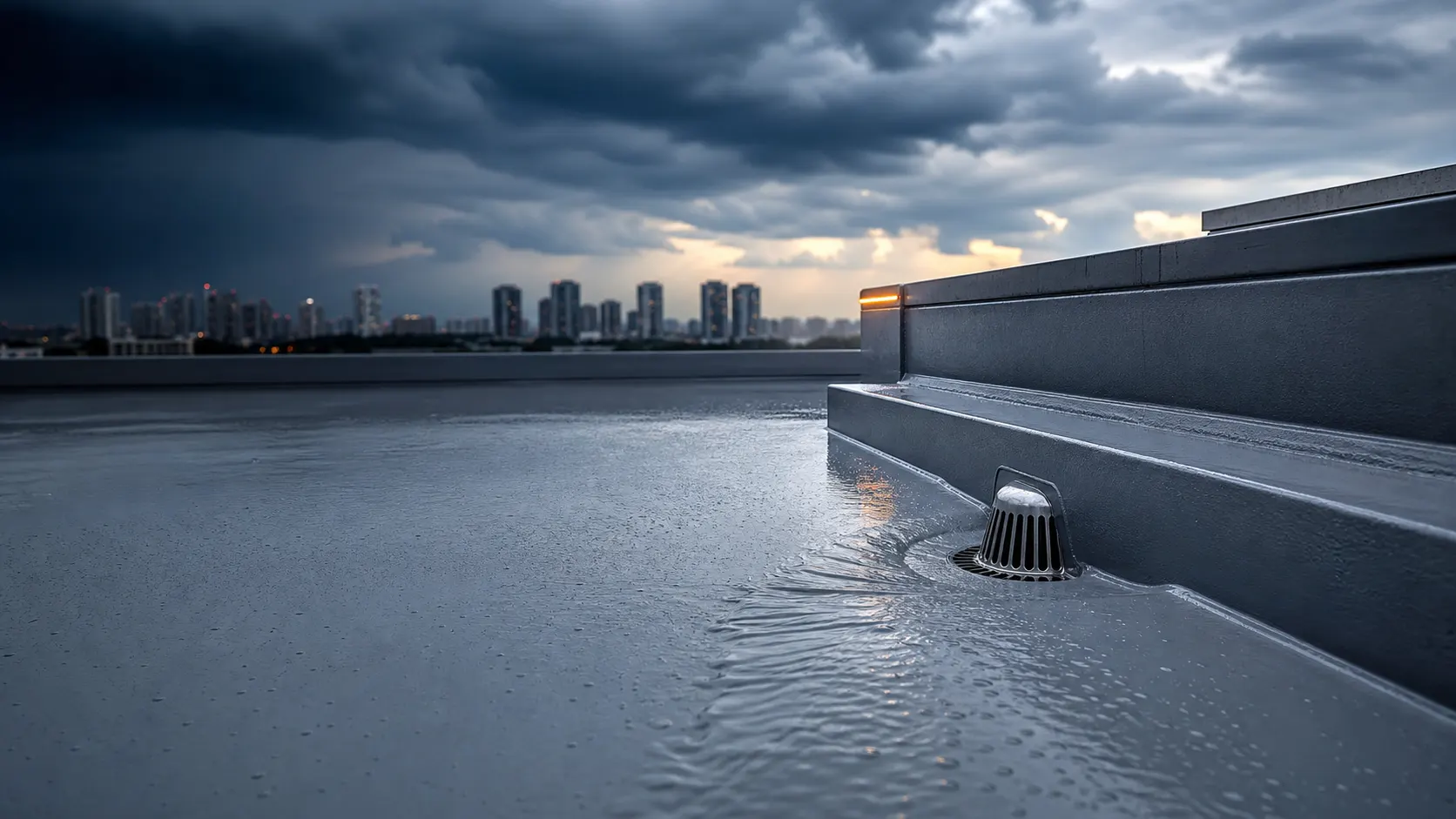
Full sun, so the membrane must hold colour and elasticity under permanent UV — and stay continuous through every outlet, upstand and plinth.
Rayson makes the system, publishes its data and quotes the job. Applicators in Rayson's network assess the site and install it, under the workmanship warranty set out in Rayson's quotation; in an HDB flat, a contractor on HDB's Directory of Renovation Contractors quotes instead. From an HDB or condo toilet to a landed roof, a car porch or a car park deck, four things decide which system: the surface, the exposure, the detailing and the traffic, and the 2026 cost ranges are on this page.
Reviewed: October 2026
Reply within one working day, Mon–Fri. Rayson quotes; an applicator from its network inspects and installs.
Answer them in order and the shortlist writes itself. Skip one, and the system fails at the point you skipped.
Concrete, screed, tile, metal or an old membrane each need a different primer, and each has a soundness and moisture threshold below which nothing holds.
Permanent sun demands a UV-stable chemistry. Standing water, a contained liquid, chemicals or wash-down heat each change the answer.
Count the upstands, outlets, penetrations, terminations and joints. A surface dense with details rewards a seamless liquid system.
Trolleys, forklifts and turning tyres mean a wearing layer above the membrane — waterproofing on its own is not a wearing surface.
Each fails differently, so each has its own page. Pick the one you are standing on.
Full sun, so the membrane must hold colour and elasticity under permanent UV — and stay continuous through every outlet, upstand and plinth.
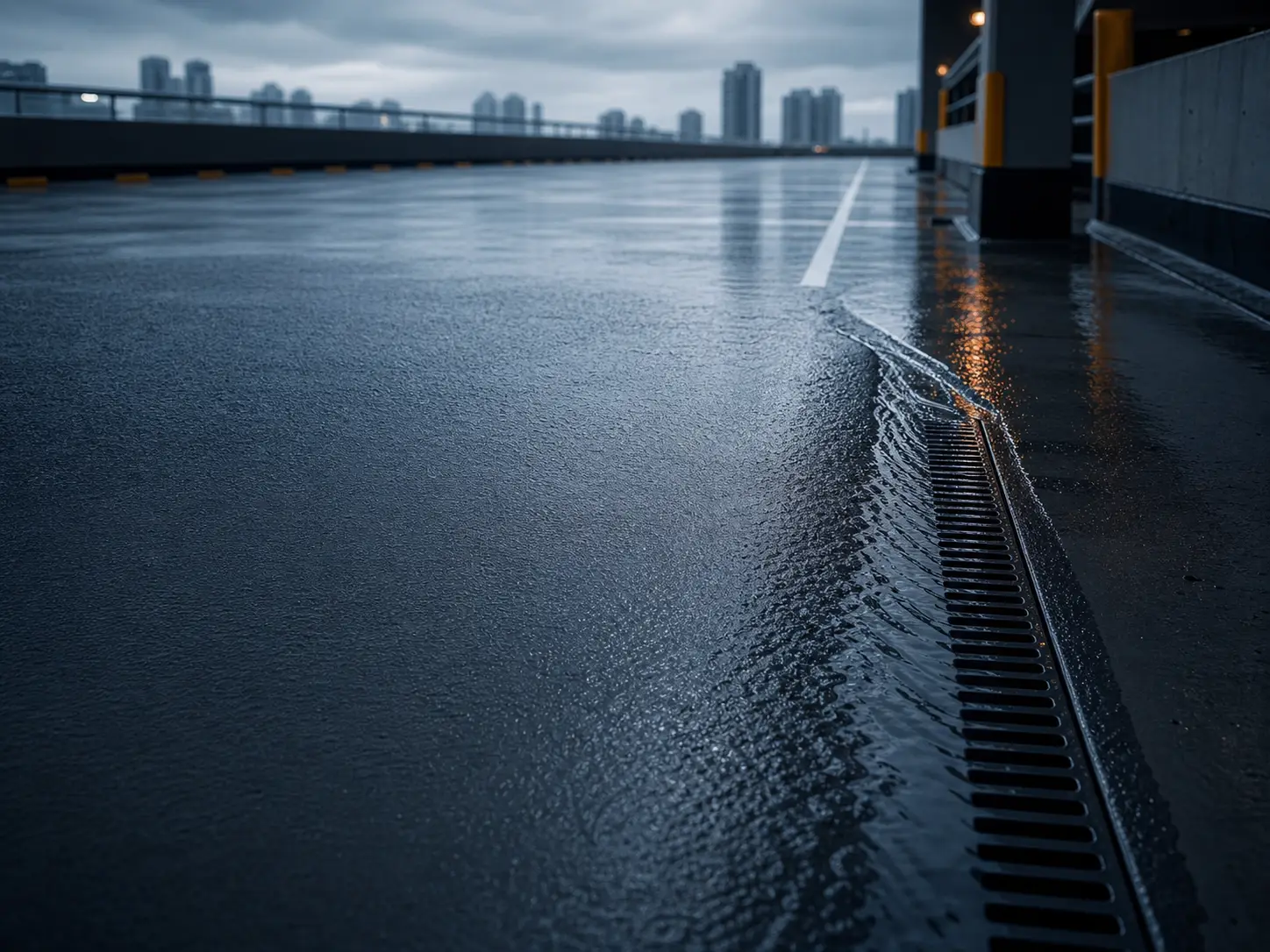
Waterproofing is half the job: above the membrane a wearing surface has to survive turning tyres and keep its grip when wet. A landed-home car porch is the same job in miniature, sitting over living space.
The membrane vanishes under tile or screed and is never inspected again. The trap, the turn-ups and the penetrations decide it, and a 24-hour flood test proves it before a tile goes down.
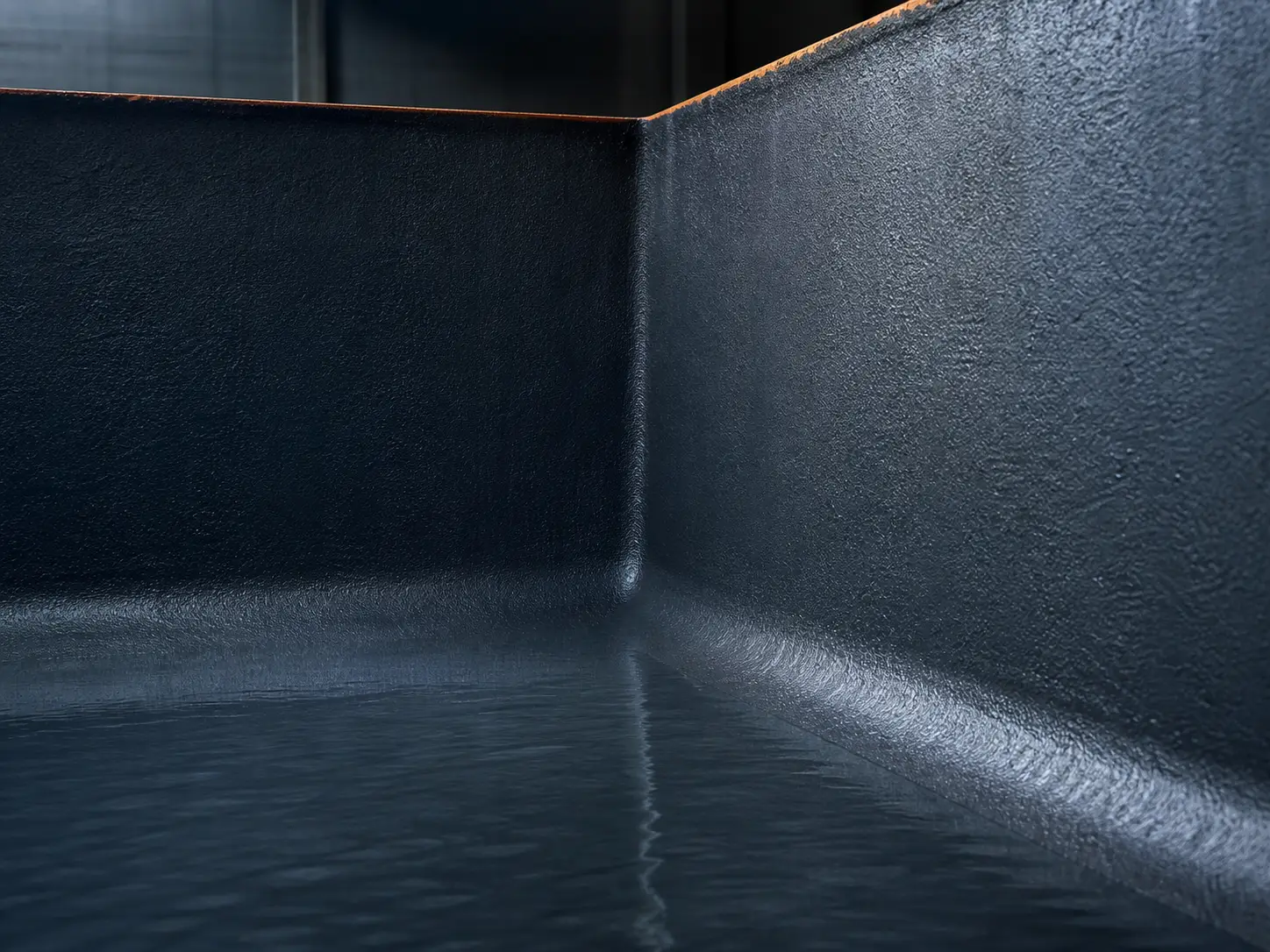
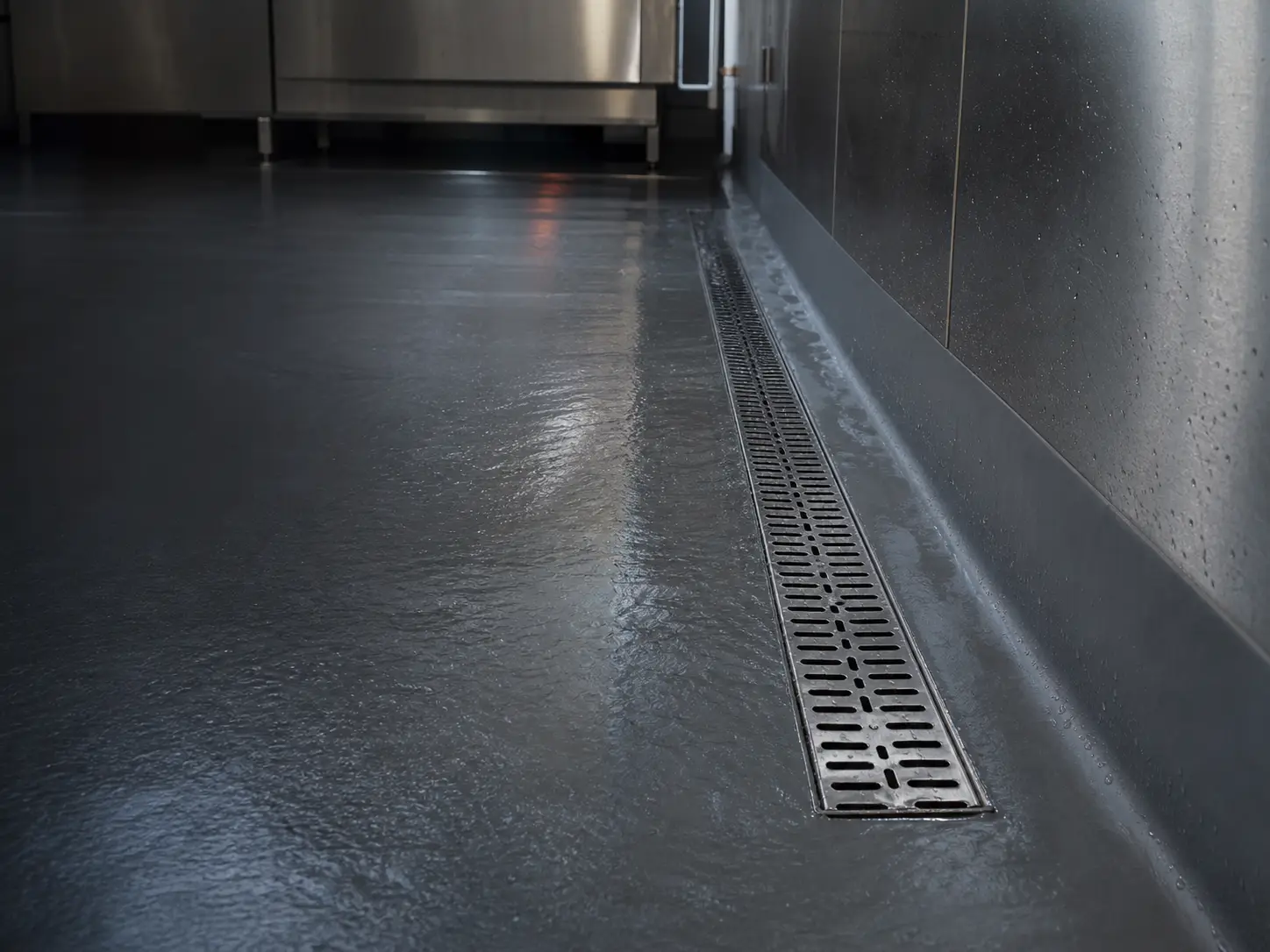
The contained liquid sets the chemistry, not the weather, and liquid-tight is the whole specification — usually a specialist sprayed lining.
A liquid coating is built on site: seamless, but its thickness depends on workmanship. A sheet arrives at factory thickness, but every seam is a path. Neither is more waterproof — they are strong in different places.
| Liquid-applied coating | Sheet membrane | |
|---|---|---|
| How thickness happens | Built coat by coat on site — workmanship is the variable | Set in the factory — consistent whoever lays it |
| Joints | None in the field; the film is continuous | Every lap and termination is a joint, and a joint is a path |
| Complex detailing | Follows coves, outlets and changes of plane directly | Cut and taped around geometry — the slowest, riskiest part of the job |
| Strongest at | Exposed, detail-heavy, trafficked surfaces; simple local recoat | Buried tanking and podium decks under hydrostatic pressure |
| Inspection and repair | Visible; a wear zone is recoated locally | Hidden — water travels under it, far from the visible leak |
| Defeated by | Ponding from failed falls, live cracks, saturated substrates, negative-side pressure — correct these first, either way | |
Waterproofing rarely fails in the middle of a sound slab. It fails where the surface turns, drains, moves or meets another material.
The membrane turns up the wall and has to stay up; a cove removes the sharp angle that thins a liquid film and cracks a folded sheet.
Water concentrates at the drain, so the detail is reinforced and dressed into the outlet — never stopped short of it.
Pipes, conduits, handrail feet and plinths each need their own collar. Count them before pricing: they are why equal areas are not equal jobs.
Every edge where the system stops must be mechanically secure and sealed above the water line, or water gets behind it and travels unseen.
Joints keep moving after the membrane is down, so they need a detail designed to move — plain film only defers the tear.
Live cracks, saturated substrates, negative-side pressure and chronic ponding are corrections, not coatings. Rayson says so before specifying a system.
Compare quotations on the same area, preparation, system and detailing scope, and confirm whether they cover materials only or installation as well. TDS consumption supports a theoretical material estimate; surface condition, application losses and wastage affect the quantity required.
A waterproofing coating — often searched for as waterproofing paint — is a liquid that cures into the membrane on the surface it is applied to, with no sheets and no laps. It is not a tin of damp-proof wall paint: a membrane is applied at a published consumption to a measured thickness over a primer (the difference, set out in full). Rayson supplies six: a one-part water-based membrane for the tiled toilets, bathrooms and balconies of homes, an aliphatic polyurea coating for exposed roofs, a one-part acrylic coating for pitched and tiled roofs and external walls, a roller-applied polyurea membrane for decks and heavier-duty wet areas, and two hot-spray polyureas for linings. Starting routes, not a specification — open the TDS before committing to preparation, film build or timing.
One-part, water-based, polyurethane-modified membrane rolled straight from the pail in two coats beneath the tiles of toilets, showers, bathrooms and balconies — no primer, no mixing, low odour in an occupied home.
Two-component, cold-applied aliphatic polyurea membrane for suitable exposed roofs — UV-stable, walkable, applied by roller, brush or airless spray.
One-part, water-based acrylic membrane rolled on from the pail over its SealForce AP05 primer and left exposed on roofs that drain freely, old roof tiles and external walls — UV-resistant, elastic and permeable to water vapour. Not for roofs that pond or are walked on.
Two-component, roller-applied polyurea-based liquid membrane for suitable deck build-ups, roofs and heavier-duty wet areas, including under-tile work where a two-component membrane is specified.
Hot spray-applied, 100% solids pure polyurea for suitable concrete and steel linings — heated plural-component equipment and specialist applicators only.
Hot spray-applied pure polyurea lining for suitable tank, reservoir and containment work; its drinking-water contact certification is set out in the product data.
A pre-launch trial batch of SealForce WB20, photographed between the coats and during the flood test. Reference for the wet-area duty; the product is part of Rayson's upcoming release.
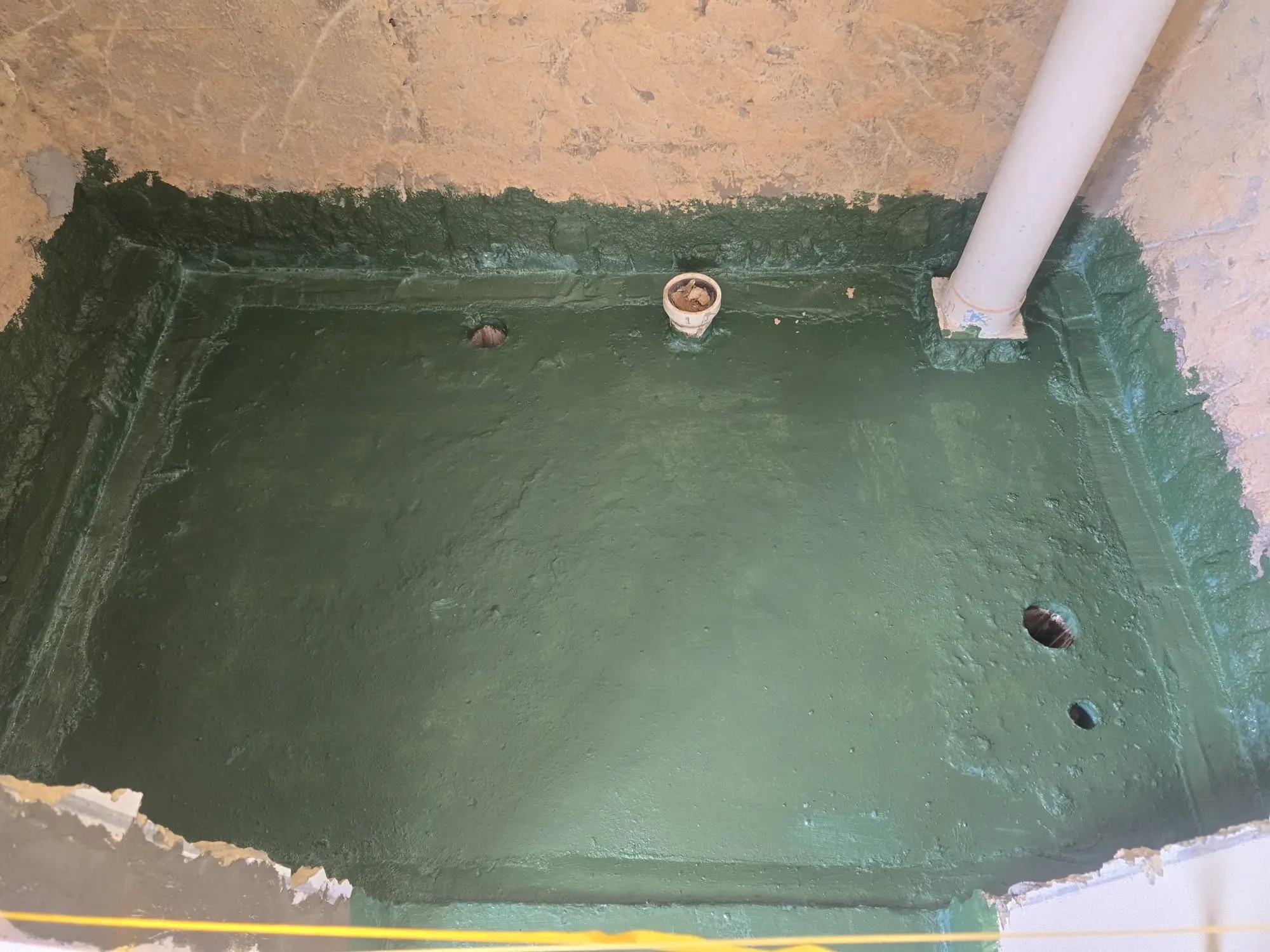
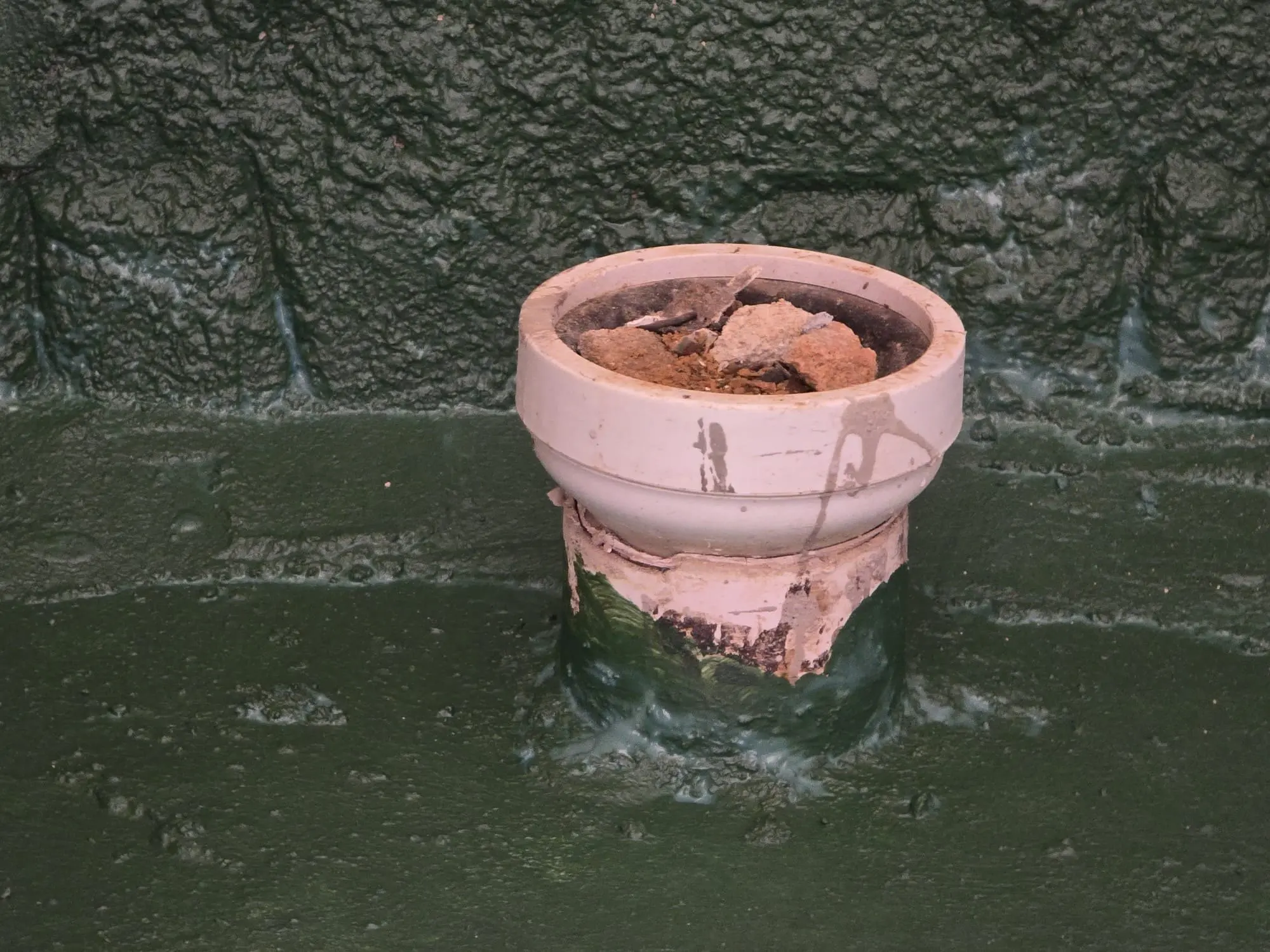
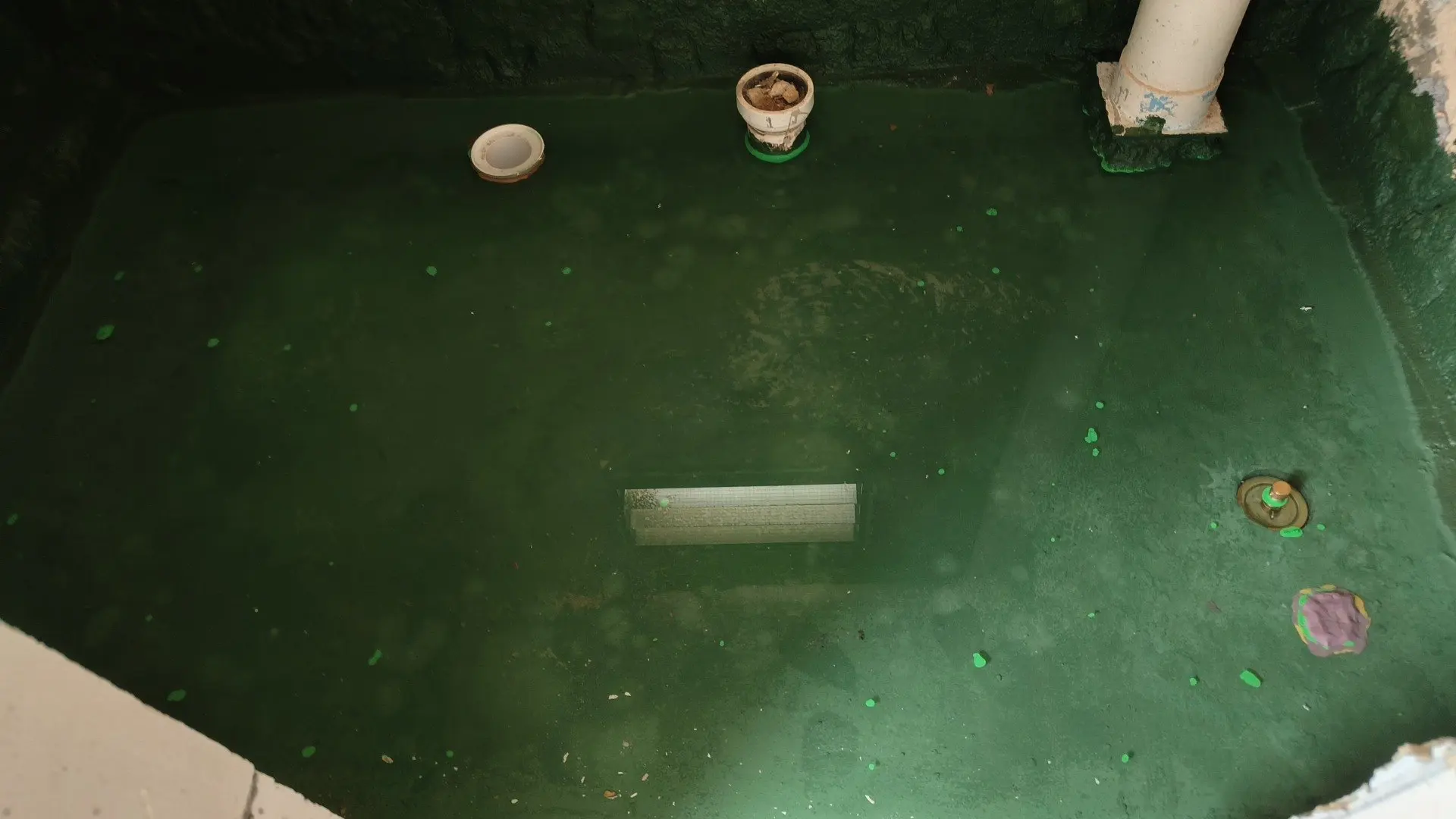
Send overview and close-up photos, the structure, approximate area, where water appears and your access window. You get an initial response within one working day — including when the honest answer is a repair or a drainage fix rather than a coating.
Rayson manufactures coating materials, quotes installation jobs and has them carried out by applicators in its network using Rayson products. Active-leak diagnosis and waterproofing repair need an appropriately experienced applicator. Tell us the problem so we can review material suitability and arrange an inspection. Confirm the scope and responsible parties before work begins.
Answer four questions about your surface and conditions to shortlist suitable Rayson systems.
Find your systemEstimate material quantities from your floor area, coats and coverage rate.
Estimate quantitiesOpen technical data sheets for every Rayson product — no forms, no gating.
Open the libraryA waterproofing coating goes on as a liquid and cures into a seamless film, so it follows upstands, drains and penetrations without laps. Thickness is built on site, so consumption per coat and the number of coats decide the result — which is why Rayson publishes coverage in every TDS.
Neither is inherently more waterproof. A liquid coating suits exposed, detail-heavy, trafficked surfaces where seamless detailing and easy local recoat matter. A sheet membrane suits buried work under sustained hydrostatic pressure and gives factory-consistent thickness — but every lap is a potential path, and a failure under a hidden sheet travels far from the visible leak. Many Singapore buildings use both — a sheet in buried and podium zones, a liquid coating on exposed decks, parapets and complex details.
Answer four questions in order: what the surface is, what exposure sits above it, how much detailing it has, and what traffic it carries. Exposed roofs point to a UV-stable liquid membrane such as SealForce RC40, or to the one-part acrylic SealForce AC10, over its SealForce AP05 primer, where the roof is pitched or tiled and drains freely; toilets, bathrooms and balconies beneath tiles to the one-part water-based SealForce WB20; deck build-ups and heavier-duty wet areas to a roller-applied polyurea membrane such as SealForce RC30; tanks and containment to a specialist spray polyurea such as SealForce SP200 or SP210. Confirm any route against the TDS.
Yes. SealForce WB20 is a one-part, water-based, polyurethane-modified membrane for the concealed layer beneath the tiles of toilets, showers, bathrooms and balconies: two coats at 0.4 mm wet film each, about 0.56 kg/m² per coat, touch dry in under an hour, flood-tested 24 hours after the final coat. It is applied to the prepared screed after hacking, not over existing tiles, and an applicator in the Rayson network carries out the work.
Only where the existing layer is sound, dry enough, clean and compatible. Loose, waterlogged or debonded areas must be removed and repaired first; an adhesion check and a small trial area settle the preparation.
When it is used to cover a problem it cannot solve. Ponding from failed falls, live structural cracks, saturated substrates and negative-side pressure defeat liquid systems — and sheet membranes too. Correct the falls, the crack or the water source first.
Singapore renovation and home-services platforms' guides checked in September 2026 put roof waterproofing at S$8 to S$50 per m² by system plus S$1,000 to S$3,000 of labour on a standard residential roof, a localised patch at S$200 to S$800, and the basic works of one HDB bathroom, hack, waterproof and tile, at about S$3,000 to S$9,000. PU injection for a slab crack runs about S$300 to S$1,200 per job in one waterproofing contractor's published 2026 guide; detail work and full re-membranes are quoted on inspection. Within those ranges, substrate condition, access and detailing decide the price: upstands, outlets, penetrations, terminations and joints add labour and material. Compare quotations on the same preparation, system and detailing scope; published TDS consumption supports a theoretical material estimate. The waterproofing cost guide carries the tables and their sources.
Two separate warranties. Rayson warrants its SealForce membranes against manufacturing defects from the date of supply: three years for SealForce WB20 beneath tiles in wet areas, and five years for the SealForce polyurea roof and deck membranes, provided the material is stored and applied per the technical data sheet and flood-tested before it is covered; the remedy is replacement material. The workmanship warranty is set out separately in the quotation. Ask for both in writing.
Tell us your surface, area and timeline — our Singapore technical team will recommend a practical system and price it fast.
Rayson assistant
Answers from Rayson's own product information
Guidance only — confirm specifications with the Rayson technical team.