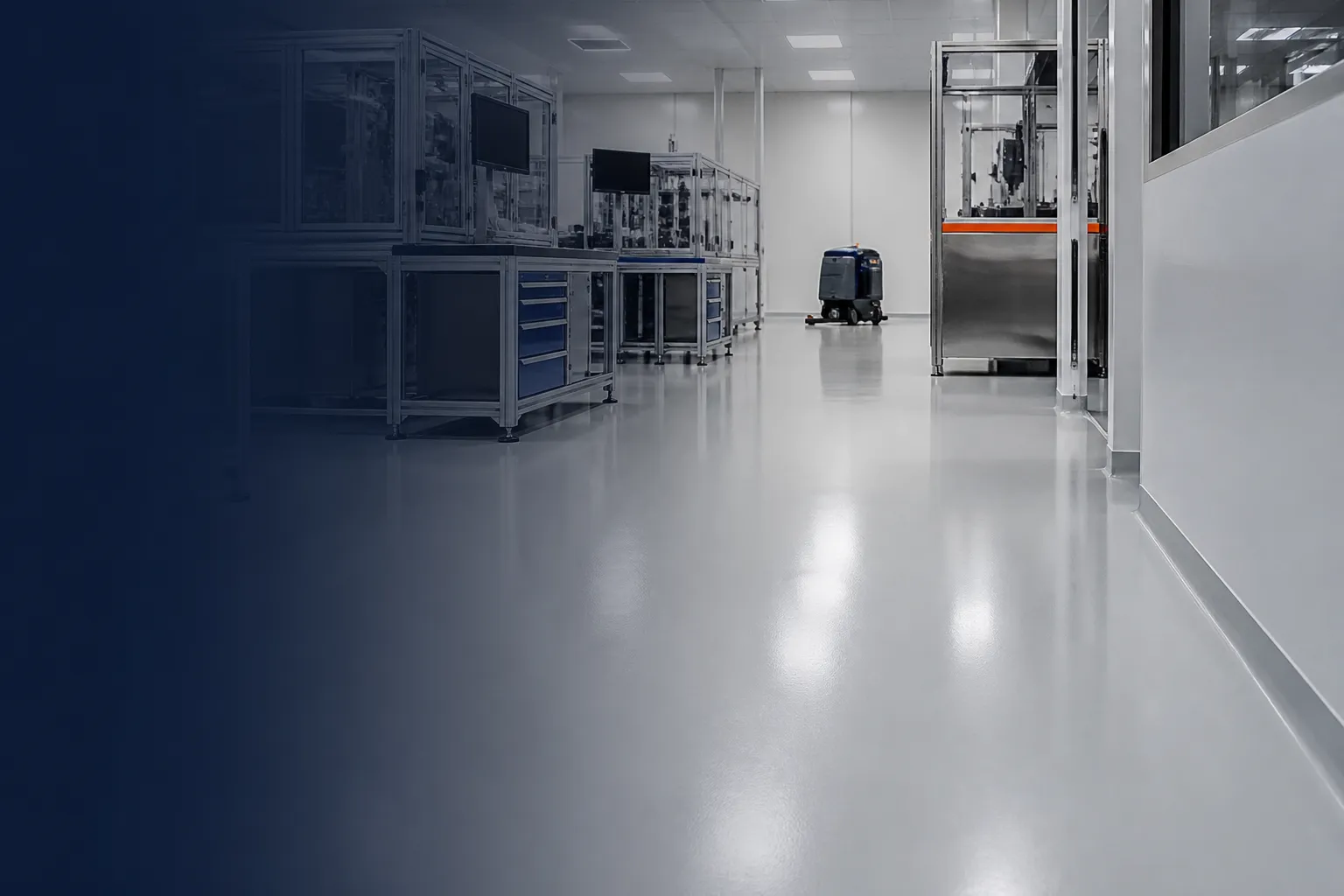
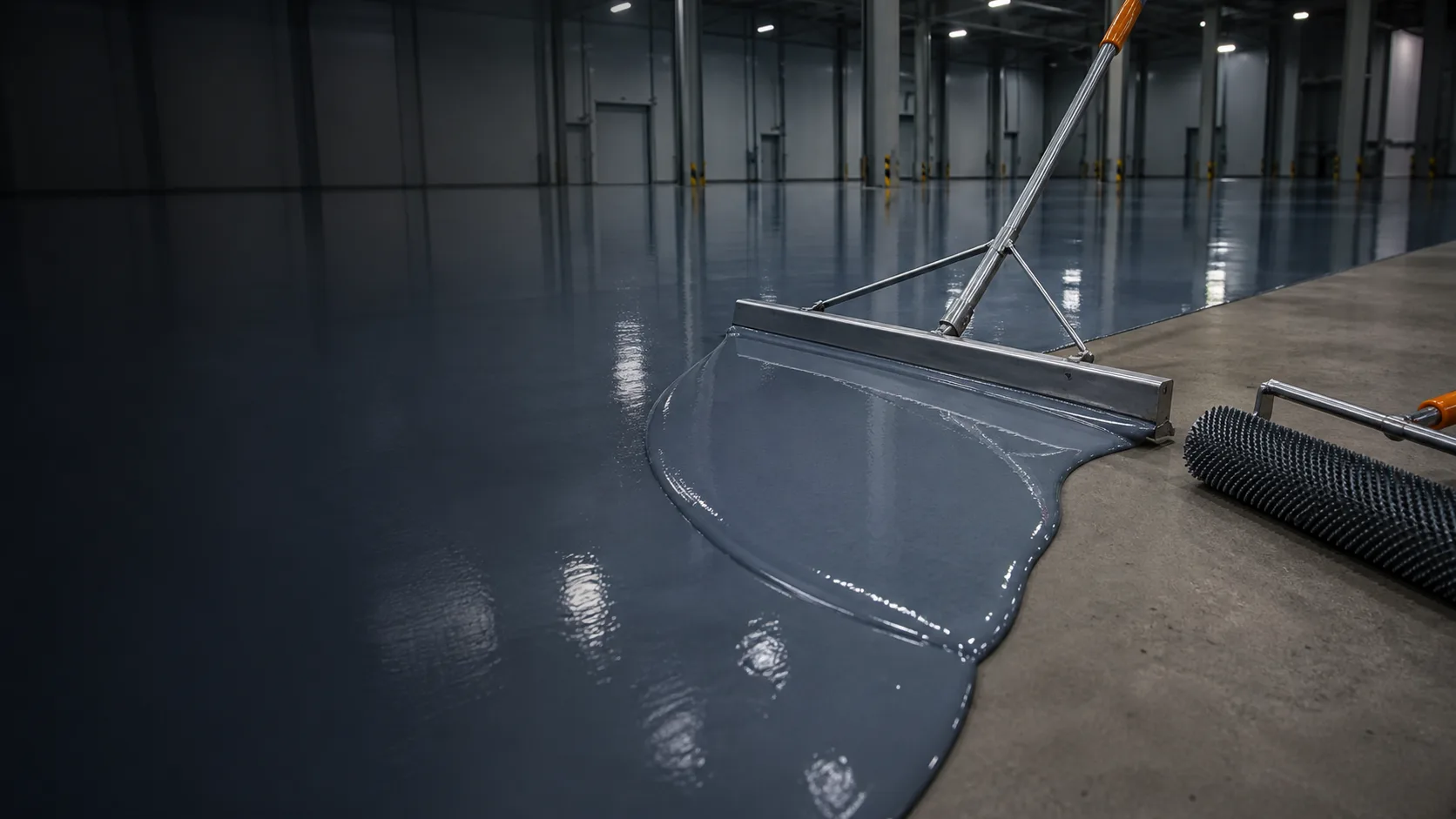
Controlled application of viscous self-smoothing epoxy resin using a gauge rake and spiked roller
Self-Levelling Epoxy Singapore

A seamless floor starts with what lies beneath.

Rayson specifies the preparation, primer and self-smoothing body coat around your traffic, exposure and operating window—not appearance alone.

Production trafficCleanable surfacesESD route availableSunlit zones considered
The short answer

Self-smoothing is a finish behaviour—not a promise to level the slab.

The correct system begins with sound concrete, mechanical preparation and compatible priming. The self-smoothing body coat then forms a continuous wearing surface selected around traffic, cleaning, chemicals, static control and UV exposure.

Specify by operating requirement

What must the finished floor do every day?

Choose the operating condition. The visual, technical priorities and project brief change with it.

01 / INDUSTRIAL TRAFFIC

Design around the wheel path—not the room name.

Forklift wheel type, turning zones, point loads and traffic frequency influence the system build. The slab and joints still carry the load beneath the coating.

  • Wheel type
  • Turning load
  • Impact and joints
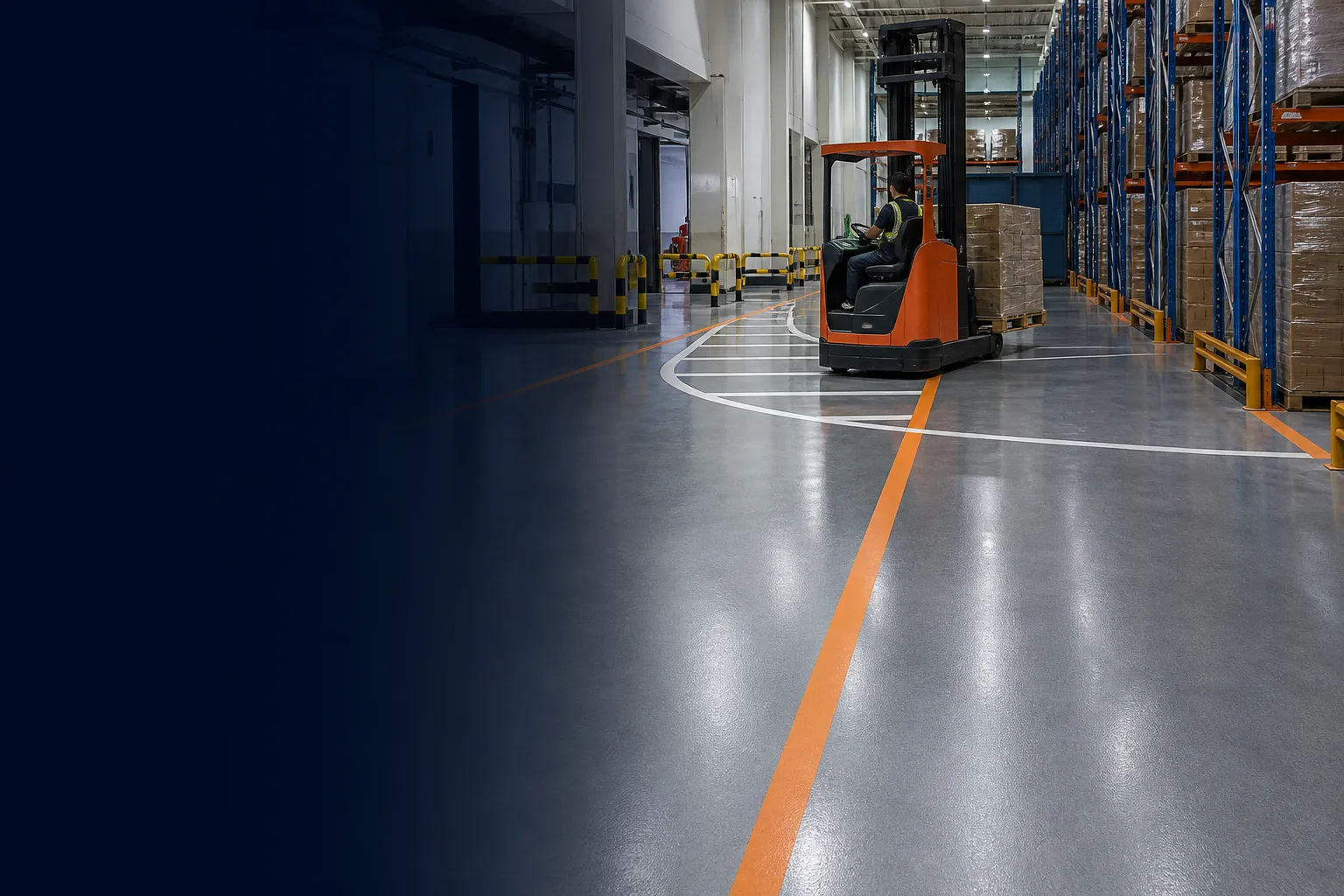
Reach truck turning on a smooth resin-coated warehouse floor
Before the resin flows

The coating smooths itself. It does not redesign the slab.

Correct the geometry and movement first. A smooth finish can reveal shortcuts more clearly—it cannot make them disappear.

01

High spots

Mechanically reduce them before the coating build begins.

02

Local hollows

Assess and pre-fill them with a compatible repair route.

03

Cracks

Determine whether they are static or moving before repair.

04

Failed falls

Correct drainage geometry rather than hiding it below resin.

Review concrete preparation principles
Choose the system format

Similar colours can hide very different floor systems.

01 / LIGHTER DUTY

Roller-applied epoxy

A thinner coating route that follows more of the prepared substrate profile.

Consider
Light-to-medium duty and maintenance coating
Starting product
FloorGuard R50
03 / THERMAL & CHEMICAL DUTY

PU-cement screed

A different chemistry and heavier screed route for demanding wet-process exposure.

Consider
Hot wash-down and severe process exposure
Starting product
PurScreed PC70
View the complete technical comparison
DecisionRoller epoxySelf-smoothing epoxyPU-cement screed
System formThin roller-applied coatingHeavier continuous body coatHeavier screed build
Surface characterFollows more substrate profileSmoother, more uniform finishSelected around process and texture duty
Selection basisSubstrate, traffic, cleaning, chemistry, temperature and project programme
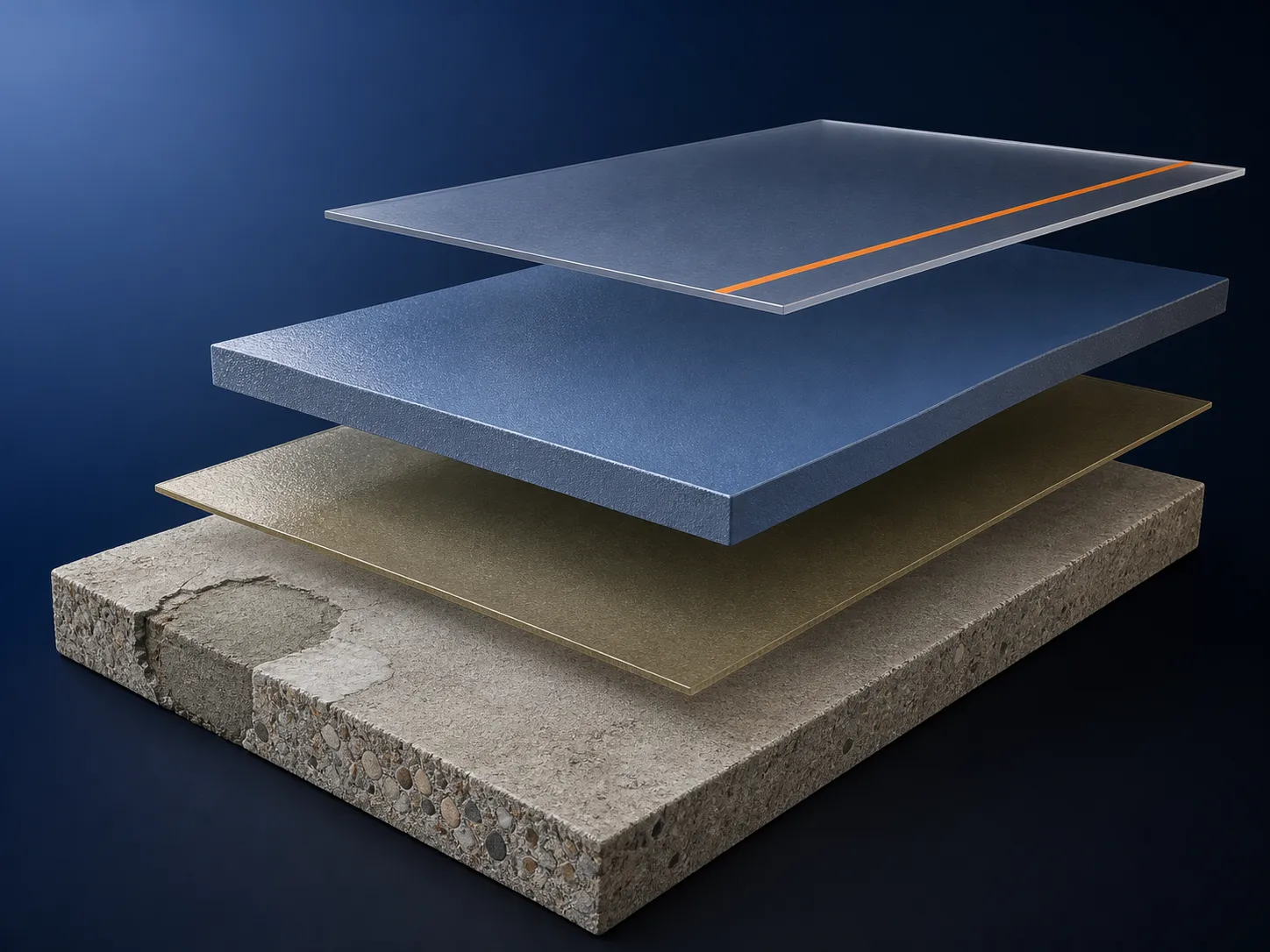
System build-up

Five controlled stages create one seamless floor.

Each layer has a job. The illustration explains system logic—not a universal project specification.

Read the epoxy application guide
Exploded self-levelling epoxy floor build-up showing concrete, repair, primer, body coat and finish layers
Concept build-up. Confirm preparation, products and application against the selected TDS.
  1. 01SurveyCondition, moisture and geometry
  2. 02PrepareExpose sound concrete
  3. 03PrimeCreate the compatible bond
  4. 04Body coatApply the self-smoothing layer
  5. 05VerifyFinish, continuity and records
Published system evidence

Choose the role. Then read the product data.

These are preliminary directions. Confirm preparation, compatibility, application and timing against the current TDS before work begins.

Ready for a useful first review?

Show us the slab before choosing the finish.

Send wide floor photos, close-ups of cracks and joints, the approximate area, traffic and work window. We will review the starting conditions and respond within one working day.

Frequently asked questions

What is self-levelling epoxy flooring?

Self-levelling epoxy, also called self-smoothing epoxy, is a resin flooring system applied as a continuous body coat over prepared and primed concrete. It produces a smoother, heavier-build finish than a typical roller-applied coating.

Does self-levelling epoxy level an uneven concrete slab?

No. The coating smooths within its applied layer, but it does not correct slab geometry, high spots, deep hollows, failed falls or structural movement. These conditions must be assessed and corrected during preparation.

What is the difference between roller epoxy and self-levelling epoxy?

A roller-applied epoxy is a thinner coating that follows more of the substrate profile. A self-smoothing system forms a heavier, more uniform seamless layer. The correct choice depends on traffic, finish expectations, substrate condition and operating exposure.

Is self-levelling epoxy suitable for forklift traffic?

It can be considered for production and logistics floors, but the complete system must be selected from wheel type, turning load, traffic frequency, impact, substrate condition and maintenance. Confirm the specified build against the current product TDS.

Can a self-levelling epoxy floor provide ESD control?

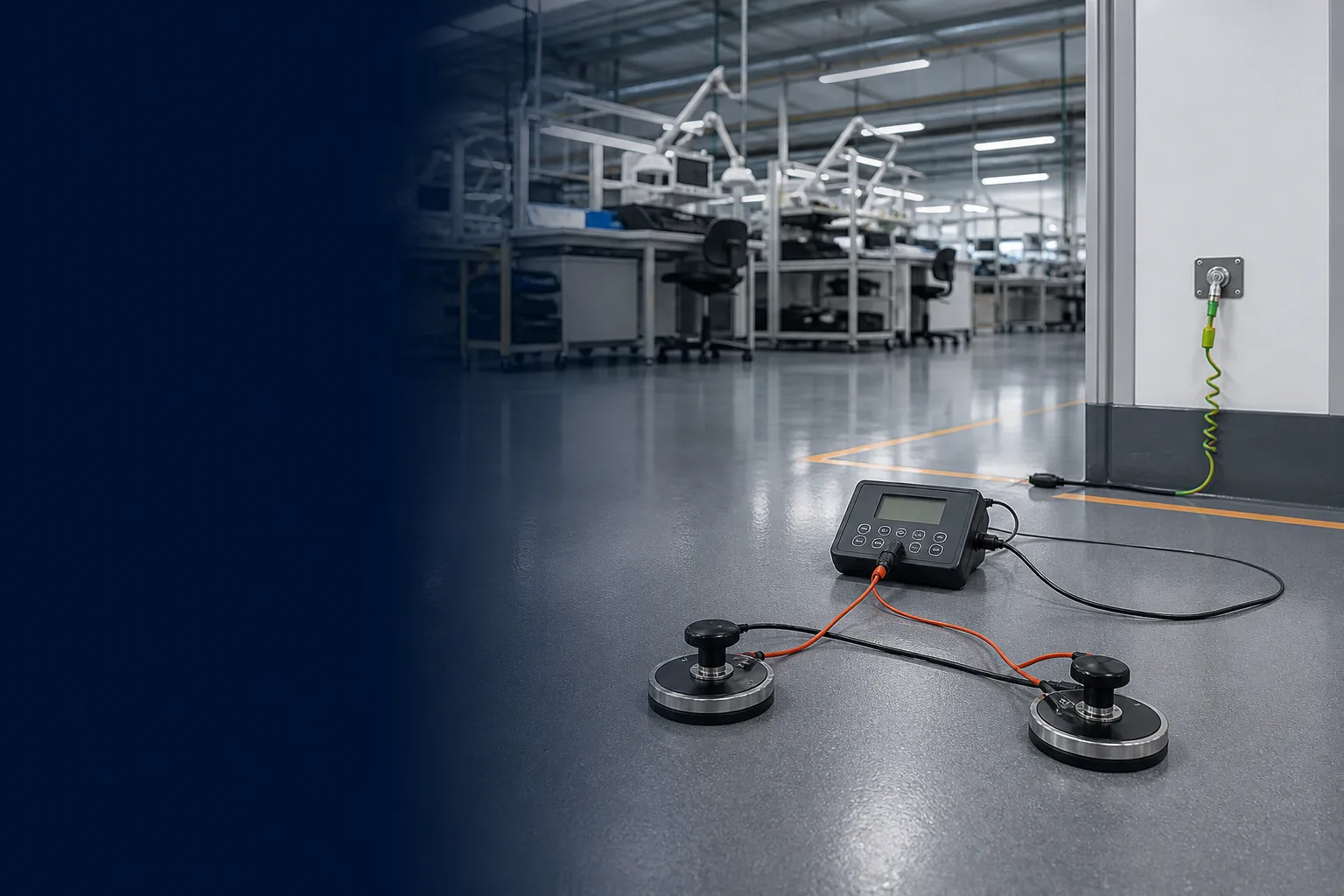
A standard self-smoothing epoxy is not automatically an ESD-control floor. Where static control is required, use a designed conductive system such as Rayson StaticGuard CX90 and verify the complete build-up and testing requirements.

Can self-levelling epoxy be used in sunlight?

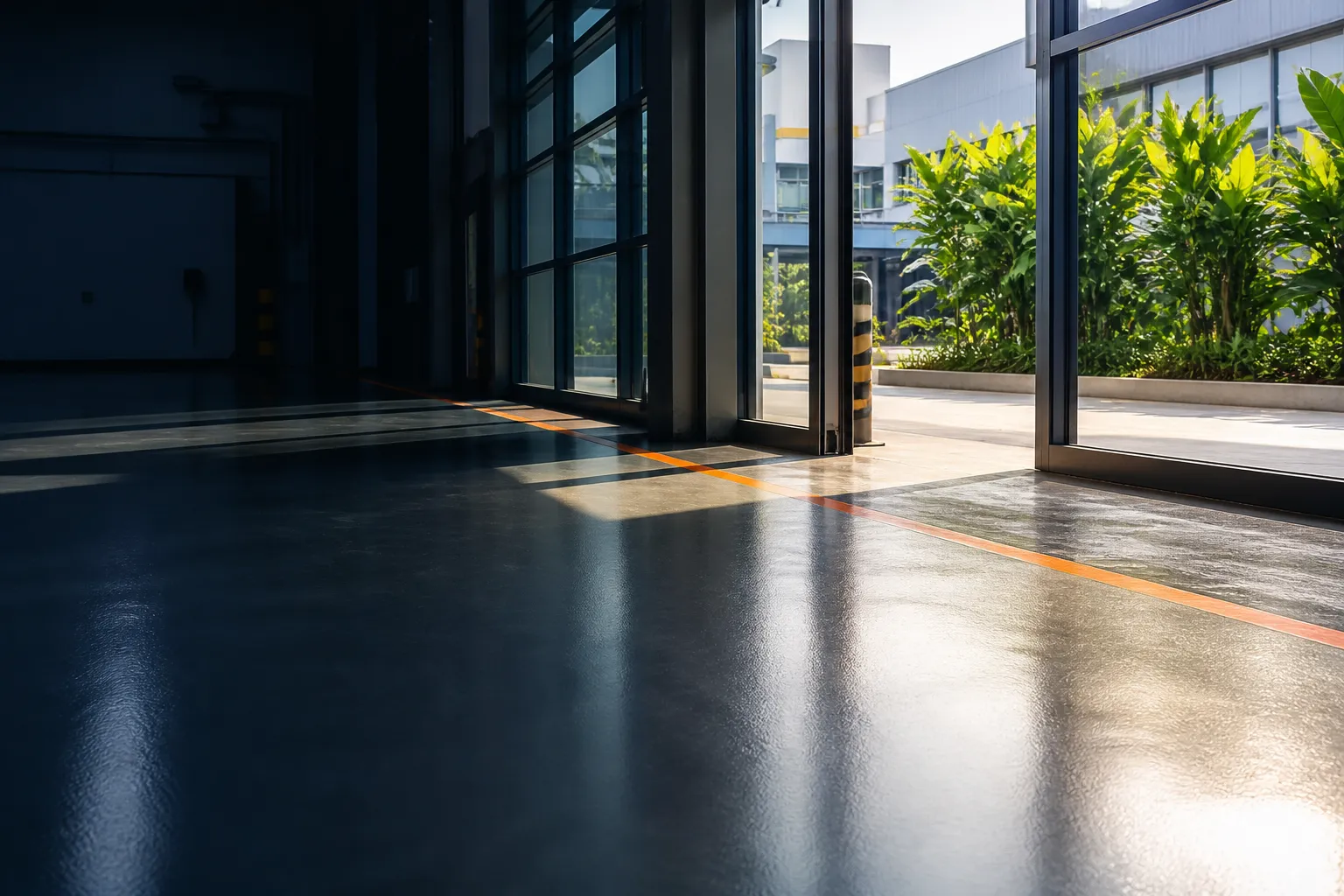
Epoxy can change colour under UV exposure. Sunlit interior zones may require a compatible UV-stable finish such as Rayson UraForce SB72, while exterior exposure may require a different system. Confirm compatibility in the relevant TDS.

How much does self-levelling epoxy flooring cost in Singapore?

Cost depends on area, slab condition, repairs, preparation, system build, access and the available work window. A meaningful quotation starts with floor photos, approximate area, operating exposure and programme.

How soon can the floor return to service?

Return-to-service depends on the selected products, temperature, ventilation, site conditions and traffic duty. Use the current technical data sheets for published application and curing information, then confirm the project programme with Rayson.
Not sure which system fits your project?

Tell us your surface, area and timeline — our Singapore technical team will recommend a practical system and price it fast.