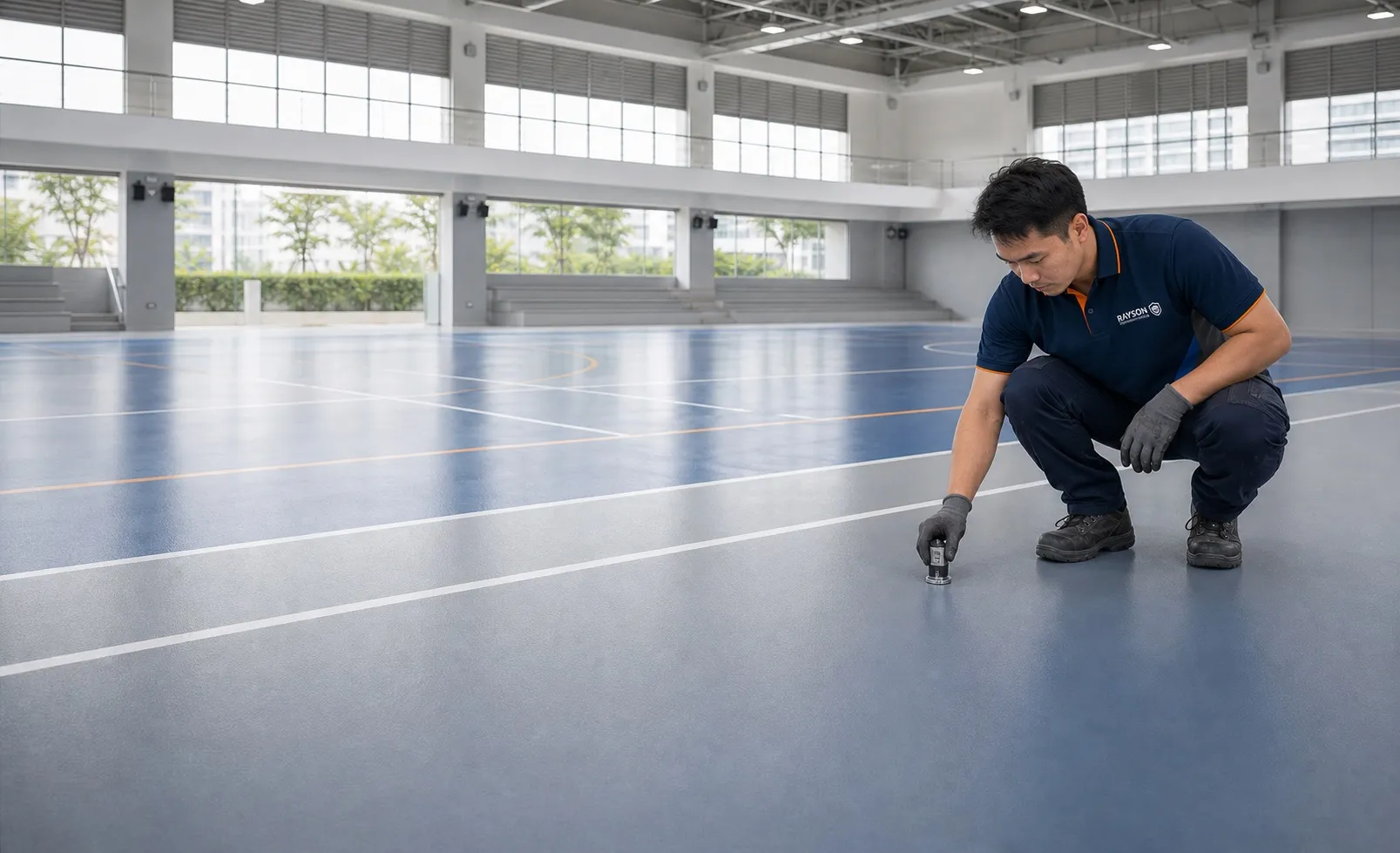
A technician testing the slip resistance of a completed floor surface

Malls · F&B · Schools · Eldercare · MCSTs

Wet pendulum slip testing in Singapore.

A number, not an adjective.

An independent tester measures the grip of your floor where people slip, wet and dry, and reports the SS 485:2022 class at each point. Send the site and the floor type; we reply within one working day.

First response within one working day · Repair scope follows site assessment

Reviewed: October 2026

Quote on WhatsApp

Need a slip test? WhatsApp the site, the floor and where it gets slippery.

  1. The site address and how many areas
  2. The floor type: tiles, stone, concrete or coated
  3. When it is slippery: wet, dry or greasy
WhatsApp the photos Prefer a form? Send the brief

Reply within one working day, Mon–Fri. Rayson quotes; an applicator from its network inspects and installs.

The short answer

"Anti-slip" is a claim. The pendulum reading is the measurement.

A slip resistance test measures how much grip a floor gives, instead of taking the word anti-slip on trust: an independent tester swings a standardised rubber slider across the installed floor, dry and then wet, and the reading sets a class under SS 485:2022, Singapore's slip resistance standard, from P0 to P5 for the wet pendulum test (the laboratory oil-wet ramp test gives the separate R9 to R13 scale, and NEA's code of practice recommends R10 for public toilet floors). A site visit covers an agreed set of points, typically six, chosen where people slip, where the floor gets wet or greasy and where a treatment or coating is planned; the report gives the reading and the class at each point, the condition it was measured in, and what to do next: clean, treat, coat or replace. An independent tester in Rayson's network quoted a six-point site visit at about S$800 in October 2026, indicative and confirmed on quotation; samples sent in are tested and reported at a separate price, and the quotation is per visit, not per point. Rayson does not test, and does not install with its own crews: it makes the coating route, introduces the tester, and quotes the coating work, which an applicator from its network installs.

The standard
SS 485:2022, Singapore's specification for slip resistance classification, adopting the Australian classification
Wet pendulum
Classes P0 to P5, measured on the installed floor, wet or dry; the higher the class, the more grip under the test condition
Ramp rating
R9 to R13 from a laboratory oil-wet ramp test: a comparison of products, not a measurement of your floor; NEA recommends R10 for public toilet floors
A visit
Typically six points, chosen with you where people slip and where the floor gets wet or greasy; dry and wet runs at each
Indicative cost
About S$800 per six-point visit, quoted by an independent tester in October 2026; samples separate; per visit, not per point; confirmed on quotation
What it is not
A rating describes the surface as tested; texture wears and contamination builds, so a result is not a promise for the life of the floor
When you need a test

Four moments when a reading beats an opinion.

Each one ends in a report an insurer, an auditor, a management corporation or a contractor can act on. Two of the four lead straight to a fix on this site.

01 / AFTER A FALL

Someone slipped, or a tenant, staff member or customer has complained

The test turns an argument into a number: the class at the exact spot, in the condition it was in. The tester records the dry and wet readings and the cleaning state, so the report stands up with an insurer or a management committee.

How a visit runs
02 / BEFORE AND AFTER

A chemical treatment or an anti-slip coating is planned

A reading before the work and the same points measured after it are the only proof the treatment did what the quotation said. Ask for the class in the quotation and the warranty, then test it.

See anti-slip treatment
03 / NEW FLOOR OR SAMPLE

A floor finish is being specified, or a tile sample is on the desk

A supplier's brochure value was measured on another surface. A pendulum reading on your sample, or on the first laid area, is what the specification should quote; the ramp R rating stays a laboratory comparison.

P class or R rating?
04 / AUDIT OR EVIDENCE

A public toilet, kitchen, pool deck or corridor is due for an audit, or a landlord, MCST or insurer asks for evidence

NEA's code of practice recommends an R10 rating for public toilet floors; SS 485:2022 is the class an auditor will recognise. A dated report per point is the evidence.

See anti-slip coatings
How a visit runs

Six steps, from the walk-round to the recommendation.

  1. 01
    Walk the site and choose the points

    Where people slip, where water, soap or grease reaches, the route a wheelchair or trolley takes, the first tread of a stair. Six points is the usual visit; more can be added.

  2. 02
    Check the instrument

    The tester checks the pendulum and the slider before the first swing, in plain sight, and notes the floor's cleaning state. A reading on a freshly degreased floor and one on the floor as found tell different stories, so the report says which it was.

  3. 03
    Dry runs at each point

    The slider is swung across the dry surface and the reading is recorded.

  4. 04
    Wet runs at each point

    The surface is wetted and the swings repeated. The wet reading sets the P class under SS 485:2022, the one a wet area is judged on.

  5. 05
    The report

    For each point: the location, the dry and wet readings, the class, the condition and the date; photographs of the points; the standard the class comes from.

  6. 06
    The recommendation

    Clean (a film is defeating a texture that tests well when clean), treat (glazed tiles that must keep their look), coat (concrete, asphalt or a floor being recoated anyway) or replace. Each route is on this site, and the same tester can measure it again afterwards.

The facts

What the test is, in numbers, and where each line comes from.

SS 485:2022, the slip-standards guide on this site, NEA's code of practice as cited in the homes guide, and the tester's October 2026 quotation. Nothing here is a Rayson test result.

QuestionAnswerWhere it comes from
The standardSS 485:2022, Specification for slip resistance classification of pedestrian surface materials, adopting the Australian classification (AS 4586:2013)Singapore Standards eShop; anti-slip cost guide
Wet pendulum classesP0 to P5, measured on the installed floor; the wet reading sets the class a wet area is judged onSS 485:2022; slip-standards guide
Ramp ratingsR9 to R13 from a laboratory oil-wet ramp test: an operator walks a contaminated sample as the angle increases; comparative, describes a product, not your floorSlip-standards guide
Public toiletsNEA's code of practice recommends an R10 rating for public toilet floorsNEA Code of Practice on Environmental Health 2025, as cited in the epoxy for homes guide
Points per visitTypically six, chosen on site with you; more by arrangementTester's quotation, October 2026
The reportPer point: location, dry and wet readings, class, condition and date; photographs; the standard. Ask for each line in writing before the visitWhat to ask the tester for
What the figure does not meanA rating describes the surface as tested; traffic polishes texture and grease or soap films defeat it, so a result is not for the life of the floorSlip-standards guide
Who does itAn independent tester in Rayson's network visits, quotes, tests and reports; Rayson does not testRayson

What it costs: an independent tester in Rayson's network quoted a six-point site visit at about S$800 in October 2026; samples sent in are tested and reported at a separate price; the quotation is per visit, not per point. Indicative, confirmed on quotation, and not a Rayson price. For what the fix costs afterwards, treatment or coating: the anti-slip cost guide

What the result leads to

Three routes, decided by the floor and the reading.

Rayson makes the coating route and publishes its data sheet. No Rayson product carries a class of its own: the class is what the pendulum measures on the finished floor.

GLAZED TILES / CHEMICAL TREATMENT

Treat the tiles you have

Bathroom, kitchen and corridor tiles that must keep their appearance take a chemical anti-slip treatment after a test patch, with no hacking. Published Singapore figures put tile treatment at about S$2–4 per sq ft, with an HDB toilet from about S$250–300 as a minimum charge, and HDB's EASE scheme covers eligible seniors. Measure the test patch wet before you commit.

Anti-slip floor treatment
CONCRETE & ASPHALT / COATING

Build the texture into a coating

GripSafe AP12 is Rayson's acrylic primer filler with 0.5–1.5 mm silicate quartz for suitable concrete and asphalt; it is not a treatment for glazed tiles. The applicator matches the texture to the traffic and the cleaning regime, and the class is what the pendulum measures afterwards, not what a product name implies.

Anti-slip flooring and coatings
NEW FLOOR / NEW SYSTEM

Specify the class into the new floor

A commercial kitchen in PU-cement or textured epoxy, or an epoxy floor over toilet tiles: write the wet class into the specification, have the first laid area measured, and keep the cleaning method the texture needs. Over-specifying texture in a dry area creates a cleaning problem instead.

Commercial kitchen flooring
For contractors and applicators

A reading before, the same points after. That is the proof a quotation needs.

An anti-slip quotation that states a class and a warranty needs a measurement behind it. Book the tester for the test patch and again after the work, on the same points; the two reports go to the client with the invoice, and the warranty refers to a number instead of a word.

What to write into an anti-slip quotation
Book a before-and-after test

Tell us the site, the floor, the number of areas and the dates. We reply within one working day.

Ready to book?

Tell us the floor, and where it gets slippery.

Send the site address, the floor type (tiles, stone, concrete or coated), how many areas, whether the problem is wet or dry, and when it happens. We respond within one working day and introduce an independent tester who quotes the visit, runs the test and writes the report. Applicators and contractors: ask for the GripSafe AP12 data sheet and material pricing direct.

Frequently asked questions

Is a slip resistance test required by law in Singapore?

This site does not record a general legal duty to test. What it records is that Singapore classifies slip resistance under SS 485:2022, and that NEA's Code of Practice on Environmental Health 2025 recommends an R10 rating for public toilet floors. Specifiers, insurers and safety officers ask for the measurement because "anti-slip" is a claim, not a rating; a dated report per point is the evidence.

What is the difference between a P class and an R rating?

An R rating comes from a laboratory ramp test: an operator in standard footwear walks a sample coated in a standard contaminant as the ramp angle increases, and the angle at which slipping starts sets the class from R9 to R13. It compares products and suits a specification, but it is not a measurement of your floor in service. The pendulum test runs on the installed floor, dry or wet, and its reading describes your floor, today; under SS 485:2022 the wet pendulum gives a class from P0 to P5. The two measure different conditions and are not interchangeable.

How many points does a visit cover, and how long does it take?

Typically six points, chosen on site with you; more by arrangement. The time depends on the number of points and on access to them, and the tester confirms it when quoting.

Can a sample be tested instead of the floor?

Yes. Samples sent in are tested and reported at a separate price. A reading on a sample describes the sample, not the installed floor, so the first laid area should still be measured once it is down; that is the figure a specification should quote.

Does an anti-slip treatment change the result?

That is the point of testing. A reading before the work and the same points measured after it are the only proof that a treatment or coating delivered the class its quotation promised. The anti-slip cost guide's advice stands: ask for the class to be stated in the quotation and the warranty, then measure it.

How often should a floor be re-tested?

No fixed interval is published on this site. The slip-standards guide explains that slip resistance is perishable: traffic polishes texture and grease or soap films defeat a texture that tests well when clean, so wet, heavy-traffic areas deserve periodic re-testing. Sensible triggers are a fall, a change of cleaning regime, a treatment or coating, and an audit or insurance renewal.

What does the test cost?

An independent tester in Rayson's network quoted a six-point site visit at about S$800 in October 2026; samples sent in are quoted separately; the quotation is per visit, not per point. Indicative, confirmed on quotation, and not a Rayson price.

Wet or dry: which reading matters?

The wet reading sets the P class under SS 485:2022 and is the one a wet area is judged on; the dry reading is recorded alongside it for comparison and to show what a film or contaminant is doing. The report should say which condition each reading was taken in.

Who runs the test, and what does Rayson do?

An independent tester in Rayson's network visits, quotes, tests, writes the report and stands behind it. Rayson does not test, and does not install with its own crews: it makes the coating route, GripSafe AP12, an acrylic primer filler with 0.5–1.5 mm silicate quartz for suitable concrete and asphalt and not a treatment for glazed tiles, publishes its data sheet, introduces the tester, and quotes the coating work.

What do I send to book a visit?

The site address; the floor type (tiles, stone, concrete or coated); how many areas; whether the floor is slippery wet, dry or greasy; when it happens (time of day, weather, after cleaning); and, if you have them, a wide shot of each area and a close-up of the surface. We respond within one working day and introduce the tester, who quotes the visit.