Water at the bottom corners of the frame or under the sill
The perimeter sealant between frame and wall has failed, or the weep holes are blocked and rain cannot drain out. Cut out and reseal, clear the weep holes.
See the resealing sequence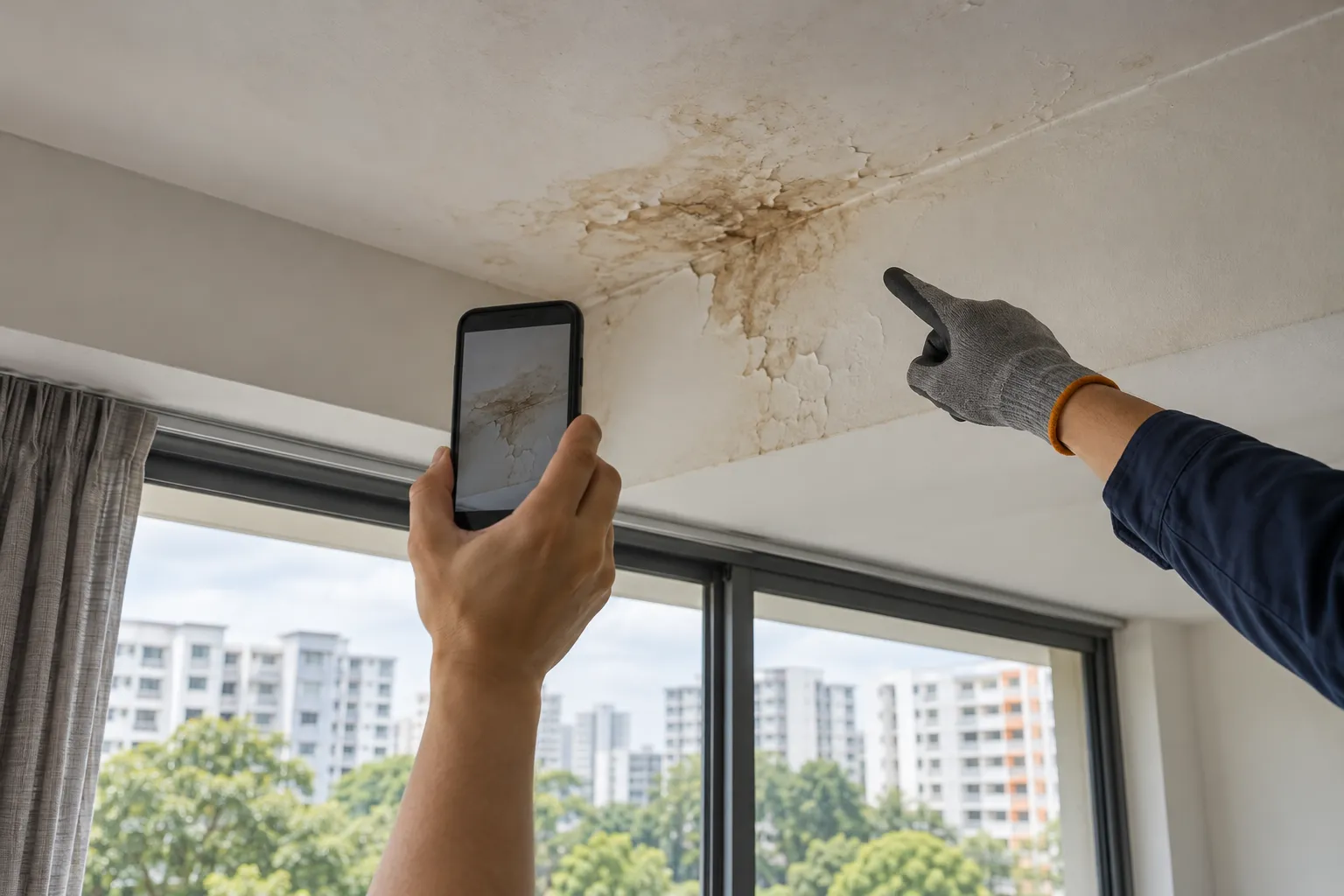
HDB · Condos · Landed homes · Façades
Find where the rain gets in. Reseal that, not the whole window.
A window that leaks in driving rain, a wet corner under the sill, a stain above the frame, or a block of windows on a façade inspection list. Send photos and an applicator from our network inspects before Rayson quotes the work.
First response within one working day · Repair scope follows site assessment
Reviewed: October 2026
Reply within one working day, Mon–Fri. Rayson quotes; an applicator from its network inspects and installs.
A window in Singapore leaks in driving rain through one of five places: the sealant between the frame and the wall, which is the most common; blocked weep holes in the frame; a sill that holds water or slopes inwards; a perished glazing gasket; or a crack in the wall at the head or corners of the opening. The repair follows the entry point. Resealing means cutting out the failed sealant completely, cleaning and priming the joint, fitting a backer rod where the gap is deep, applying a compatible flexible sealant and tooling it, clearing the weep holes and checking the sill; a crack beside the frame is treated as a wall crack and the surround coated. A Singapore repair platform's price page, read on 20 October 2026, puts window sealant replacement at S$5 to S$15 per metre, plus the call-out. HDB's maintenance guide makes windows the owner's fittings, checked at least every six months, and places the external wall under the Town Council. Rayson makes SealForce AP05 primer and SealForce AC10, the elastic coating for the wall around the opening; the sealant is specified by the applicator. Rayson quotes the job, and an applicator in the Rayson network inspects and does the work under the workmanship warranty set out in Rayson's quotation.
Where the water shows first in a storm narrows it down. The applicator confirms from outside before the repair is specified.
The perimeter sealant between frame and wall has failed, or the weep holes are blocked and rain cannot drain out. Cut out and reseal, clear the weep holes.
See the resealing sequenceThat is the wall, not the window: the corners of window openings are where external walls crack most. Treat it as a wall crack, then coat the surround.
How a wall crack is fixedA perished glazing gasket or a loose bead. That is a window contractor's job, BCA-approved in an HDB flat; the perimeter sealant and the wall stay with the applicator.
HDB on window maintenanceThe sealant around the penetration has aged. Reseal the penetration and check that the trunking falls outward.
See the repairPublished range from a Singapore repair platform's price page, read on 20 October 2026. Not Rayson quotations. Each window is quoted after it has been seen.
| Where it gets in | Repair | Published range, S$ | Who does it |
|---|---|---|---|
| Perimeter sealant, frame to wall | Cut out the old sealant, clean and prime, backer rod, new flexible sealant, tooled | 5 – 15 per metre, plus the call-out | Applicator; sealant specified by the applicator |
| Blocked weep holes | Cleared; the frame drains again | Part of the same visit | Applicator |
| Sill holding water or sloping inwards | Fall corrected with render, drip edge or flashing made good | Quoted on inspection | Applicator; RW1 in the render |
| Crack at the head or corner of the opening | Fill, prime with AP05, coat the surround with AC10, fleece over a moving crack | See the wall crack page | Applicator; Rayson AP05, AC10, TX80 |
| Glazing gasket or bead | Gasket or bead replaced | Quoted by a window contractor | Window contractor, BCA-approved in an HDB flat |
| Aircon pipe or cable penetration | Penetration resealed, trunking fall checked | Part of the same visit | Applicator |
Cracks and seepage in the wall around the window: the wall crack and seepage page
From HDB's maintenance guide and BCA's strata guide, both linked. Verify the current terms before you rely on them.
HDB's maintenance guide, updated 17 August 2026: windows are fittings within the flat, maintained by the owner, inspected at least every six months (check, clean, change) and repaired by a BCA-approved window contractor from HDB's directory; a window that falls for lack of maintenance can bring a fine of up to S$20,000 and/or up to a year's jail. The external wall is the Town Council's. New flats: five years' warranty on external seepage.
HDB maintenance guideThe window usually belongs to the unit and the façade is common property, so the sealant between them is decided by the strata title and the by-laws. BCA's Strata Management Guide 13, first published November 2023: seepage from common property is the management corporation's to repair. Buildings over 13 m and 20 years old carry a façade inspection every seven years, and failed sealant joints are a routine finding for the management corporation to rectify.
BCA Strata Management Guide 13 (PDF)Frames, sills, the wall around them and the pitched roof above are all the owner's. Have every window on the weather side checked in the same visit and quoted per window, so the sealant is renewed once rather than one leak at a time.
The landed-home waterproofing guideSealant ages at the same rate on every window of a block, so the leaks arrive one after another. Since 1 January 2022, a building taller than 13 metres and older than 20 years is inspected every seven years, and failed sealant joints are among the most common findings the management corporation must rectify within BCA's deadline. Rayson quotes the façade per window after an applicator from its network has surveyed it: metres of sealant, weep holes, sills, cracks at the openings and the coating of the surrounds, done at height with a photographic record for the building file.
BCA on periodic façade inspectionSend the number of windows, the floors, the access, and any inspection finding. We reply within one working day.
One photo of where the water shows inside, one of the frame and sill outside. Photos taken during a storm are the most useful.
From inside, check whether the small slots at the bottom of the outer frame are blocked with dust. Do not lean out of the window.
HDB window: you. The external wall beside it: the Town Council. Condo: check the by-laws, then the management corporation.
Per window: metres of sealant, weep holes, sill and any wall crack, with the sealant type named, so two quotes can be compared.
The sealant needs dry weather to skin over. The wall coating around the frame follows once the sealant has cured.
Rayson makes the primer, the elastic wall coating and the repair compounds and publishes their data sheets. The sealant is not a Rayson product today, so the applicator specifies a suitable one and says so; this page will name Rayson's sealant when it is released.
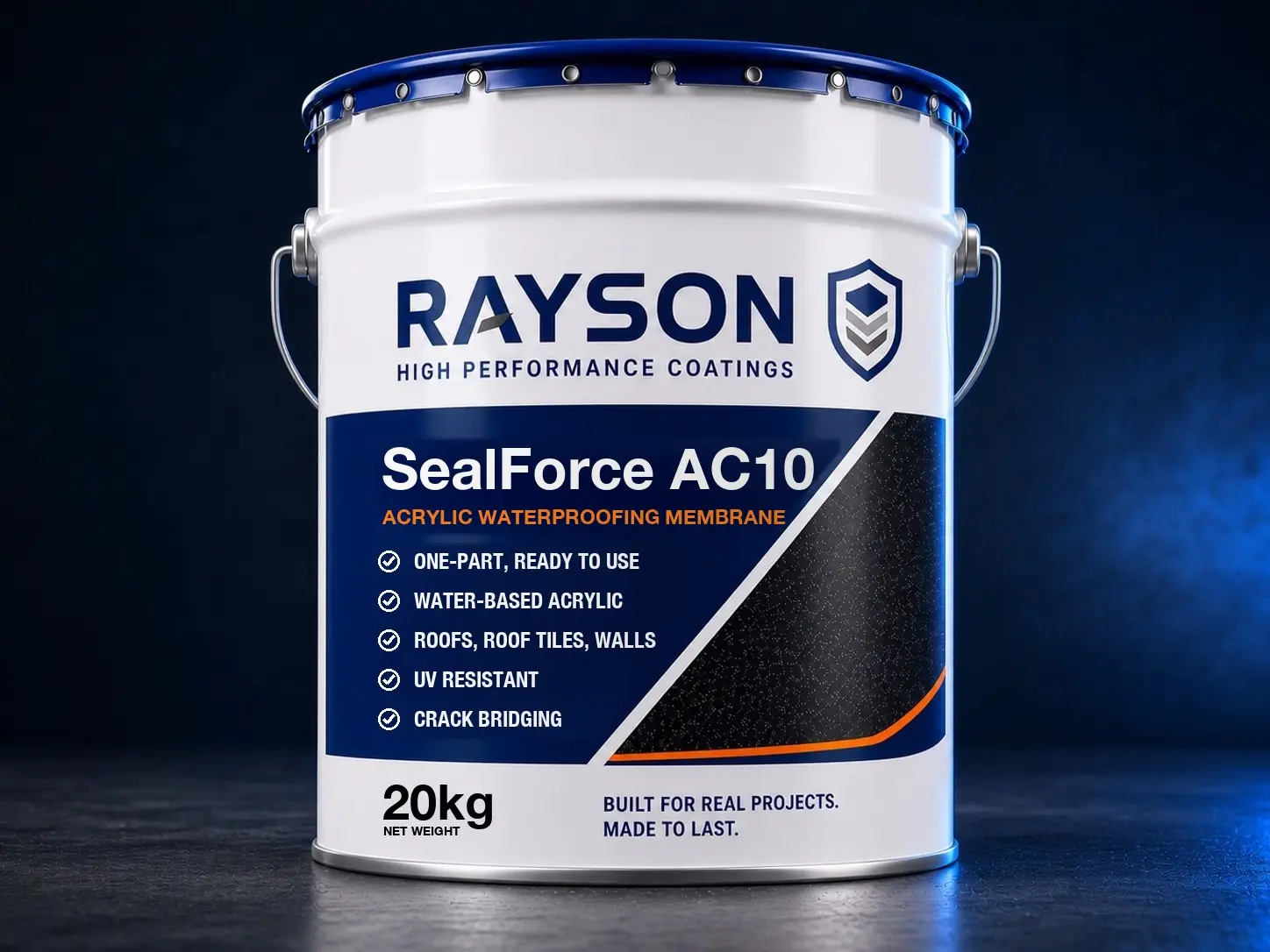 THE WALL AROUND THE OPENING / ONE-PART ACRYLIC COATING
One-part, water-based acrylic waterproofing coating for external walls, two coats at about 0.68 kg/m² each over SealForce AP05. Elongation of at least 180%, bridges cracks wider than 2 mm, lets the wall breathe, and takes a fleece strip over a crack that moves at the corner of an opening. Applied once the sealant has cured, over a paintable sealant.
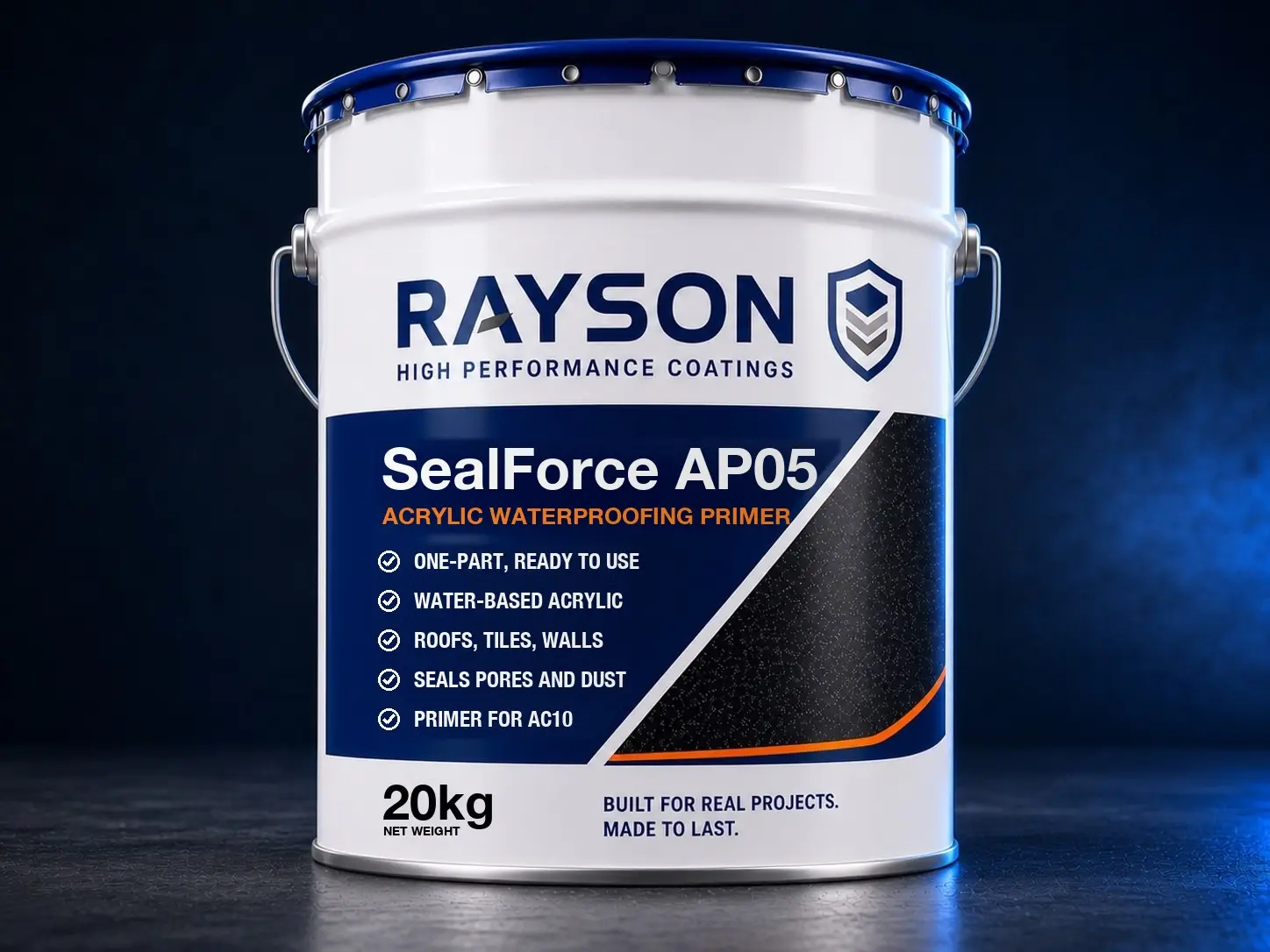 RENDER, BRICK, CONCRETE / PRIMER
Water-based acrylic primer at 0.1 to 0.3 kg/m² that binds a dusty or absorbent reveal and dries clear before AC10 goes on.
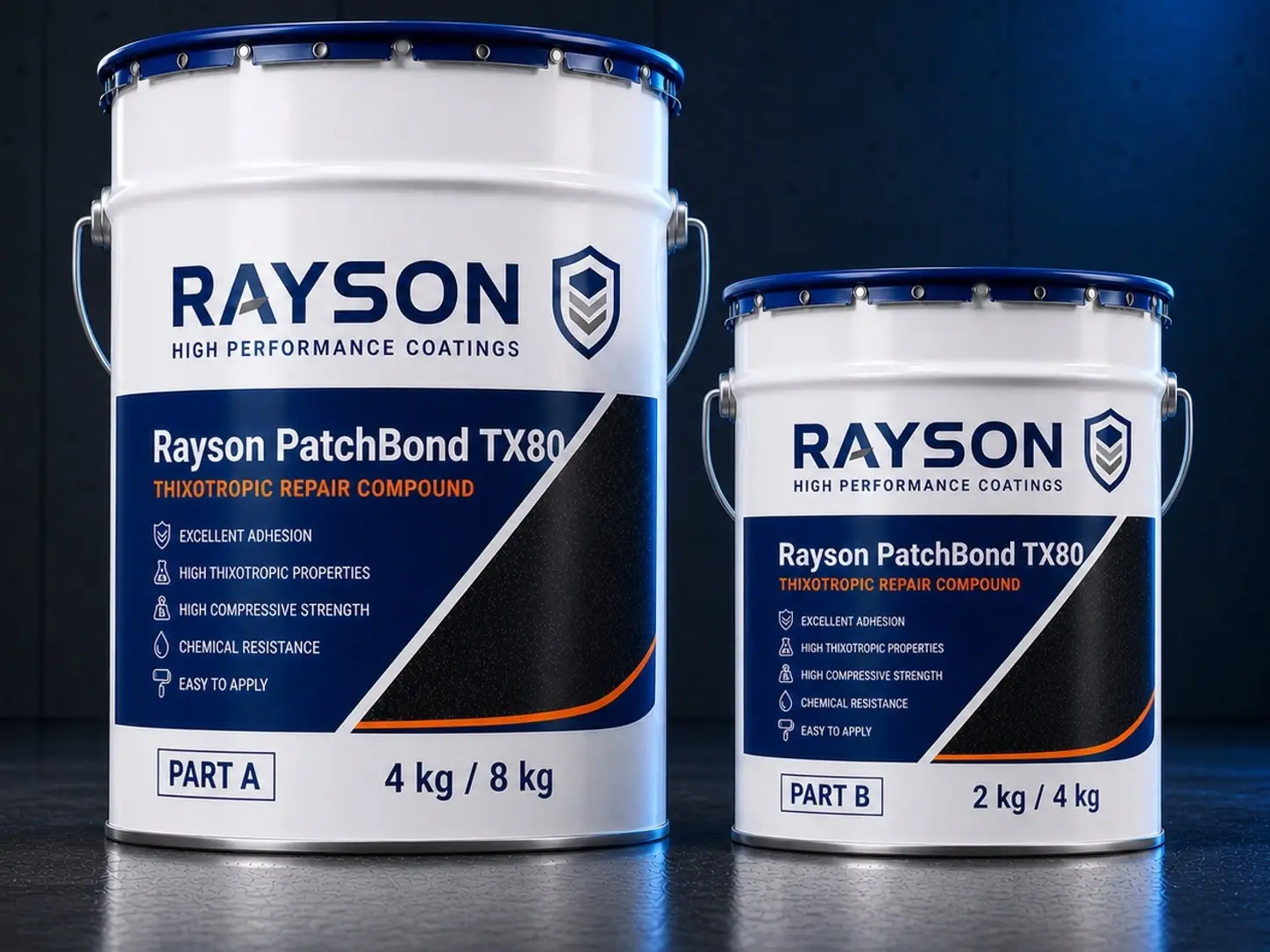 HEADS, SILLS AND SPALLS / REPAIR
Non-sag epoxy repair compound that holds 13 to 15 mm on a vertical face, for spalls at window heads and sills and static cracks at the corners of openings before the primer. Rigid when cured, so not for the sealant joint itself.
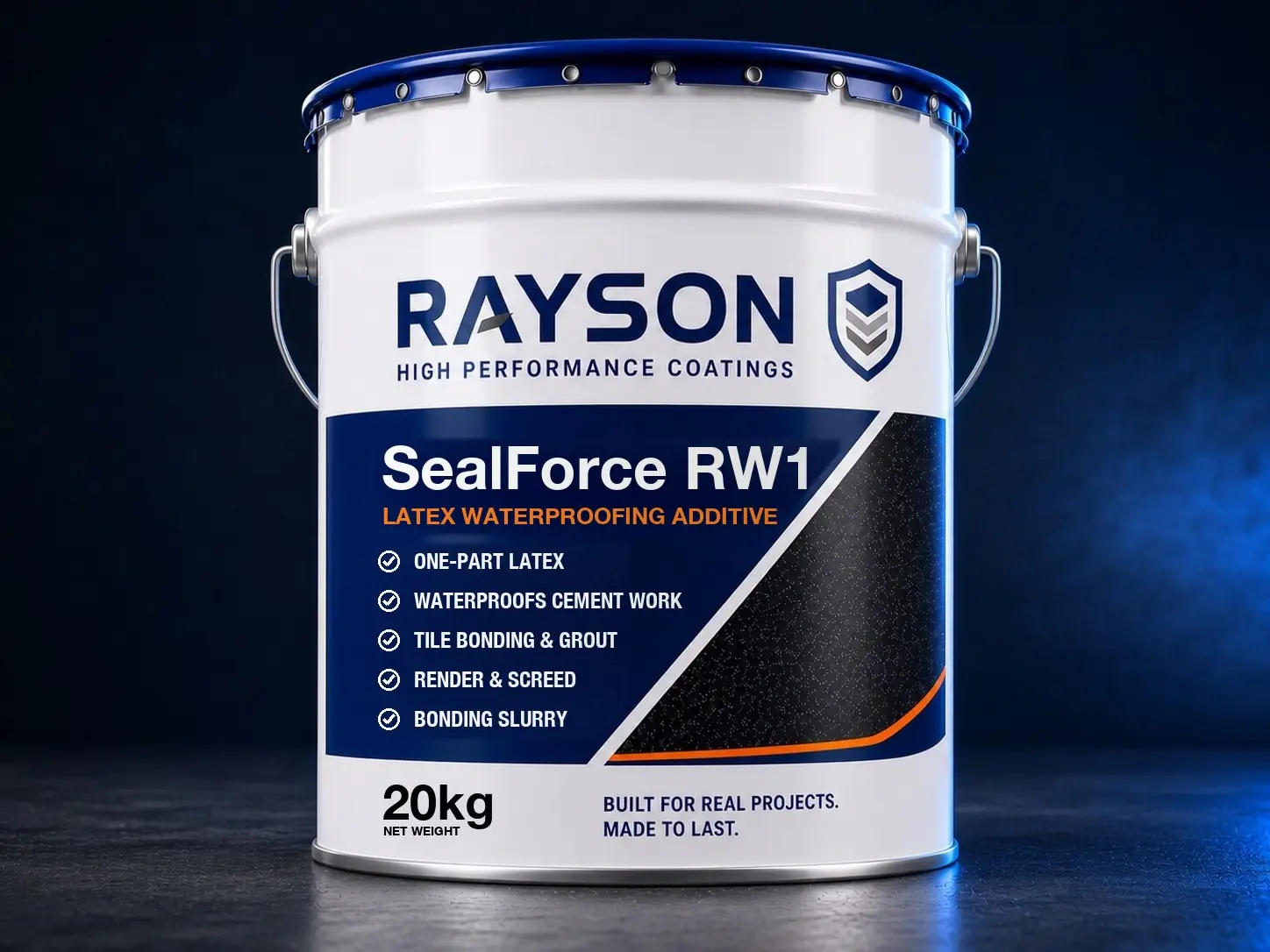 SILLS AND REVEALS / LATEX ADDITIVE
Latex additive for the render that re-forms a sill fall or makes good a reveal: water-resistant and better bonded to the old wall.
Send photos of where the water shows inside and of the frame and sill outside, the number of windows, the property type and floor, and when it leaks. We respond within one working day, arrange an inspection by an applicator from our network, and quote the work. Applicators and contractors: ask for material pricing and the data sheets direct.
Because wind pushes rain past the outer seal of the frame faster than the frame's weep holes can drain it. Perimeter sealant that has hardened, cracked or let go, blocked weep holes and a sill that holds water all cope with a light shower and fail in driving rain. Watch the window during a storm and note where water shows first: that is where the repair starts.
Water at the corners of the frame, under the sill or along the junction of frame and wall is the window: sealant, weep holes or sill. Water above the head of the frame, or along a crack running out from a corner of the opening, is the wall: the corners of window openings are where external walls crack most. A damp patch away from the window that spreads after rain is porous render. The applicator checks outside, in the rain if need be.
A Singapore repair platform's price page, read on 20 October 2026, puts window sealant replacement at S$5 to S$15 per metre depending on the material, plus the call-out; a window has a perimeter of a few metres. Clearing the weep holes and correcting the sill are usually done on the same visit; a glazing gasket is quoted by a window contractor; a crack in the wall beside the frame is quoted as a crack repair. These are published market ranges, not Rayson quotations.
The failed sealant is cut out completely rather than covered, the joint is cleaned and primed, a backer rod is fitted where the gap is deep, a flexible sealant compatible with the frame and the wall is applied and tooled, the weep holes at the bottom of the frame are cleared, and the sill is checked for its outward fall and flashing. One window usually takes a few hours; the sealant needs dry weather to skin over, and the cure time depends on the product used.
It depends on whether the wall around the window will be coated afterwards. Silicone weathers well, but no coating bonds to it. MS-polymer and polyurethane sealants can be painted and work with an elastic wall coating applied later. Where the surround is to be coated with SealForce AC10, the applicator uses a paintable sealant. The sealant is specified by the applicator for now; this page will be updated when Rayson's own sealant is released.
HDB's maintenance guide, updated 17 August 2026: windows are fittings within the flat, maintained by the owner, checked at least every six months (check, clean, change), and repaired by a BCA-approved window contractor from HDB's directory; a window that falls for lack of maintenance can bring a fine of up to S$20,000 and/or up to a year's jail. The perimeter sealant is the owner's; a crack in the external wall beside the window is the Town Council's. New flats carry a five-year warranty on external seepage.
The window usually belongs to the unit and the external wall is common property, and the sealant sits exactly where the two meet, so the answer depends on the development's strata title and by-laws. BCA's Strata Management Guide 13, first published November 2023: seepage that originates from common property is the management corporation's to repair. A building over 13 m and 20 years old also carries a façade inspection every seven years, and failed sealant joints are a routine finding for the management corporation to rectify.
A bead over old sealant usually leaks again within months: the new sealant bonds to the failed sealant, not to the frame and the wall. A repair that lasts cuts the old sealant out, cleans, primes and reseals. Working outside a window on an upper floor is also a fall risk, so it is work for an applicator with the means to reach it safely.
Report it to HDB first. Within the defects liability period HDB rectifies maintenance issues in a new flat, and external seepage carries a five-year warranty. Attach photos taken during rain and say exactly where the water shows.
Not the window, but the same repair. The aircon pipes and cable pass through the wall or the frame beside the window, and the sealant around that penetration ages like the window sealant; rain then follows the pipe in. The applicator reseals the penetration and checks that the trunking falls outward.
Rayson quotes and contracts the job, and an applicator in the Rayson network inspects and does the work, under the workmanship warranty set out in Rayson's quotation; a glazing gasket or the frame itself is replaced by a window contractor, which in an HDB flat must be BCA-approved. Rayson makes SealForce AP05 primer, SealForce AC10 elastic coating and PatchBond TX80 for the wall around the opening and publishes their data sheets; the sealant is specified by the applicator for now.
HDB's guide sets no interval; it asks owners to check their windows at least every six months. Sealant hardens, cracks and pulls away under Singapore sun, so it is replaced when a check finds it cracked, hard or detached, not on a calendar. Façade contractors in Singapore commonly plan exposed sealant joints on a cycle of several years; one contractor's 2026 guidance works to five. Check the windows on the weather side of the building first.
Policies differ. Many Singapore home insurance policies cover sudden water damage to contents and renovation and exclude gradual seepage, wear and tear, and the cost of resealing the window itself. Check the policy wording, photograph the damage and the window during rain, and keep the quotation and the invoice; the insurer will ask for them.
Photos of where the water shows inside, ideally taken during rain; photos of the frame and sill from outside; the number of windows and their rough size; the property type and floor; when the leak appears; and any façade-inspection finding. We respond within one working day and arrange the site inspection by an applicator from our network.
Rayson assistant
Answers from Rayson's own product information
Guidance only — confirm specifications with the Rayson technical team.