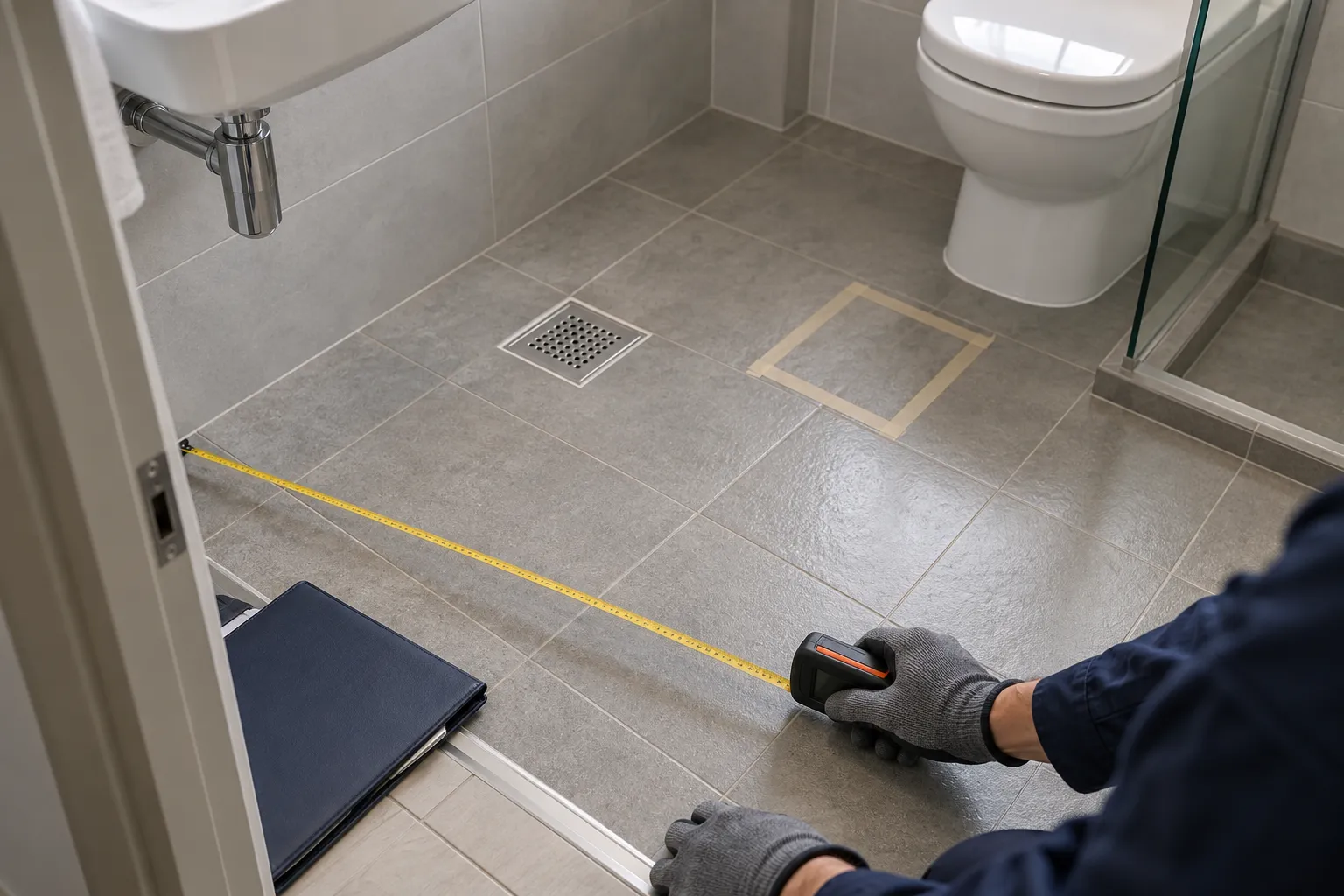
A tiled HDB toilet floor being measured with a tape before an epoxy overlay, a taped test-patch square beside the floor trap

HDB · Condo · Resale flats

Epoxy flooring for HDB and condo toilets.

Keep the tiles if they are sound. Lose the grout lines either way.

A seamless epoxy or flake floor over the existing toilet tiles, or over the screed after hacking, with an anti-slip texture and a washable finish up the walls. Send photos and an applicator from our network checks the tiles and tests a patch before the job is quoted.

First response within one working day · Repair scope follows site assessment

Reviewed: October 2026

Quote on WhatsApp

Want a price for an epoxy toilet floor? WhatsApp three photos and the size.

  1. The whole floor, from the door
  2. A close-up of the tiles and the grout
  3. The size, and HDB or condo
WhatsApp the photos Prefer a form? Send the brief

Reply within one working day, Mon–Fri. Rayson quotes; an applicator from its network inspects and installs.

The short answer

Over the tiles or after hacking. The floor decides which.

Epoxy flooring for an HDB or condo toilet is a seamless coating laid over the existing floor tiles, or over the screed once the tiles are hacked out: the tiles are checked for hollow spots, degreased, abraded and primed, the grout lines are filled, a base coat goes down, a fine aggregate or decorative flake is broadcast for grip, and a water-based polyurethane topcoat seals it, usually two coating days with the floor walkable the next morning. Advertised contractor prices seen on 26 September 2026 put a floor-only epoxy or flake overlay at roughly S$650–1,200 per HDB toilet, with the walls to skirting height adding about S$1,150, priced as a minimum-charge job rather than by area. HDB allows a new finish over one existing layer with adhesive, without a permit, when the total stays within 13 mm and the floor traps are not disturbed; epoxy is not named in its guidelines, so ask HDB first, and all renovation work in a flat must be done by a contractor on HDB's directory. An overlay is not waterproofing: a toilet that stains the ceiling below needs its membrane rebuilt first. Rayson makes the water-based epoxy and polyurethane system and publishes the data sheets; its published systems are written for concrete and screed, so an applicator from its network assesses the tiles with a test patch before installing; Rayson quotes condo and landed jobs, and in an HDB flat a contractor on HDB's directory quotes.

Over existing tiles
Sound tiles only: hollow-tested, degreased, abraded, primed, grout filled, test patch first; HDB's 13 mm overlay limit, floor traps untouched
After hacking
Under an HDB permit: screed checked for falls and levelled, membrane renewed where the room is wet, then the system its data sheet is written for
Published cost
Floor-only overlay about S$650–1,200 per HDB toilet, walls about S$1,150 more; contractor prices seen 26 Sep 2026, not Rayson quotes
Time
Two coating days on a prepared floor, walkable the next morning; showers on the day the applicator puts in writing
Slip
Gloss epoxy is slippery wet; aggregate or flake broadcast gives grip; ask for the SS 485:2022 wet pendulum class, not the word anti-slip
Not waterproofing
An overlay seals the surface and grout; it is not a membrane. A stained ceiling below means waterproofing first
Is your toilet a candidate?

Four toilets. Only the first gets an overlay straight away.

What the applicator finds on the first visit decides the route. Two of the four are not epoxy jobs at all.

01 / SOUND TILES, TIRED GROUT

The tiles are all firm; the grout is dark and hard to clean

The case an overlay is for. The applicator taps for hollow spots, degreases and abrades, then coats a test patch to confirm adhesion and appearance before the room is priced.

See the sequence 
02 / HOLLOW OR LOOSE TILES

Hollow or loose tiles, or water that does not run to the trap

An overlay fails with the tile beneath it and cannot change the fall. Hack to the screed under an HDB permit, level it, and the epoxy goes onto the floor its data sheet is written for.

What hacking changes 
03 / CEILING BELOW STAINED

A stain or drip on the ceiling of the flat below

That is the membrane, not the finish. No overlay stops water already in the slab; the waterproofing is rebuilt and flood-tested first, and the epoxy comes after.

Start with waterproofing 
04 / ONLY SLIPPERY WHEN WET

The tiles are fine; they are just slippery when wet

No coating needed: a chemical anti-slip treatment of the existing tiles, with no hacking, no change of appearance and same-day use.

See anti-slip treatment 
How it is done

Eight steps, in this order.

  1. 01
    Survey and check

    The applicator taps every tile for hollow spots, checks the fall to the trap, looks at the ceiling below, and decides between an overlay and hacking first.

  2. 02
    Degrease and clean

    Soap scum, grease and cleaner residue make coatings let go. The floor is degreased, washed and dried.

  3. 03
    Abrade or prime

    Glazed tiles are mechanically abraded to give the coating a key, or primed as the applicator's assessment specifies; a small test patch is coated and approved first.

  4. 04
    Fill the grout lines

    Grout lines are filled and chips and tile edges made good; otherwise every joint telegraphs through the new floor.

  5. 05
    Base coat

    A first coat of HydroShield WE40 water-based epoxy as the primer, a second as the colour; an occupied home gets the low-odour water-based system.

  6. 06
    Flake or anti-slip broadcast

    Where wanted, decorative flakes (supplied by the applicator) or a fine aggregate are broadcast into the wet coat for grip.

  7. 07
    Walls and skirting

    Optional: the walls to about shoulder height and a coved skirting at the junction, so no joint holds water.

  8. 08
    Topcoat and cure

    At least two coats of non-yellowing water-based polyurethane, UraForce WB60 or WB58. Usually two coating days, walkable the next morning; showers resume on the day the applicator puts in writing.

The facts

What an epoxy toilet floor is, in numbers.

Each line names where it comes from: HDB's renovation guidelines, SS 485:2022, NEA's code of practice, Singapore price guides and the Rayson data sheets.

QuestionAnswerWhere it comes from
ThicknessA thin-film coating system, far below the 13 mm HDB allows for an adhesive overlay over one existing layer; floor finish and screed together may not exceed 50 mmHDB renovation guidelines; Rayson data sheets
Time on siteTwo coating days plus preparation on a prepared floor; walkable the next morning; add hacking days if the tiles come outEpoxy for homes guide
Return to useFoot traffic the next morning; standing water and heavy items after the topcoat has cured per its data sheet; the applicator states the dates in writingEpoxy for homes guide; Rayson data sheets
Slip resistanceMeasured by the wet pendulum test under SS 485:2022, classes P0–P5; NEA recommends R10 for public toilet floors; gloss epoxy is slippery wet, so the finish takes an aggregate or flake broadcastSS 485:2022; NEA Code of Practice on Environmental Health 2025
OdourWater-based epoxy and water-based polyurethane are the mildest; HydroShield WE40 is suitable for unventilated areas and occupied buildingsRayson product data
YellowingEpoxy yellows and chalks under UV; the topcoat is a non-yellowing aliphatic polyurethane, UraForce WB60 or WB58Rayson product data
Walls and skirtingOptional; walls add about S$1,150 per toilet in the published figures; WB60 and WB58 are specified as washable wall coatingsEpoxy cost guide; Rayson product data
WaterproofingNot provided by an overlay; a toilet that leaks to the flat below needs the membrane beneath the screed and tiles rebuilt firstEpoxy for homes guide; toilet waterproofing page
Who may do itIn an HDB flat, a contractor on HDB's Directory of Renovation Contractors, permit or not; noisy work 9 am to 5 pm on weekdays onlyHDB important information on renovations

What it costs: advertised contractor prices seen on 26 September 2026 put a floor-only epoxy or flake overlay at roughly S$650–1,200 per HDB toilet, with walls adding about S$1,150, because a small room is priced as a minimum-charge job rather than by area; lead-in prices of S$299–449 on classified listings are starting figures, not quotes. Market ranges, not Rayson quotations. The full tables, the per-square-foot bands and their sources: the epoxy flooring cost guide 

The rules

HDB, condo, new flat: what you may do, and who may do it.

Summarised from HDB's renovation guidelines and BCA's strata guide, both linked from the homes guide. Confirm the current terms before you plan.

HDB FLATS

Overlay within 13 mm without a permit; hacking with one

HDB allows a new floor finish over one existing layer with adhesive, without a permit, if the total including adhesive stays within 13 mm and the floor traps are not disturbed; epoxy is not named, so ask HDB first. Hacking and re-laying finishes needs a renovation permit applied for by a contractor on HDB's Directory of Renovation Contractors, and all renovation work in a flat must be done by such a contractor. Noisy work 9 am to 5 pm on weekdays only; removal of finishes within three consecutive days; floor finish and screed together within 50 mm.

HDB renovation guidelines, building works 
CONDOMINIUMS

The management corporation's by-laws come first

Condominiums add the management corporation's own by-laws: written approval before works, a refundable deposit, and working hours that typically run weekdays 9 am to 5 pm and Saturday mornings. BCA's Strata Management Guide 14 (November 2023) covers works carried out in lots. The floor itself is the owner's; the waterproofing beneath a wet area may involve common property, which is why a stained ceiling below is raised with the management corporation before any finish goes down.

BCA Strata Management Guide 14 (PDF) 
NEW AND RESALE FLATS

Three years for a new flat; a test patch for a resale one

In a new flat, bathroom and toilet finishes cannot be replaced for three years from the block's completion. A resale flat is where most overlays happen: the tiles are often sound but dated, the grout is stained, and hacking adds S$3–8 per sq ft for removal and disposal plus S$1–5 for levelling. The test patch decides whether the tiles will hold a coating; if they are hollow, hacking is the honest answer.

Epoxy for HDB and condo homes: the full guide 
The option most people ask for

Floor, walls to shoulder height, and a coved skirting. No joint left to hold water.

A toilet floor alone still meets the wall at a grout line. Carrying the coating up the walls to about shoulder height and forming a coved skirting at the junction removes that line, which is why the walls are the part of the job homeowners most often add. In the published figures the walls add about S$1,150 per toilet; the coving and the drain detail decide the price more than the area does. UraForce WB60 and WB58 are specified as hygienic, washable coatings for walls as well as floors, so one system runs from the floor up.

UraForce WB60: the washable clear finish for floors and walls 
Quote floor and walls together

Send photos of the floor and the walls, the size, and whether it is an HDB flat or a condo. We reply within one working day.

Published system evidence

What Rayson makes for a toilet floor, and what the applicator supplies.

Rayson makes the water-based epoxy, the polyurethane topcoats and the solvent-free epoxy for the hacked-and-screeded case, and publishes each data sheet. Its published systems are written for concrete and screed: the bond to glazed tiles is proven by the applicator's test patch, and decorative flakes are the applicator's product, not Rayson's.

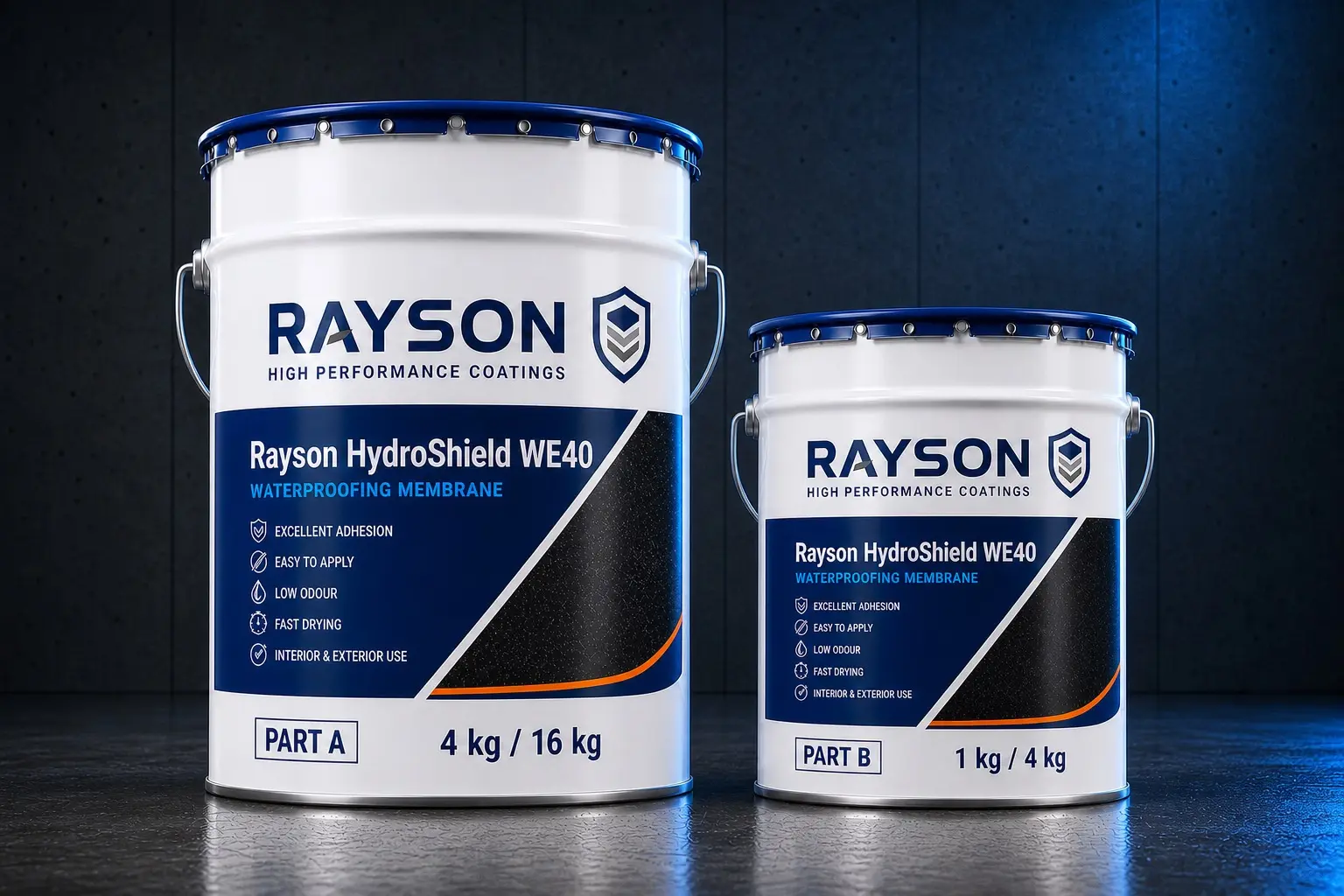
HydroShield WE40 water-based epoxy, Part A and Part B pailsTHE FLOOR / WATER-BASED EPOXY, SELF-PRIMING

HydroShield WE40

Two-component water-based epoxy that serves as its own primer and coloured coat: a first coat as the primer, a second as the finish, at 6–8 m² per kg per coat. Suitable for unventilated areas and occupied buildings, and tolerant of dry or damp substrates with no standing water. A thin-film seal coat; epoxy chemistry, so it is topcoated with polyurethane where light reaches it.

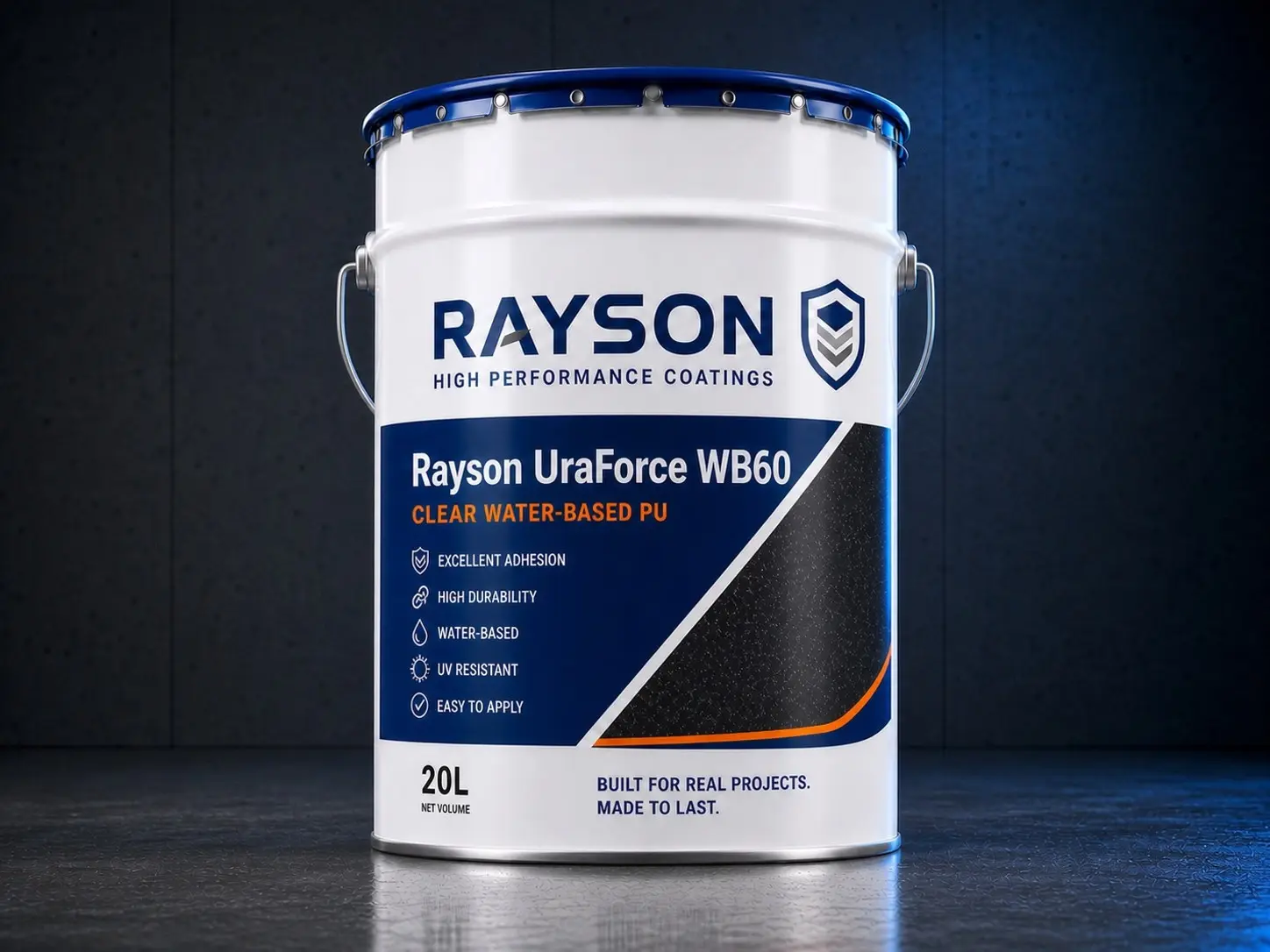
UraForce WB60 water-based polyurethane clear coat, Part A and Part B pailsCLEAR TOPCOAT / NON-YELLOWING

UraForce WB60

Water-based aliphatic polyurethane clear coat in gloss, satin or matt: non-yellowing, abrasion-resistant, low odour, mixed 9:1 and applied in at least two coats. Seals a flake or coloured floor and doubles as a washable coating for the walls.

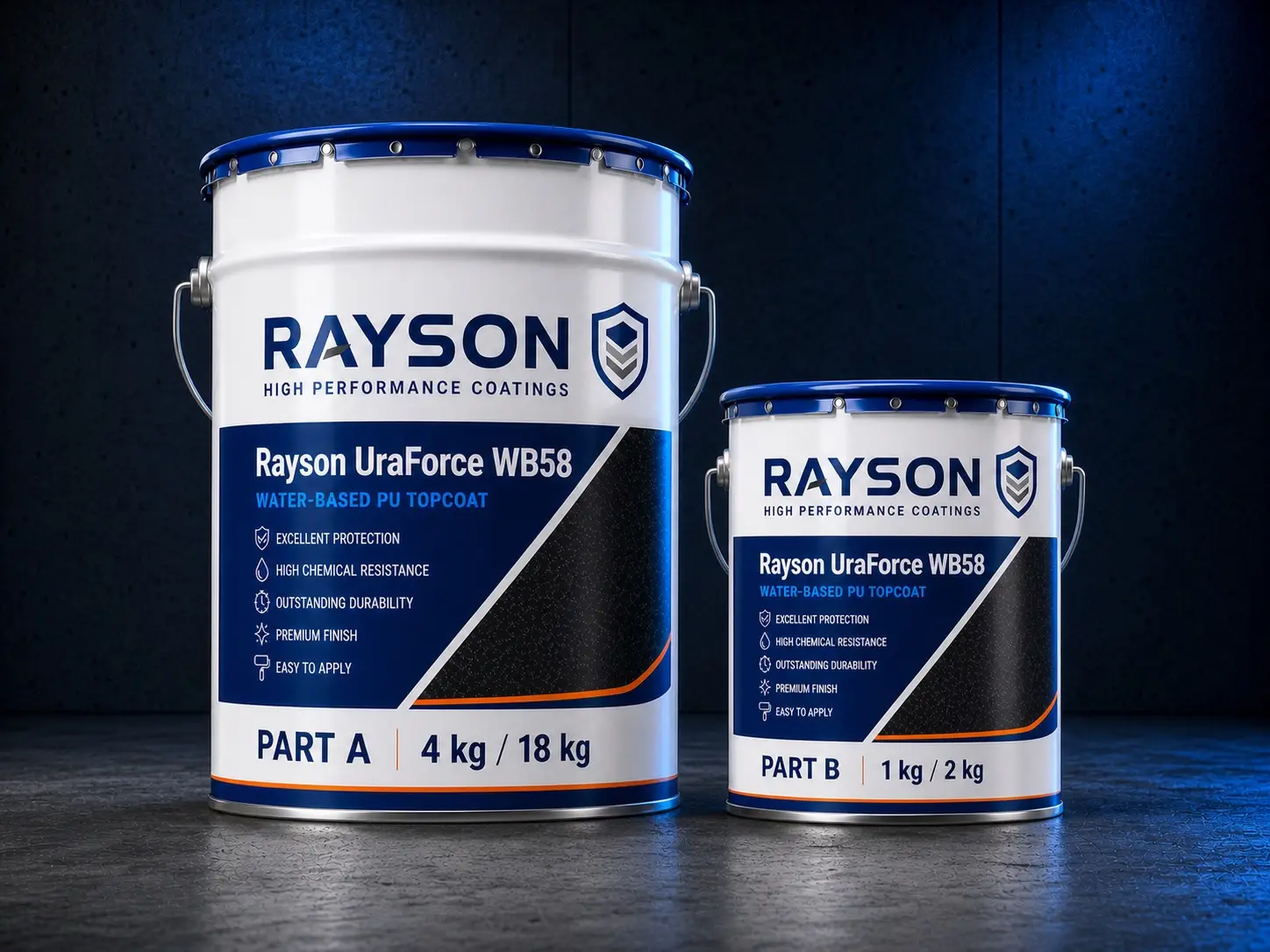
UraForce WB58 water-based polyurethane topcoat, Part A and Part B pailsCOLOURED TOPCOAT / NON-YELLOWING

UraForce WB58

The coloured, water-based aliphatic polyurethane topcoat: UV-resistant, non-yellowing, washable, applied in at least two coats over the sealed floor. The plain-colour alternative to a flake finish, for floors and walls.

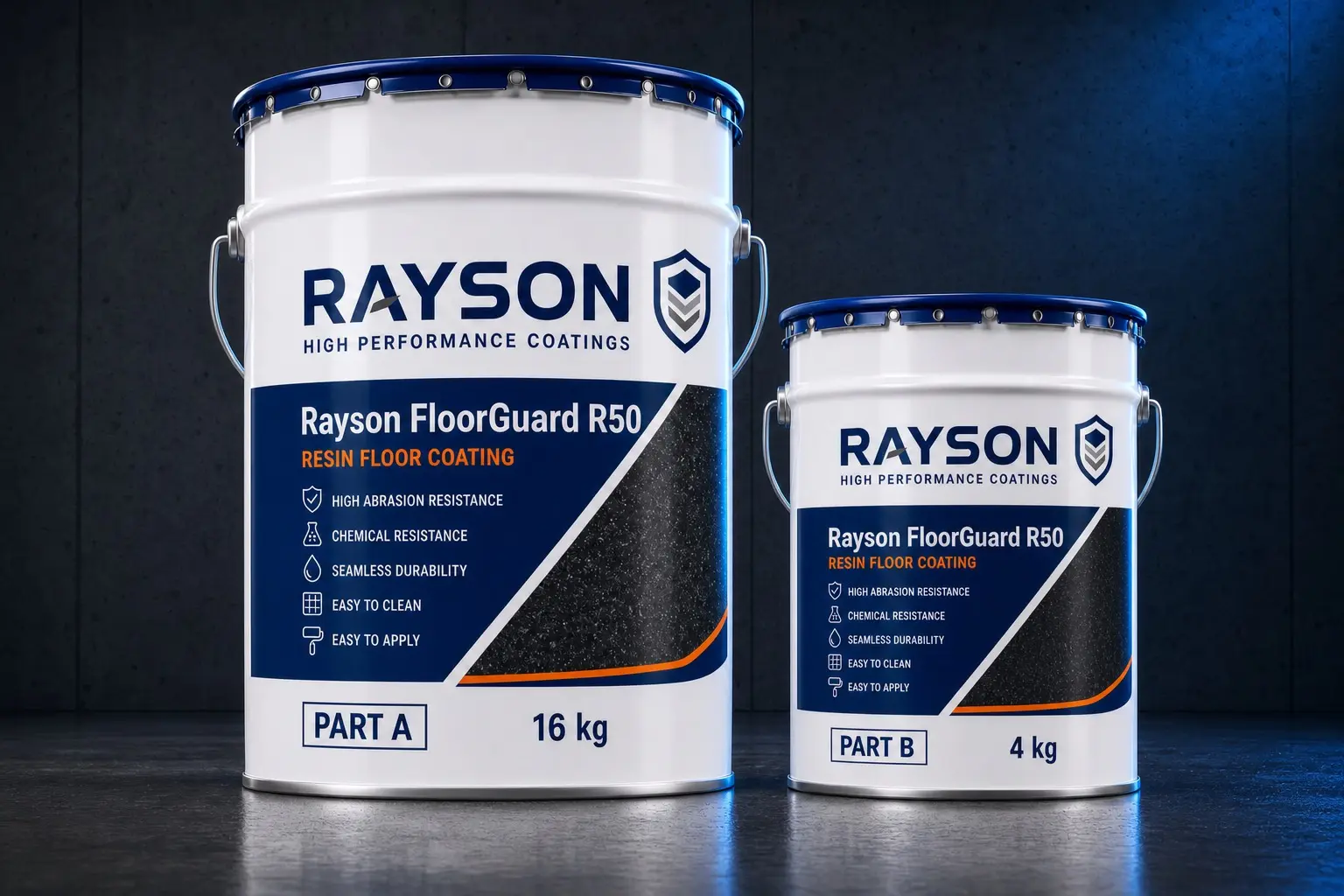
FloorGuard R50 solvent-free epoxy floor coating, Part A and Part B pailsAFTER HACKING / SOLVENT-FREE EPOXY

FloorGuard R50

Solvent-free, high-solids epoxy for the hacked-and-levelled screed: two coats at 0.3–0.5 kg/m² each over a Rayson epoxy primer, smooth and glossy plain or slip-resistant with a graded aggregate broadcast between the coats. Usable where ventilation is limited; not for sunlit surfaces without a polyurethane topcoat.

Ready for a useful first review?

Show us the toilet floor, from the door and up close.

Send a photo of the whole floor from the door, a close-up of the tiles and grout, the walls and skirting, and any stain on the ceiling below; the size; HDB or condo; and the finish you have in mind. We respond within one working day and arrange an applicator from our network to check the tiles and test a patch before the quotation. Applicators and contractors: ask for material pricing and the data sheets direct.

Frequently asked questions

Can you epoxy over bathroom tiles in an HDB flat?

HDB allows a new floor finish to be laid over one existing layer with adhesive, without a permit, if the total thickness including adhesive stays within 13 mm and the floor traps are not disturbed; epoxy is not named in HDB's guidelines, so ask HDB before unlisted work. Rayson's published systems are for concrete and cement screed and none is specified for glazed tiles, so an overlay is a job for the applicator to assess: the tiles must be sound with no hollow spots, degreased, abraded and primed, the grout lines filled, and the falls to the drain kept.

Is an epoxy toilet floor slippery when wet?

A smooth gloss epoxy is slippery when wet or soapy, which is why it is not the finish for a bare toilet floor. Broadcasting fine aggregate between coats or using a textured topcoat gives grip at some cost to easy cleaning. Singapore measures slip resistance under SS 485:2022, where a wet pendulum test gives a class from P0 to P5, and NEA's code of practice recommends an R10 rating for public toilet floors. Ask the applicator for the wet slip rating of the finish, not just the words anti-slip; no rating follows from a product name.

Does epoxy fix a leaking toilet?

No. An epoxy or flake overlay seals the surface and the grout lines, which is why it stops water sitting in the grout, but it is not a waterproofing membrane. It can crack at wall junctions and at the drain, and it cannot stop water already in the slab or the pipes. A toilet that leaks to the flat below needs the membrane beneath the screed and tiles rebuilt; see toilet and bathroom waterproofing.

How long before I can shower?

The homes guide's timings: on a prepared screed, a roller-applied epoxy is two coats over a primer, usually two days on site, walkable the next morning. A toilet floor then stays dry until the topcoat has cured fully per its data sheet before it takes standing water and heavy items. Get the return-to-use day and the first-shower day in writing from the applicator before the work is booked; do not assume same-day use.

Will it yellow?

Standard epoxy yellows and chalks in sunlight, and Rayson's product data says the same of HydroShield WE40. A toilet with a window, or any sunlit room, therefore takes a non-yellowing aliphatic polyurethane topcoat: water-based UraForce WB60 (clear) or WB58 (coloured) do not yellow and are low-odour, which suits an occupied home.

What about the walls and skirting?

Many homeowners have the floor carried up the walls to about shoulder height with a coved skirting at the junction, so there is no grout line for water to sit in. The cost guide's figures put walls at about S$1,150 more per toilet, and the detailing at the coved skirting and the drain decides the price more than the area does. UraForce WB60 and WB58 are specified as hygienic washable coatings for walls as well as floors.

How long does it last?

The homes guide gives no single lifespan: it depends on the substrate, the application and the use. Sweep grit before it scratches the finish and mop with a neutral cleaner; avoid abrasive pads, strong solvents and acids; a textured anti-slip floor needs a soft brush rather than a mop. A worn topcoat can be recoated without removing the floor. Ask for care instructions and the written warranty terms with the quotation.

Do I need an HDB permit?

An overlay within 13 mm over one existing layer, with the floor traps untouched, needs no permit. Hacking and re-laying floor finishes needs HDB's renovation permit, applied for by a contractor on HDB's Directory of Renovation Contractors, and all renovation work in a flat, permit or not, must be done by such a contractor. Hacking and tile cutting run 9 am to 5 pm on weekdays only, and removal of finishes may take no more than three consecutive days. In a new flat, bathroom and toilet finishes cannot be replaced for three years from the block's completion.

Epoxy or new tiles?

On a floor already at screed, epoxy gives a seamless floor with no grout lines, laid in days; tiles are harder, cooler underfoot and easier to repair locally, with a longer track record in Singapore homes. If the old tiles must come out, both routes carry hacking and disposal at about S$3–8 per sq ft plus levelling. Tiles remain the safer choice where the floor will be wet every day unless the epoxy finish carries a real wet slip rating.

How much does an epoxy toilet floor cost in Singapore?

Advertised contractor prices seen on 26 September 2026 put a floor-only epoxy or flake overlay at roughly S$650–1,200 per HDB toilet, with walls adding about S$1,150 per toilet, because a small room is priced as a minimum-charge job rather than by area; lead-in prices of S$299–449 on classified listings are starting figures, not quotes. These are market ranges, not Rayson quotations. The full tables and their sources are on the epoxy flooring cost guide.

Flake, plain colour or clear?

Rayson's published floor systems are plain and broadcast industrial epoxies: HydroShield WE40 gives a coloured water-based epoxy, UraForce WB58 a coloured topcoat and WB60 a clear topcoat in gloss, satin or matt. Decorative flakes are chosen and supplied by the applicator; they are not a Rayson product.

Who does the work, and what does Rayson supply?

In a condo or landed home, Rayson quotes and contracts the job, and an applicator in the Rayson network inspects the floor, runs a test patch and installs it; the workmanship warranty is set out in Rayson's quotation. In an HDB flat, HDB's rules let only a contractor on its Directory of Renovation Contractors take on renovation work, so there a listed applicator quotes and contracts with you directly. Rayson formulates the water-based epoxy HydroShield WE40, the polyurethane topcoats UraForce WB60 and WB58, the solvent-free epoxy FloorGuard R50 and their primers in Singapore, has them made to its specification by its production partners, and publishes every data sheet.

The tiles are only slippery. Can that be fixed without a coating?

Yes, and it is a different job: a chemical anti-slip treatment of the existing tiles, with no hacking and no change to the floor. See the anti-slip floor treatment page, and the anti-slip cost guide for the published prices and HDB's EASE subsidy.

What should I send for a quote?

A photo of the whole floor from the door, a close-up of the tiles and grout, the walls and skirting, and any stain on the ceiling below; the size; whether it is an HDB flat or a condo; and the finish you have in mind (plain colour, flake or anti-slip). We respond within one working day and arrange the site visit by an applicator from our network.