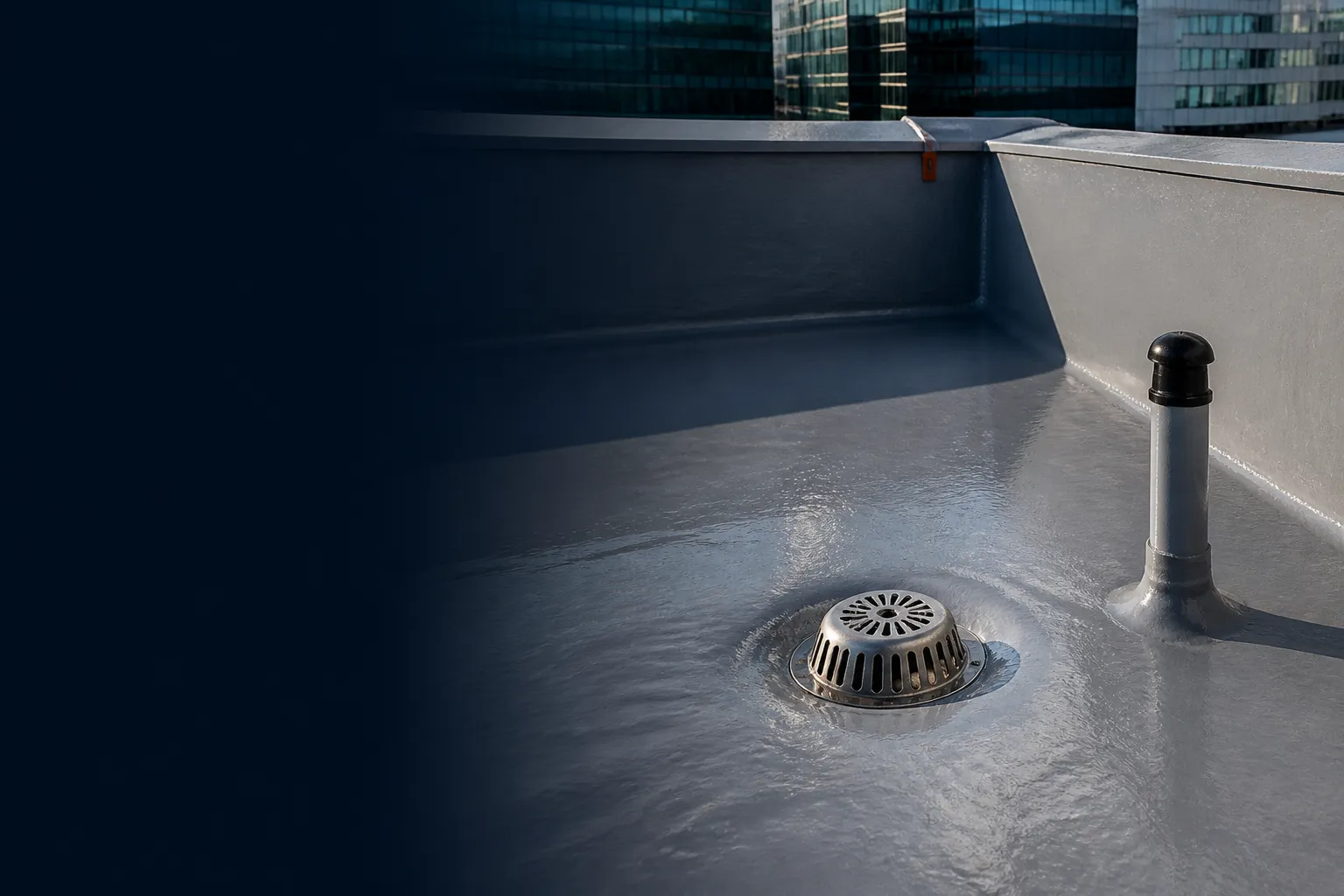
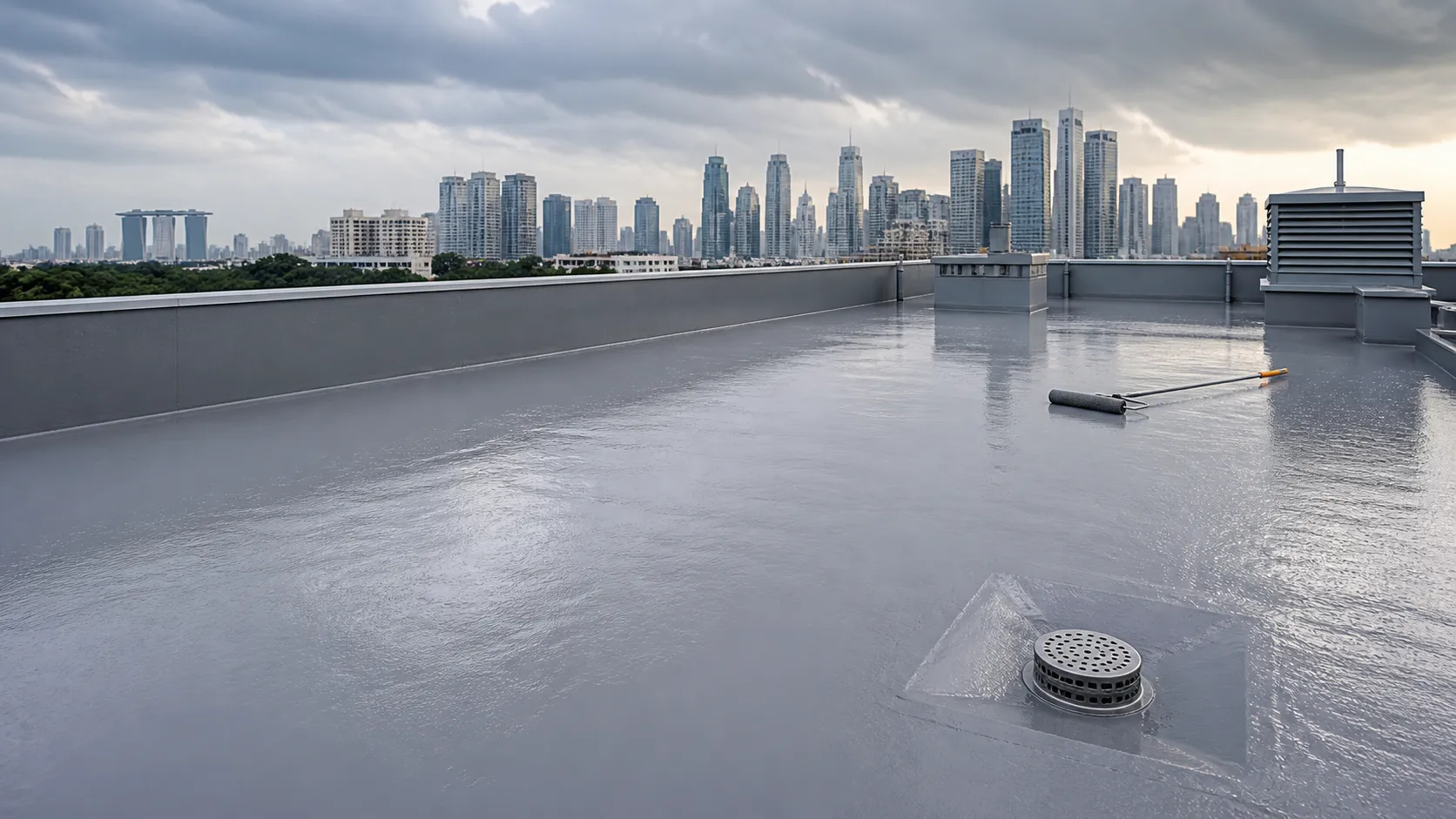
Completed seamless liquid-applied waterproof membrane with a detailed roof drain on a commercial Singapore rooftop
Roof Waterproofing Singapore

Roof waterproofing systems for Singapore’s heat, rain and complex details.

Leaks rarely begin in the open field. They begin at drains, upstands, penetrations and failed laps. Specify the system around the roof you actually have.

Exposed RC roofsExisting membranesMetal roofsDrains & upstands
The short answer

Waterproof the details first. Then protect the field.

The waterproofing route should be selected from the substrate, existing system, UV exposure, movement and drainage—not from a product name alone. Rayson SealForce systems provide liquid-applied routes for exposed roofs, wet details and specialist applications, supported by published technical data sheets.

Start with the roof

Where will water find the weakness?

Choose the roof condition. The image, technical priority and enquiry brief change with it.

01 / EXPOSED CONCRETE

Design around UV, drainage and movement.

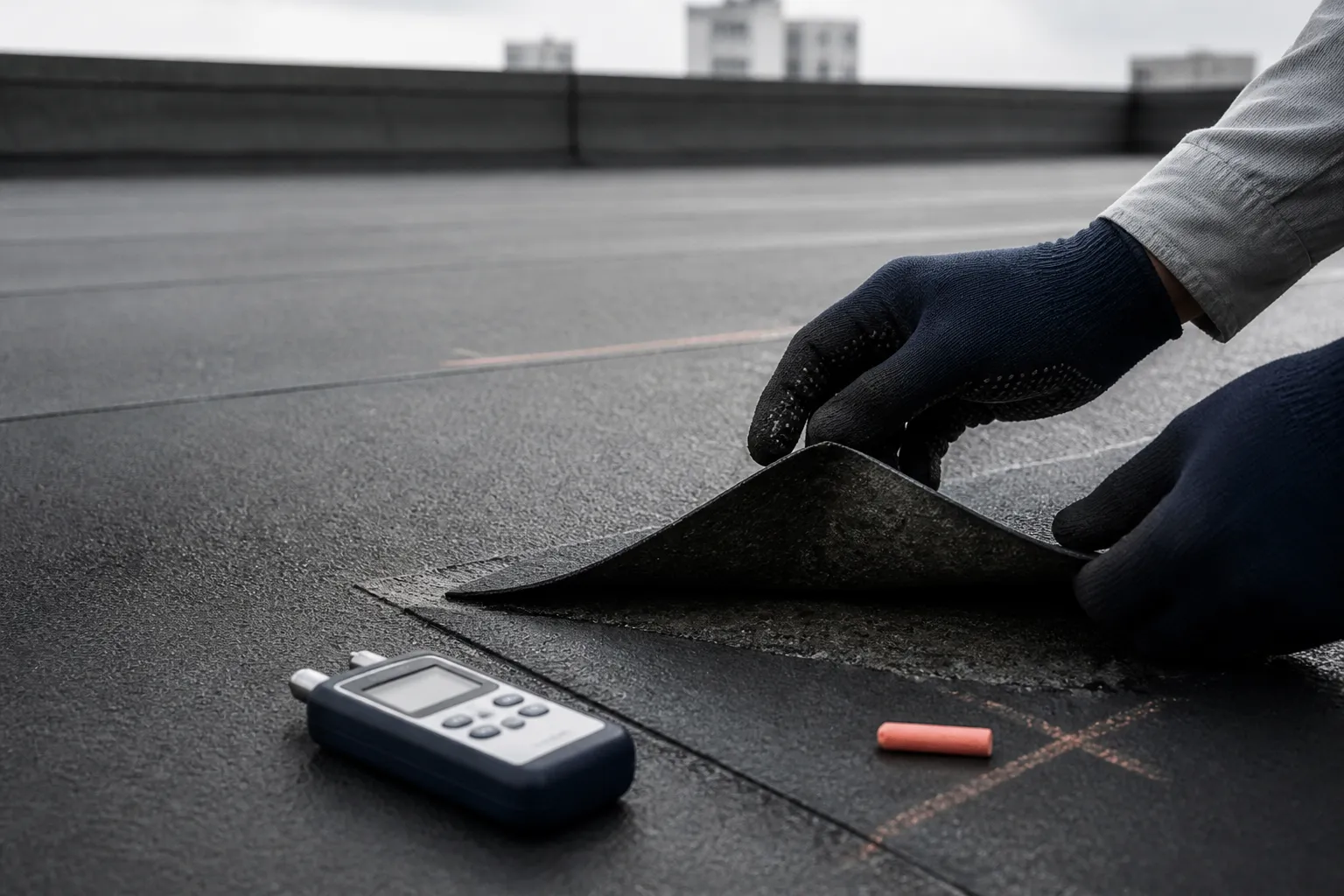
Survey cracks, falls and existing repairs before choosing the exposed membrane route. Ponding caused by failed falls should be corrected—not hidden under another coating.

  • Crack condition
  • Falls and outlets
  • Exposed UV duty
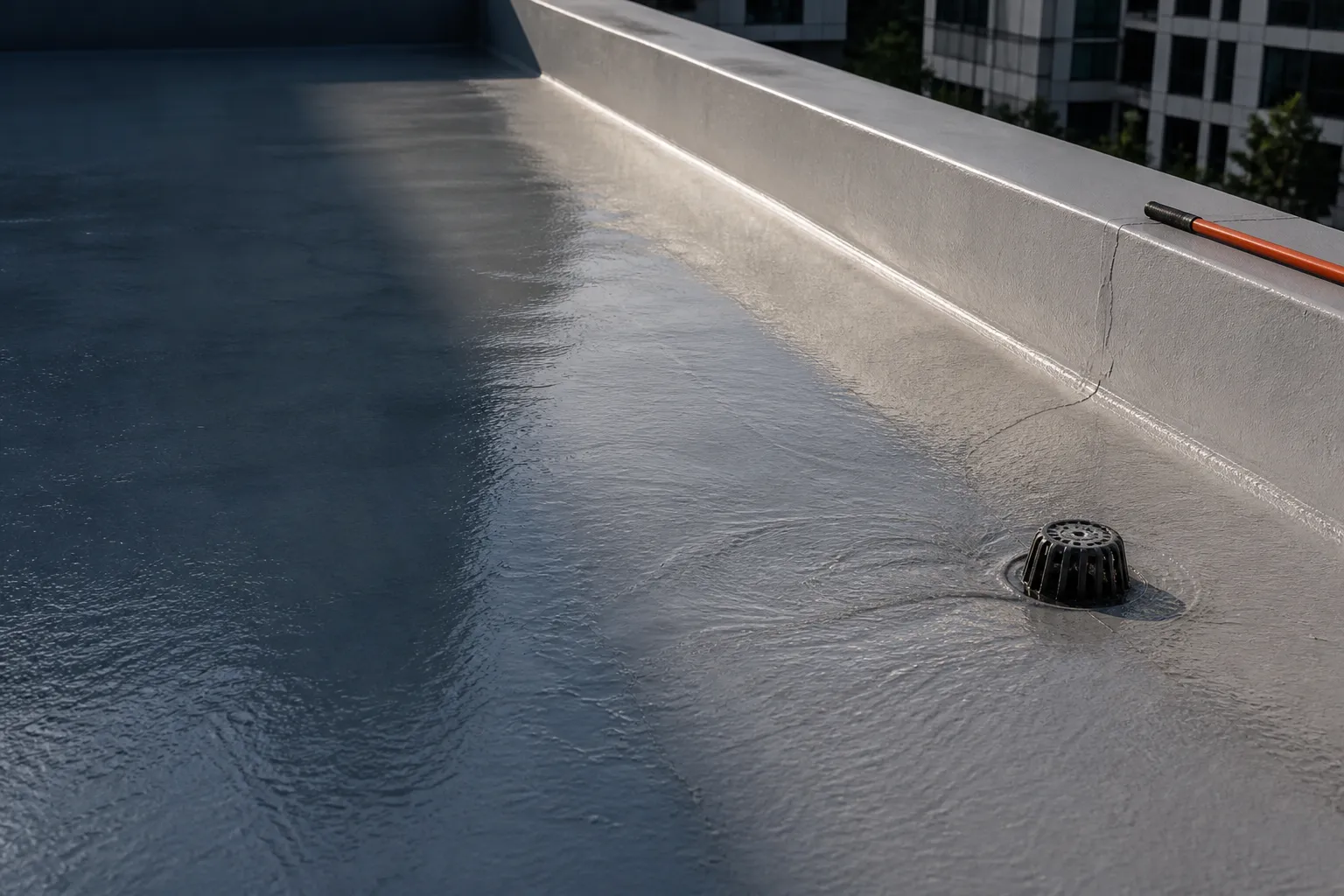
Coated concrete roof with parapet upstand and water directed toward a roof drain
Choose the route

Match the application method to the roof—not the other way around.

02 / SPECIALIST PROGRAMME

Specialist spray-applied route

A specialist application route for projects where equipment, access and programme support it.

Starting product
SealForce SP200
View the complete technical comparison
DecisionCold-applied coatingSpray-applied routeSheet membrane
FieldSeamlessSeamlessLapped sheets
Complex detailsApplied around geometryRequires controlled specialist applicationCut and detailed around geometry
Open flameNot requiredNot requiredDepends on the selected sheet system
Selection basisSubstrate, geometry, condition, access, occupancy and project programme
System build-up

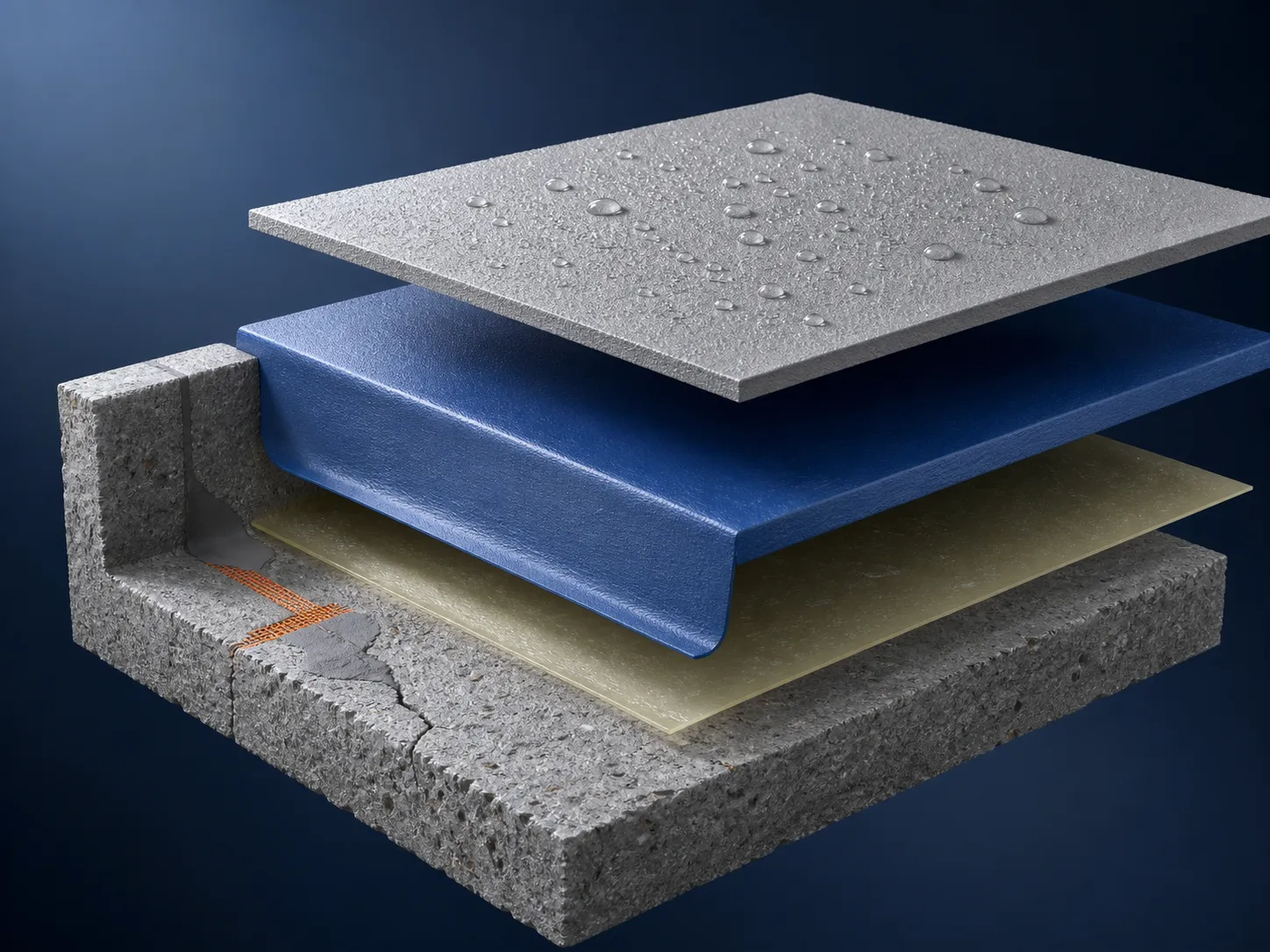
Five decisions create one continuous line of defence.

Resolve the substrate and details first, then build the compatible waterproofing route. The illustration explains the roles—not a universal specification.

Review surface-preparation principles
Exploded roof waterproofing build-up showing concrete, repair, preparation, membrane and exposed surface layers
Concept build-up. Confirm the project-specific sequence against the selected product TDS.
  1. 01SurveySubstrate, moisture and drainage
  2. 02RepairCracks and unsound areas
  3. 03DetailDrains, upstands and penetrations
  4. 04MembraneContinuous compatible field
  5. 05VerifyCoverage, continuity and records
Published system evidence

Choose the role. Then read the product data.

These are preliminary directions. Confirm substrate preparation, compatibility, application and timing against the current TDS before work begins.

Ready for a useful first review?

Show us the roof before the next storm does.

Send wide roof photos, close-ups of leaks and details, the approximate area and your work window. We will review the starting conditions and respond within one working day.

Frequently asked questions

What is the best roof waterproofing coating for Singapore weather?

The correct route depends on the existing substrate, UV exposure, movement, ponding risk and condition of drains, upstands and penetrations. For exposed roofs, Rayson SealForce RC40 is a cold-applied aliphatic polyurea membrane designed for UV-exposed applications. Confirm the complete substrate preparation and build-up against the product TDS and a roof assessment.

Can you waterproof over an old membrane without stripping it?

A sound and compatible existing membrane may be suitable for an overcoating route, but failed, debonded or waterlogged areas still need to be identified and removed or repaired. Adhesion, moisture and compatibility should be assessed before a system is selected.

Liquid-applied membrane or torch-on membrane — which is better?

Liquid-applied membranes create a seamless field and can simplify work around complex details without open-flame application. Sheet membranes remain familiar on large, regular areas. The better route depends on the substrate, roof geometry, occupancy, access and condition of the existing waterproofing.

What does cool-roof reflectance do?

A reflective exposed roof surface can reduce solar heat absorption at the roof. The relevance to a project depends on roof colour, construction and operating conditions. Review any stated product performance against the current SealForce RC40 technical data sheet.

How are cracks, drains and upstands treated before roof coating?

They are assessed and detailed before the field membrane is applied. Unsound material is removed, repairs are reinstated and transitions are prepared so the selected waterproofing system can remain continuous. The exact detail depends on crack movement, substrate condition and roof geometry.

How much does roof waterproofing cost in Singapore?

Cost depends on roof area, existing membrane condition, repairs, access, detail count, selected system and work window. Send wide roof photos, close-ups of leaks and details, and the approximate area for a project-specific review.

How long does a roof waterproofing project take?

Programme length depends on preparation, repairs, weather, area, access and the selected coating system. Return-to-service and overcoating intervals must be checked against the current product TDS and actual site conditions.
Not sure which system fits your project?

Tell us your surface, area and timeline — our Singapore technical team will recommend a practical system and price it fast.