One-part and ready to use — no mixing, no dilution, no solvent odour
Concealed waterproofing of toilets, showers and bathrooms before tiling
Rayson SealForce WB20 is a one-part, water-based, polyurethane-modified waterproofing membrane for toilets, showers, bathrooms, balconies and other interior wet areas — rolled or brushed on in two coats and concealed beneath the tiles, screed or render.
Best for concealed waterproofing before tiling in toilets, bathrooms and wet areas, and beneath the screed on balconies and terraces, where a ready-to-use, low-odour membrane is wanted in an occupied home or building.
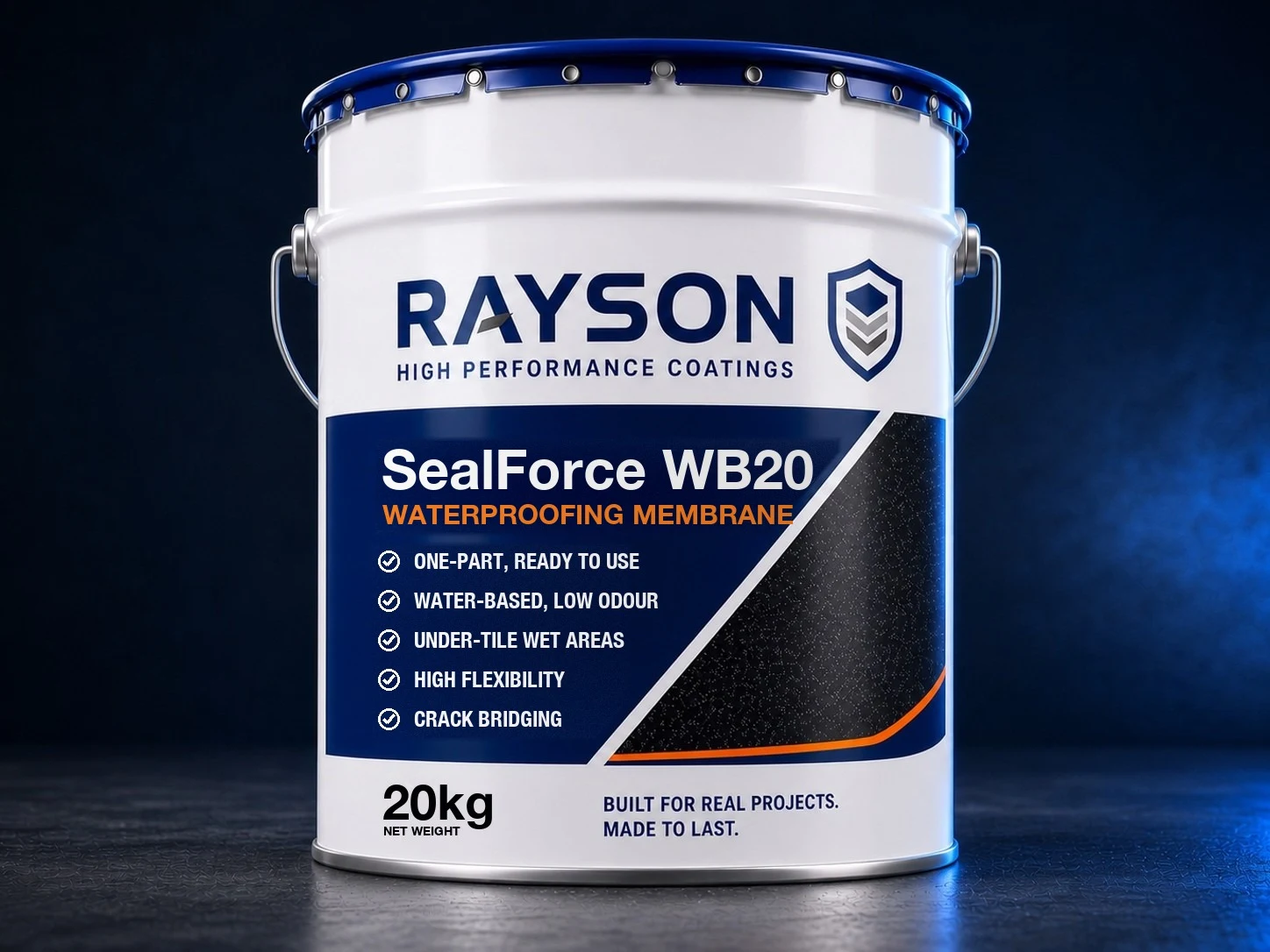
Rayson SealForce WB20 is a one-part, water-based, polyurethane-modified waterproofing membrane for toilets, showers, bathrooms, balconies and other interior wet areas — rolled or brushed on in two coats and concealed beneath the tiles, screed or render. Best for concealed waterproofing before tiling in toilets, bathrooms and wet areas, and beneath the screed on balconies and terraces, where a ready-to-use, low-odour membrane is wanted in an occupied home or building.
Concealed waterproofing of toilets, showers and bathrooms before tiling
Terraces and balconies beneath screed and tile finishes
Kitchens, laundries, yards and all other interior wet areas
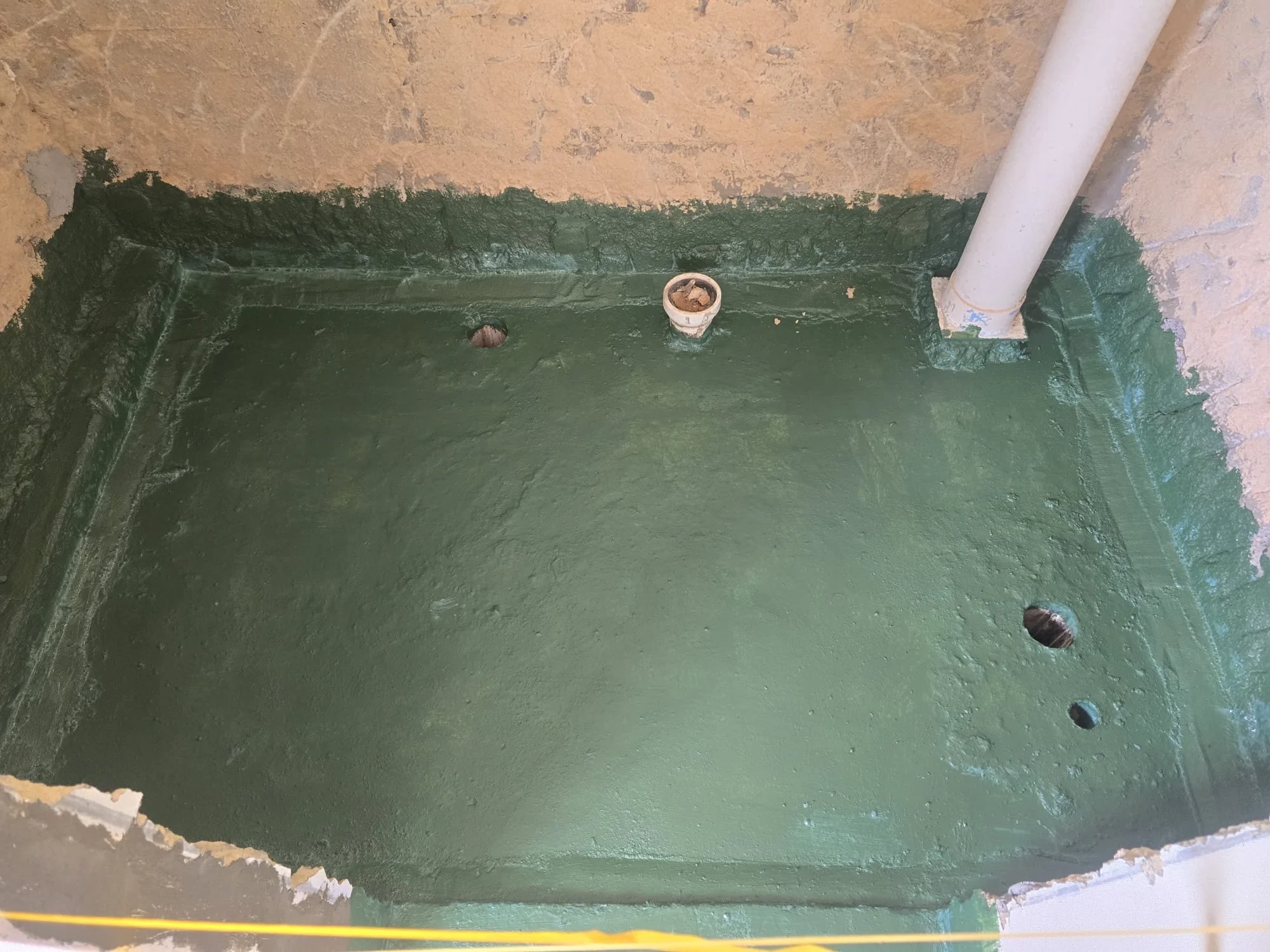
A pre-launch trial batch of SealForce WB20 on a hacked HDB toilet floor in Hougang — turned up the walls and detailed around the stack, outlet and pipe cores, then flood-tested the following day. Photographed by Rayson, September 2026.
This sequence supports early planning. It does not replace the current Technical Data Sheet, approved method statement or project-specific technical review.
Concrete floors and walls at least 28 days old
One part — stir gently before use and apply straight from the pail; do not dilute and do not add sand
Recommended methods: Roller, Brush. Confirm coat count and thickness for the project.
Touch dry in under 60 minutes; first coat dry in 1–2 hours, second coat in about 4 hours depending on temperature and humidity; ponding test 24 hours after the final coat
This diagram explains a typical system position, not a fixed specification. Primer, body coat, finish, thickness and detailing must be confirmed for the project.
Rayson SealForce WB20 serves as the standalone coating. Confirm the complete build-up against the substrate, exposure and project requirements.
Review primers, body layers, finishes or specialist components connected to this product.
These current product figures support early selection. Confirm the final build-up, quantity and application conditions against the Technical Data Sheet and site conditions.
Approximately 0.56 kg/m² per coat at 0.4 mm wet film (about 1.8 m² per kg); a 20 kg pail covers about 36 m² per coat, or about 18 m² at two coats, subject to substrate condition
One part — stir gently before use and apply straight from the pail; do not dilute and do not add sand
Touch dry in under 60 minutes; first coat dry in 1–2 hours, second coat in about 4 hours depending on temperature and humidity; ponding test 24 hours after the final coat
20 kg plastic pail
These links continue the comparison; they are not automatic substitutes. Confirm the substrate, exposure and complete build-up before selection.
Send the area, substrate condition, expected traffic or exposure, required finish and programme. The technical team can help review the system build-up and estimated quantity.
No. It is a one-part membrane applied directly to a sound, clean, dry concrete or rendered substrate — there is no separate primer in the system. Preparation does the primer's job: remove loose material, curing compounds and protrusions, and let old concrete dry fully after washing.
At least two coats at 0.4 mm wet film each, rolled or brushed straight from the pail, the second 1–2 hours after the first. Add a third coat where the film is uneven or pinholes remain. A 20 kg pail covers about 36 m² per coat.
Only after the ponding test, 24 hours after the final coat, has proved the membrane — and always through the screed, render or tile bed that protects it. The membrane is not a wearing surface and must never be left exposed.
WB20 is a one-part, water-based membrane for concealed wet areas — toilets, bathrooms and balconies beneath tiles — chosen for ease of use and low odour in occupied homes. RC30 is a two-component polyurea-based membrane with higher elongation and heat resistance for decks, roofs and heavier-duty wet areas.
No. SealForce WB20 is a positive-side membrane and must not be used where negative hydrostatic pressure is evident, such as a basement wall with groundwater behind it. Those conditions need a tanking or crystalline system designed for them.
Each coat is touch dry in under 60 minutes at laboratory conditions; the second coat goes on 1–2 hours after the first and is dry in about 4 hours. The flood (ponding) test is carried out 24 hours after the final coat, with light foot traffic only, and the screed or tile bed follows once the test has held. In a typical HDB toilet the membrane is one day of work and the test the next.
No. It is a concealed membrane applied to the prepared screed or concrete beneath the tiles, not a coating over them. If the bathroom has failed an HDB or HIP water test, water is already under the tiles and no surface-applied product reaches the failed detail: the tiles come up, the substrate is prepared, and WB20 is applied in two coats and flood-tested before re-tiling. The wet-area guide sets out when a no-hack repair is honest and when it is not.
The product by name — Rayson SealForce WB20 — two coats at 0.4 mm wet film each (about 0.56 kg/m² per coat), the turn-up height on every wall and at the door threshold, the detailing at the floor trap, pipe penetrations and wall–floor junction, a 24-hour flood test before tiling, and who carries which warranty: the applicator for workmanship, Rayson for the material, three years against manufacturing defects when applied per the TDS. A quotation that says only "waterproofing" cannot be compared with another.
About 8 to 12 kg for two coats over a typical 3 m² toilet floor with 300 mm turn-ups and a shower wall taken to 1.8 m — under one 20 kg pail, which covers about 18 m² at two coats. Detailing, a third coat on thin patches and wastage set the actual figure; the coverage calculator gives the theoretical quantity for any area.
Rayson does not publish a service-life figure for a concealed membrane: the tile bed protects the film, and it is the details that fail, not the field. What the data shows is retention — at least 1.0 N/mm² tensile strength and 120% elongation after ageing at 50 °C and after 72 hours in hypochlorite, ammonia or dilute acid. A bathroom lasts as long as its trap, penetrations and turn-ups were done correctly and flood-tested before the tiles went down.
SealForce WB20 is part of Rayson's upcoming waterproofing release, and a pre-launch trial batch has already been applied and flood-tested in a Singapore HDB toilet. Send the project details and your required date, and Rayson will confirm supply timing, quantities and, where you need one, an applicator in the Rayson network before you commit.
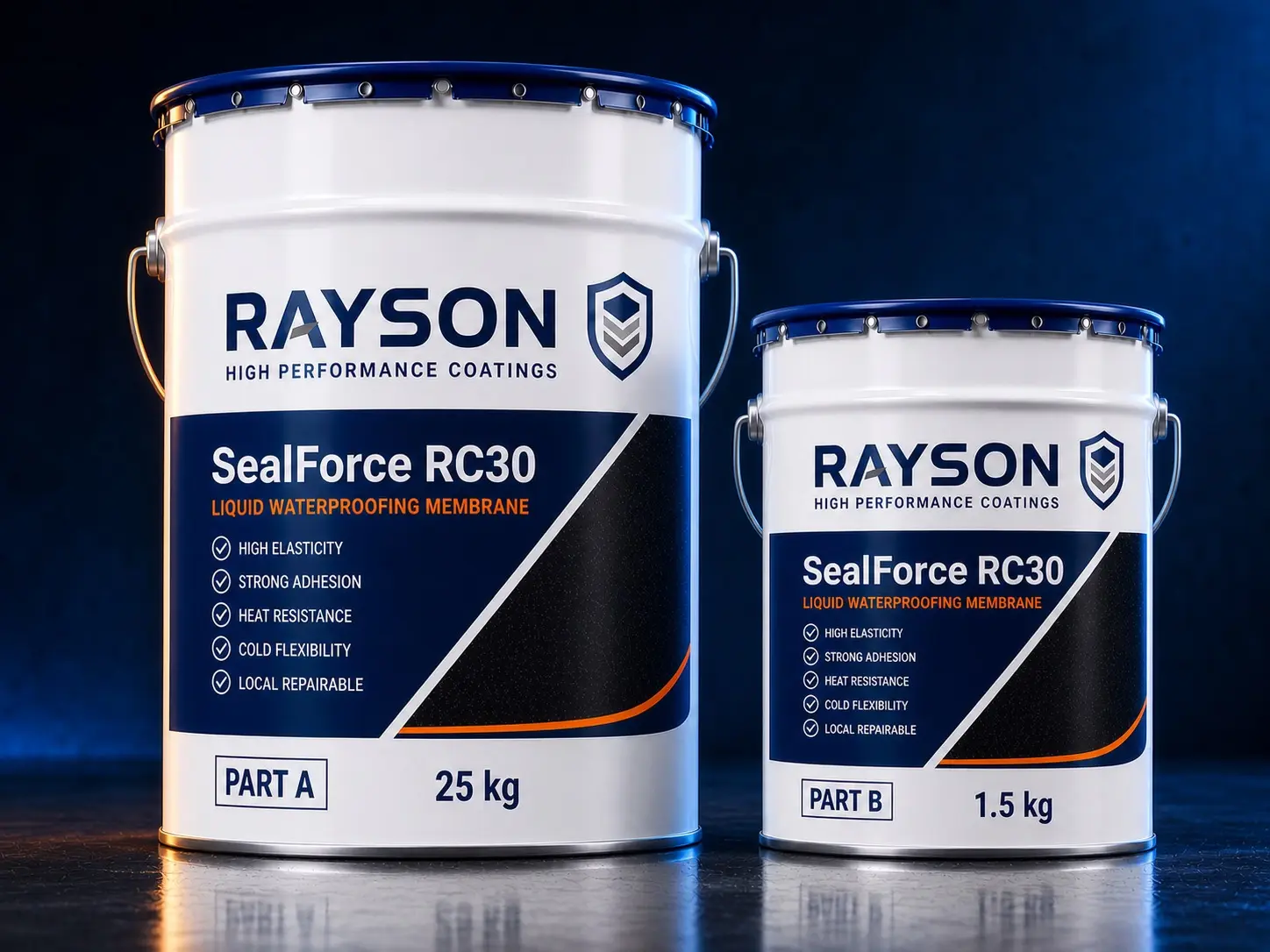
Two-part · 25 kg + 1.5 kg
Rayson SealForce RC30 is a two-component, roller-applied polyurea-based liquid waterproofing membrane — highly elastic and hydrophobic, bonding strongly to concrete, tile, metal and asphalt for wet areas, roofs and car parks.
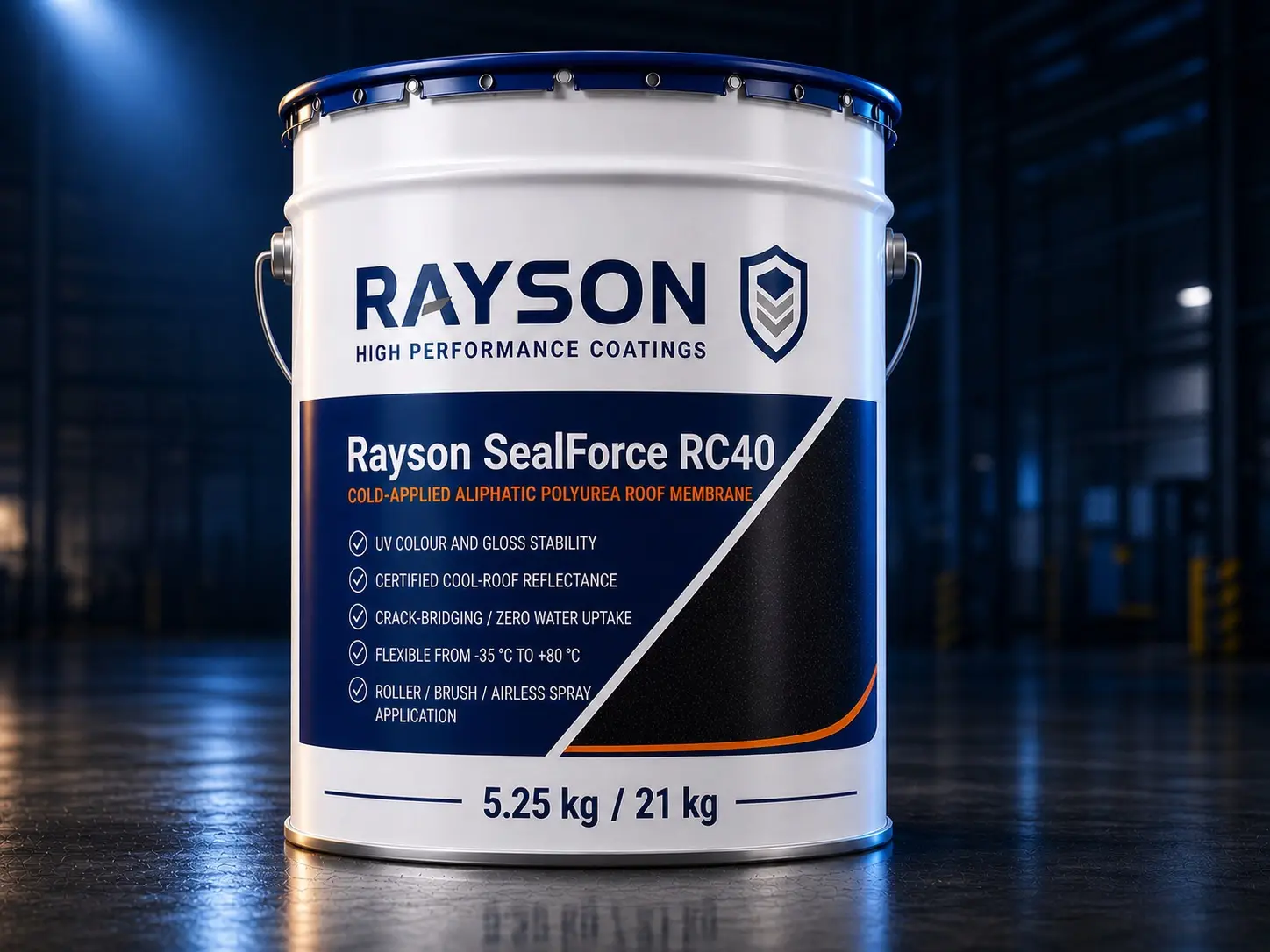
Two-component kit · 5.25 or 21 kg
Rayson SealForce RC40 is a two-component, cold-applied aliphatic polyurea waterproofing membrane for exposed roofs — roller-, brush- or spray-applied, UV-stable and walkable, with certified cool-roof reflectance.
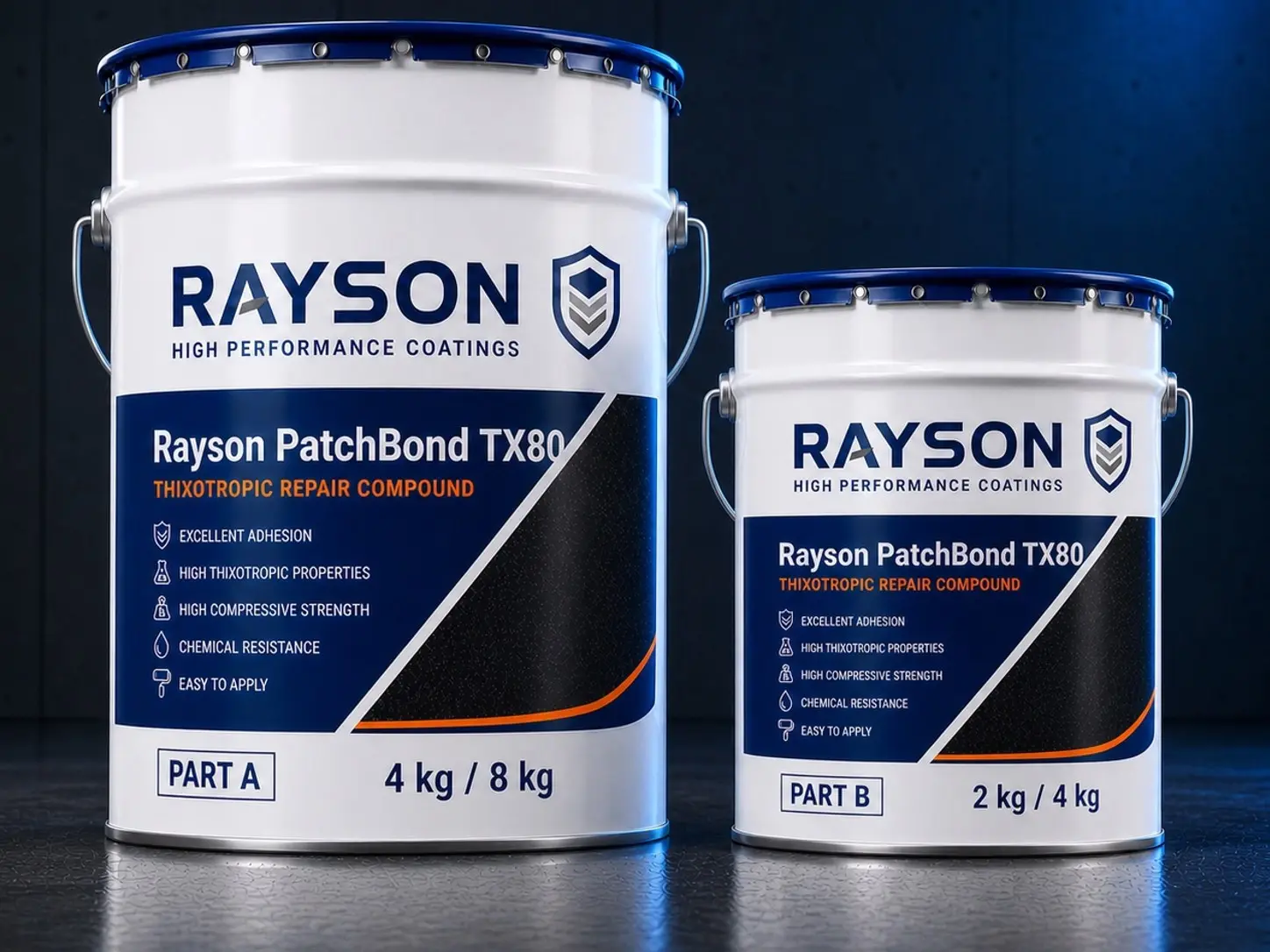
Two-part epoxy repair system
Rayson PatchBond TX80 is a two-component, solvent-free thixotropic epoxy adhesive and repair compound with exceptional sag resistance that bonds and fills on vertical, overhead and even mat-damp concrete surfaces.
Rayson assistant
Answers from Rayson's own product information
Guidance only — confirm specifications with the Rayson technical team.