One-part and water-based — applied cold from the pail, with no heat or flame
Roof waterproofing in new construction and refurbishment
Rayson SealForce AC10 is a one-part, water-based acrylic waterproofing membrane for exposed roofs, old roof tiles and external walls — applied cold, straight from the pail, by brush, roller or airless spray, and drying to a seamless, elastic, UV-resistant film.
Best for pitched, tiled and other roofs that drain freely, external walls, and detail-heavy roofs with many penetrations — where an economical one-part membrane is wanted that stays exposed to the sun and is not walked on.
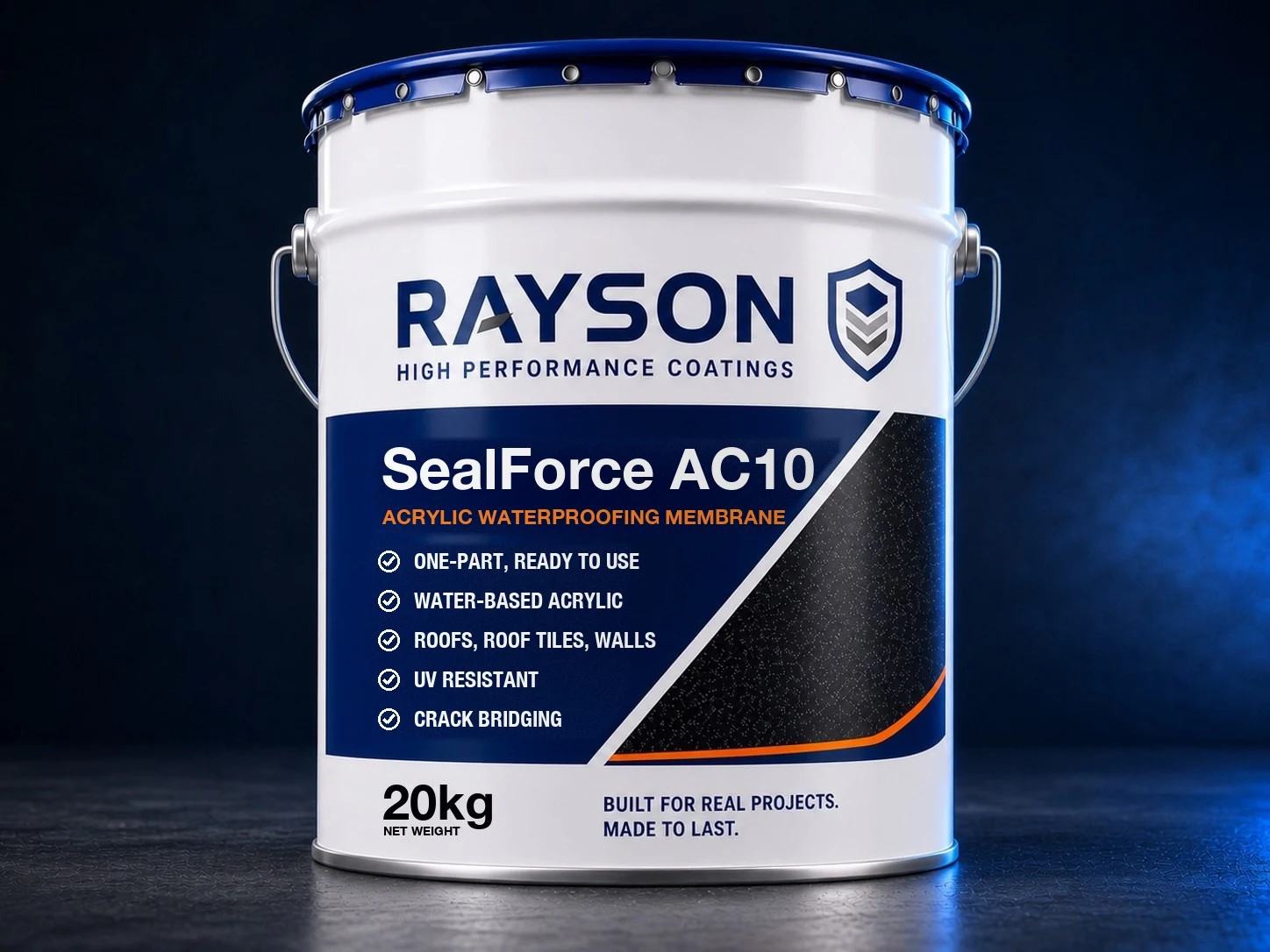
Rayson SealForce AC10 is a one-part, water-based acrylic waterproofing membrane for exposed roofs, old roof tiles and external walls — applied cold, straight from the pail, by brush, roller or airless spray, and drying to a seamless, elastic, UV-resistant film. Best for pitched, tiled and other roofs that drain freely, external walls, and detail-heavy roofs with many penetrations — where an economical one-part membrane is wanted that stays exposed to the sun and is not walked on.
Roof waterproofing in new construction and refurbishment
Waterproofing of external walls
Waterproofing and renovation of old roof tiles
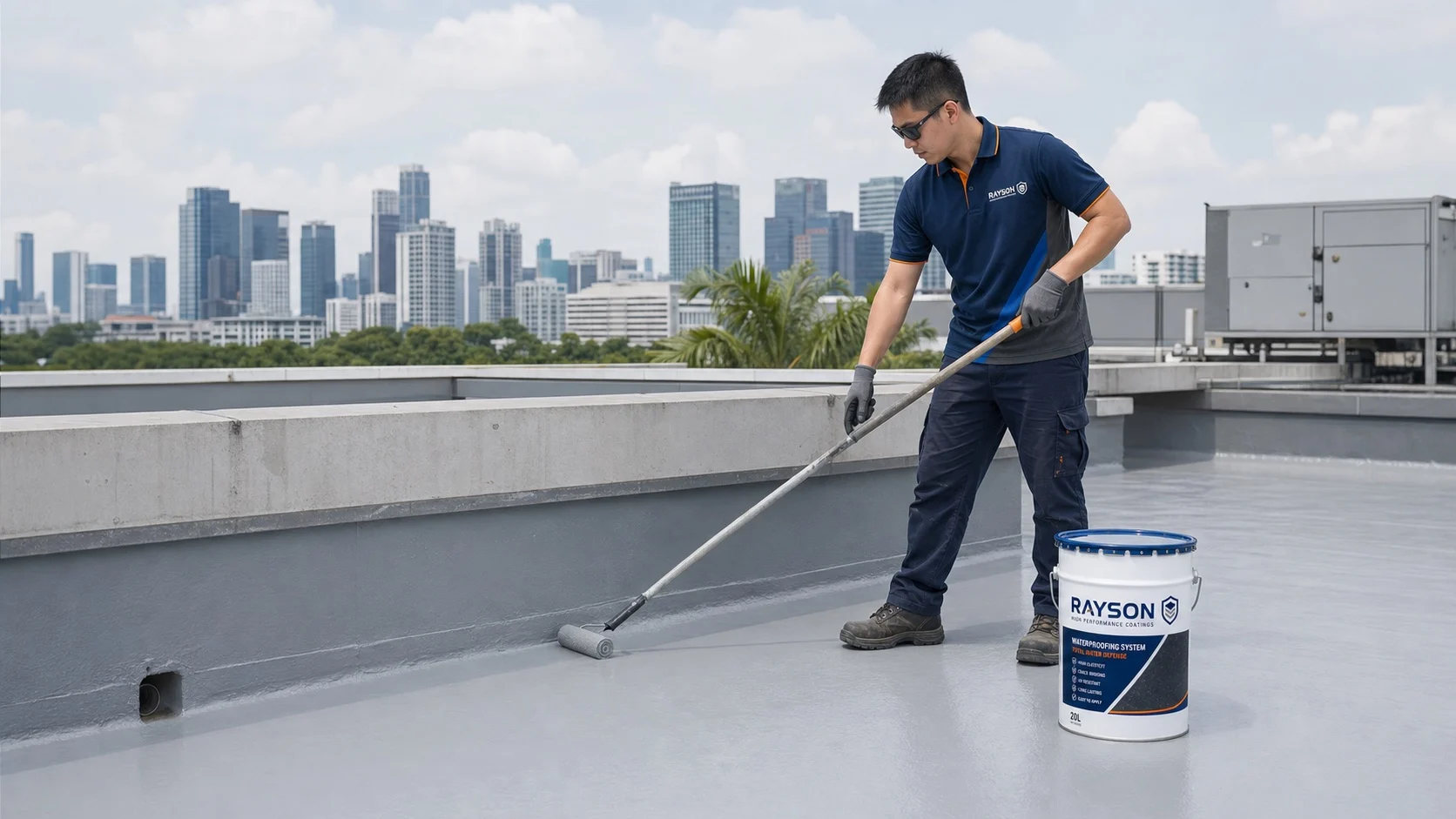
A one-part, water-based acrylic membrane for roofs that drain, old roof tiles and external walls — elastic, UV-resistant and permeable to water vapour.
This sequence supports early planning. It does not replace the current Technical Data Sheet, approved method statement or project-specific technical review.
Concrete and other cementitious surfaces, at least 28 days old and mechanically prepared
One part, ready to use — applied directly from the pail
Recommended methods: Brush, Roller, Airless spray. Confirm coat count and thickness for the project.
Allow 6–24 hours between coats, cleaning the surface before the next coat if longer; where reinforcing fleece is bedded into the first coat, allow at least 6 hours before the second. Drying takes longer where air movement is restricted; protect each coat from rain, damp and condensation until dry
This diagram explains a typical system position, not a fixed specification. Primer, body coat, finish, thickness and detailing must be confirmed for the project.
Rayson SealForce AC10 serves as the standalone coating. Confirm the complete build-up against the substrate, exposure and project requirements.
Review primers, body layers, finishes or specialist components connected to this product.
These current product figures support early selection. Confirm the final build-up, quantity and application conditions against the Technical Data Sheet and site conditions.
Approximately 0.7–0.8 kg/m² per coat; a 20 kg pail covers about 25–28 m² per coat — about 12–14 m² at two coats (roof coating) or about 8–9 m² at three coats (reinforced roof waterproofing), before allowances for porosity, surface profile and wastage
One part, ready to use — applied directly from the pail
Allow 6–24 hours between coats, cleaning the surface before the next coat if longer; where reinforcing fleece is bedded into the first coat, allow at least 6 hours before the second. Drying takes longer where air movement is restricted; protect each coat from rain, damp and condensation until dry
20 kg pail
These links continue the comparison; they are not automatic substitutes. Confirm the substrate, exposure and complete build-up before selection.
Send the area, substrate condition, expected traffic or exposure, required finish and programme. The technical team can help review the system build-up and estimated quantity.
Exposed surfaces that shed water: roofs in new construction and refurbishment, old roof tiles, external walls, and roofs crowded with penetrations, drains and roof lights. It is applied cold from the pail and left exposed. It is not for roofs where water ponds for long periods, or for surfaces people walk on.
As a roof coating, two coats at about 0.7 to 0.8 kg/m² each. As roof waterproofing, three coats with polyester reinforcing fleece bedded into the first. A 20 kg pail covers about 25 to 28 m² per coat, so about 12 to 14 m² at two coats or 8 to 9 m² at three. Porous or uneven surfaces and wastage take more.
AC10 is the one-part acrylic for roofs that drain freely and are not walked on: pitched and tiled roofs, external walls, and sound roofs that need an economical recoat. RC40 is the two-component aliphatic polyurea for flat roofs that pond, carry foot traffic or plant, or have to stay elastic from −35 °C to +80 °C. If water stands on the roof after rain, it is an RC40 roof.
Yes, once the roof itself is sound. Loose tiles are fixed, broken or missing ones replaced, and the roof pressure-washed and dried; AC10 then goes on in two coats. It renews and seals weathered tiles and lets them breathe, but it does not repair a leak: a roof that leaks at a broken tile, the ridge, a valley or a flashing needs that repair first.
Yes, external walls are one of its uses: the wall is cleaned, cracks and joints are repaired and reinforced, and AC10 is applied in two coats. In an HDB block or a condominium the external wall is common property, so the Town Council or the management corporation arranges the work; in a landed house it is the owner's.
Yes, on concrete, render, brick, stone and tiles: one coat of Rayson SealForce AP05 at about 0.15 to 0.3 kg/m², two on very porous surfaces, left until it has dried clear — at least 1 hour, and within 24 hours of the first AC10 coat. Metal is abraded to a bright finish and takes an anti-corrosion metal primer instead, and a sound old coating gets a trial area first.
Dry weather. Each coat has to be protected from rain, damp and condensation until it has dried, with 6 to 24 hours between coats. Apply between +10 °C and +35 °C, at no more than 75% relative humidity, on a substrate at least 3 °C above the dew point and with no more than 5% moisture. In Singapore that means planning the coats around the rain, above all during the Northeast Monsoon from November to January, and on an exposed roof working in the cooler morning or late afternoon, before the sun heats the surface past 35 °C.
No. It must not be used on roofs where water ponds for long periods, and it is not recommended for direct pedestrian traffic. Correct the falls so the roof drains, or use SealForce RC40, which is walkable and resists ponding water.
White, grey, green, clay brown, brick red, tile brown, red and black, with other colours on request. Applied colours are approximate to the chart, and the colour can shift slightly in direct sunlight without affecting how the membrane performs.
SealForce AC10 is part of Rayson's upcoming waterproofing release. Send the project details and your required date, and Rayson will confirm supply timing, colours, quantities and, where you need one, an applicator in the Rayson network before you commit.
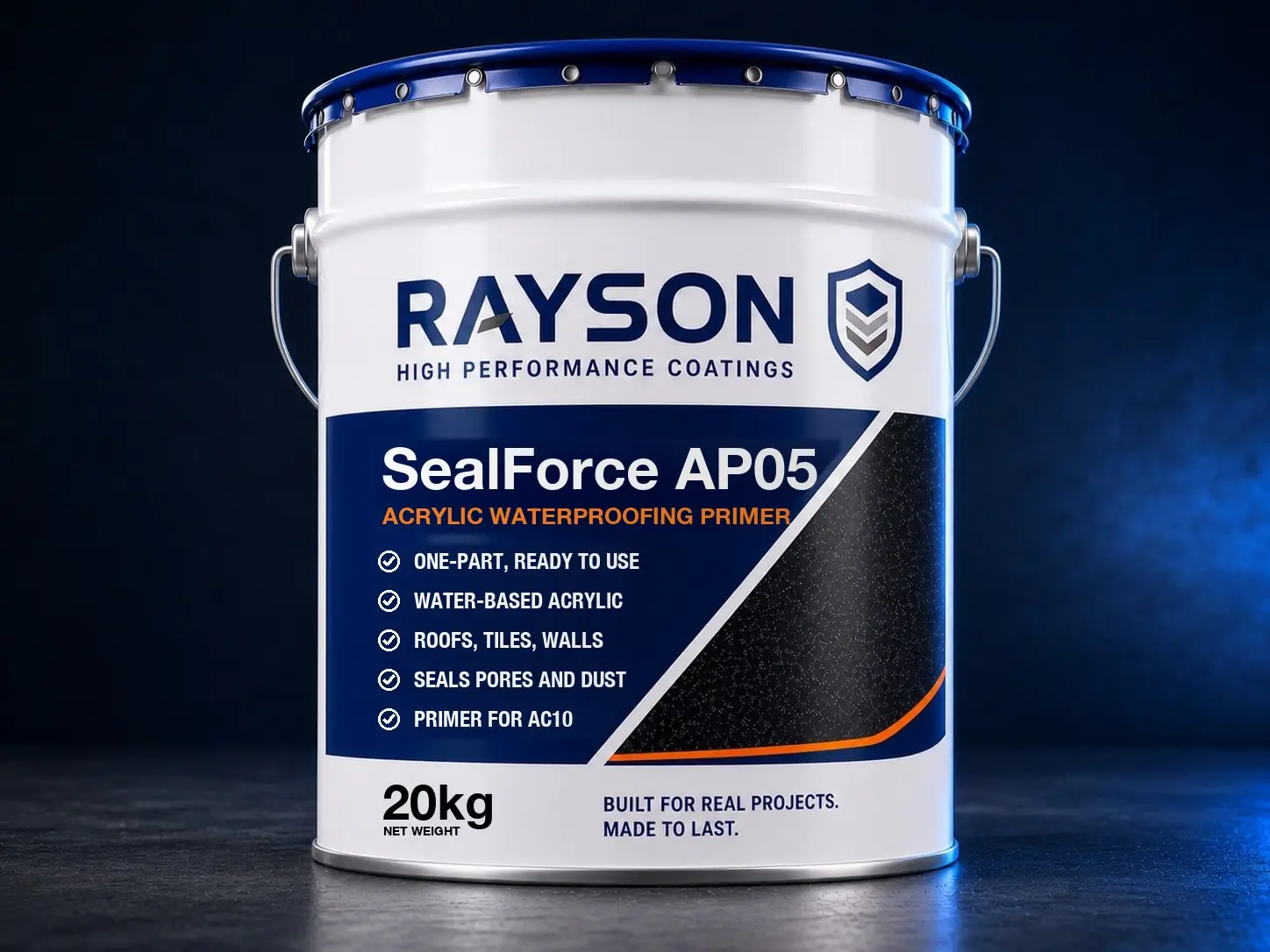
Acrylic primer · 20 kg
Rayson SealForce AP05 is a one-part, water-based acrylic primer for the SealForce waterproofing range — brushed or rolled onto concrete, render, brick, stone and roof tiles to seal pores, bind dust and give SealForce AC10 a firm surface to bond to.
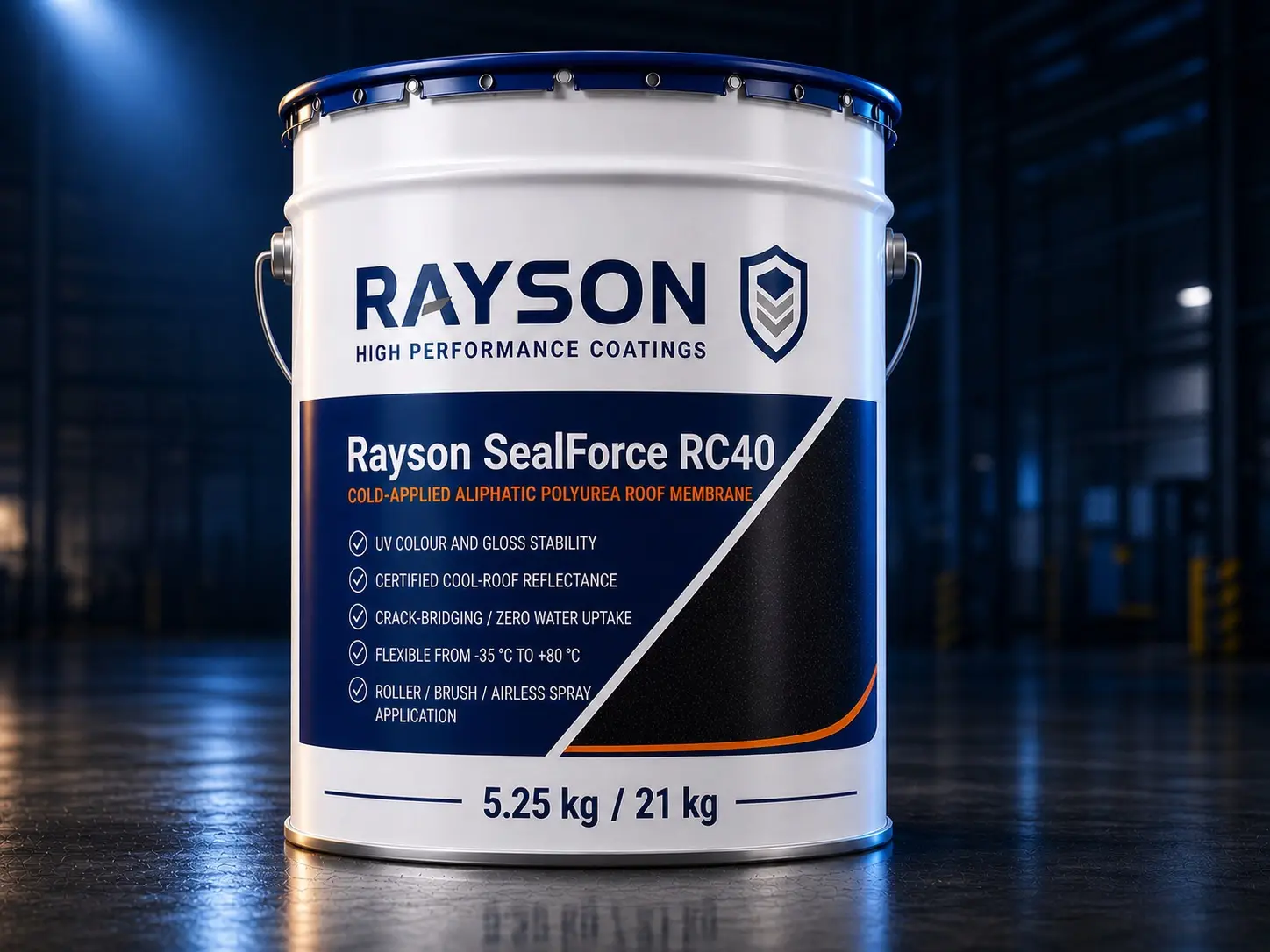
Two-component kit · 5.25 or 21 kg
Rayson SealForce RC40 is a two-component, cold-applied aliphatic polyurea waterproofing membrane for exposed roofs — roller-, brush- or spray-applied, UV-stable and walkable, with certified cool-roof reflectance.
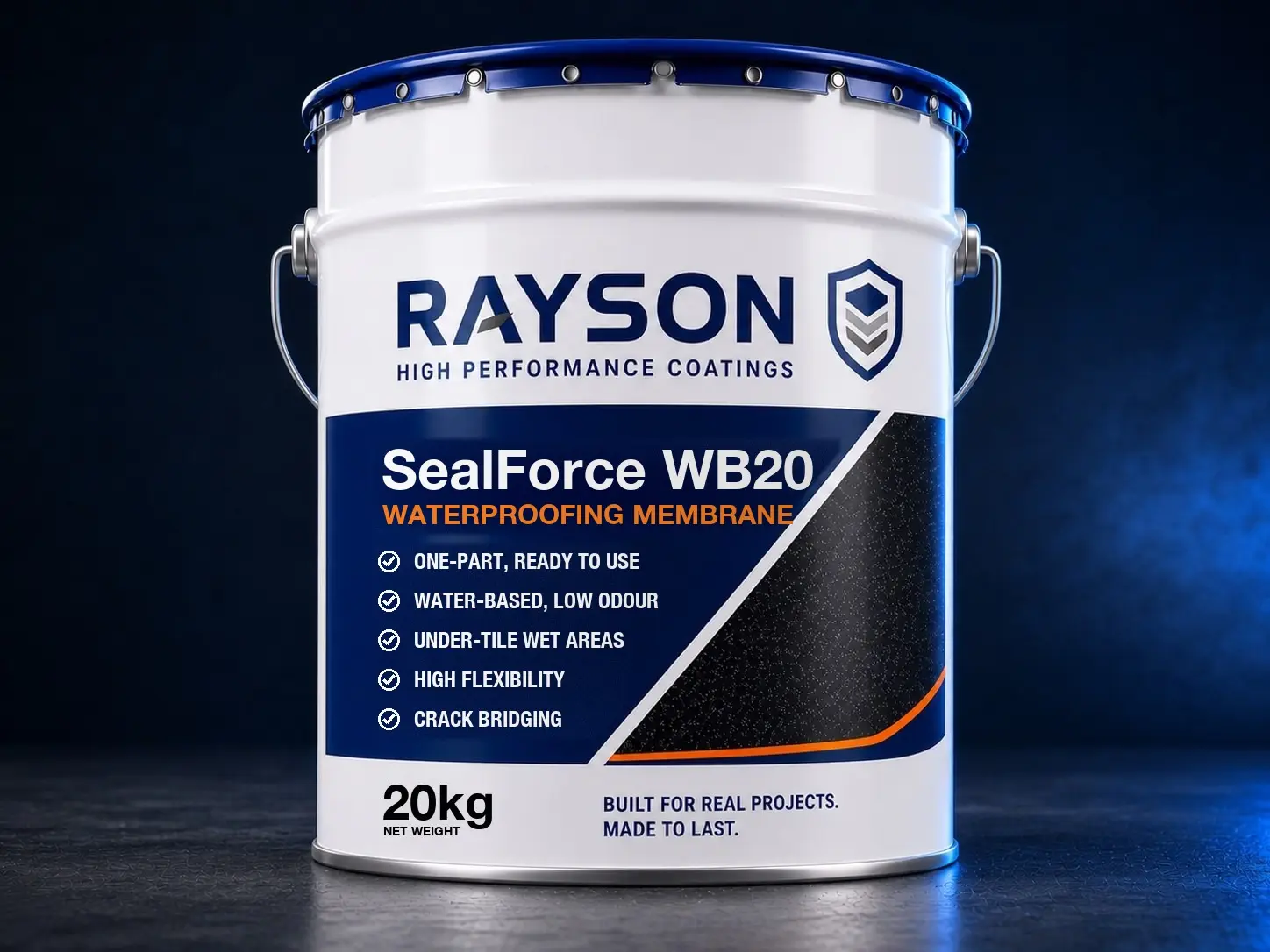
One-part · water-based · 20 kg
Rayson SealForce WB20 is a one-part, water-based, polyurethane-modified waterproofing membrane for toilets, showers, bathrooms, balconies and other interior wet areas — rolled or brushed on in two coats and concealed beneath the tiles, screed or render.
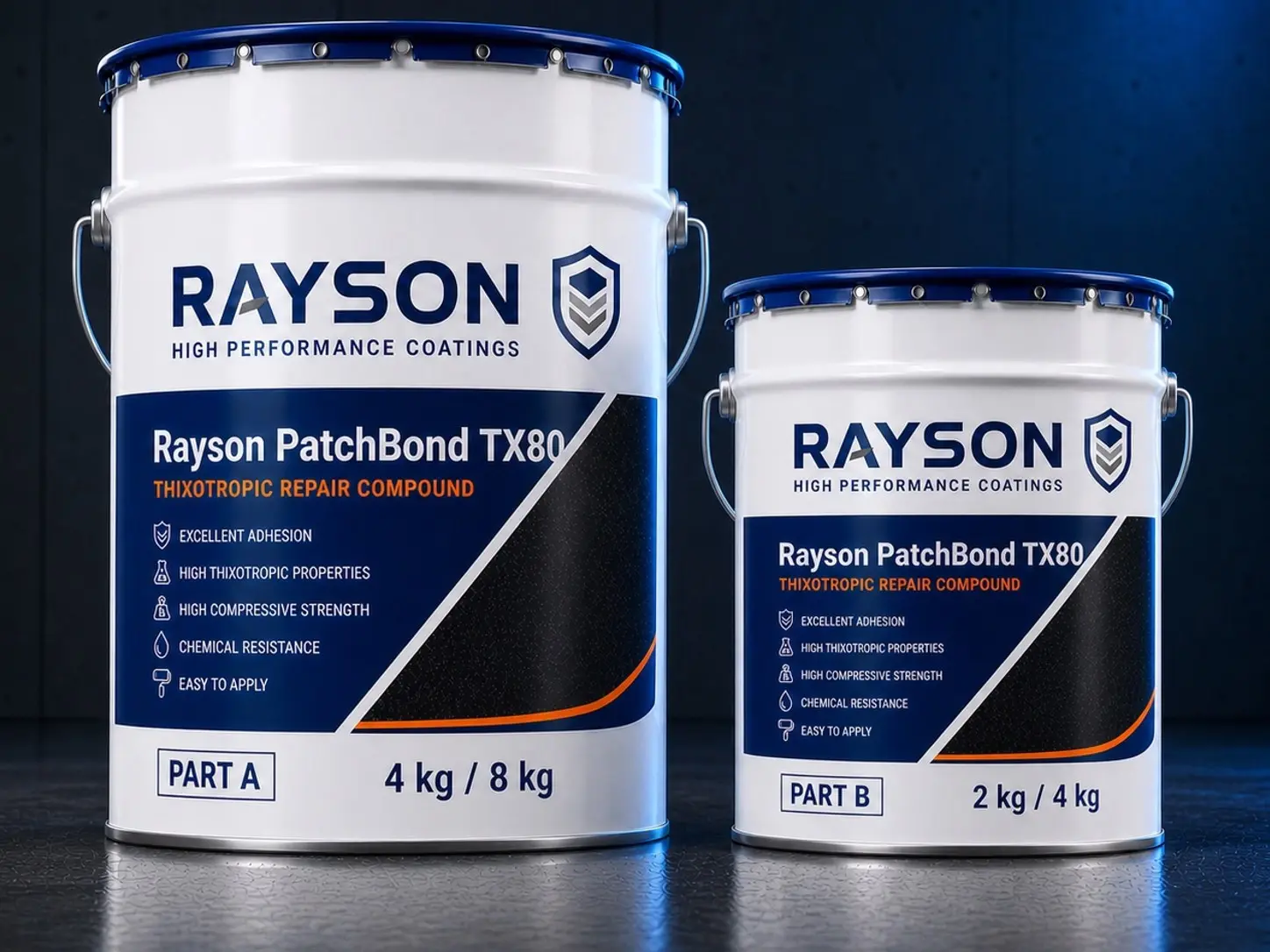
Two-part epoxy repair system
Rayson PatchBond TX80 is a two-component, solvent-free thixotropic epoxy adhesive and repair compound with exceptional sag resistance that bonds and fills on vertical, overhead and even mat-damp concrete surfaces.
Rayson assistant
Answers from Rayson's own product information
Guidance only — confirm specifications with the Rayson technical team.