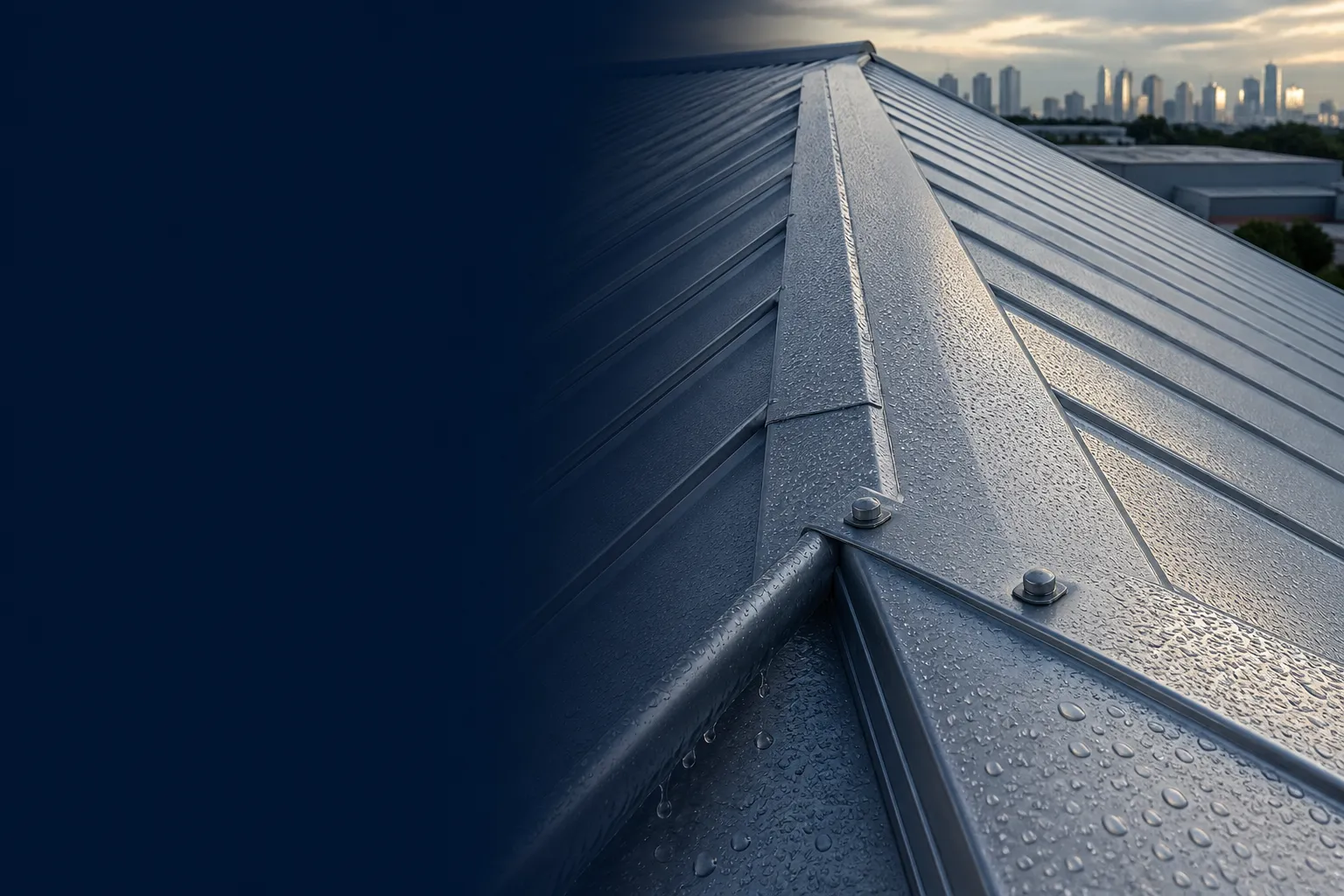
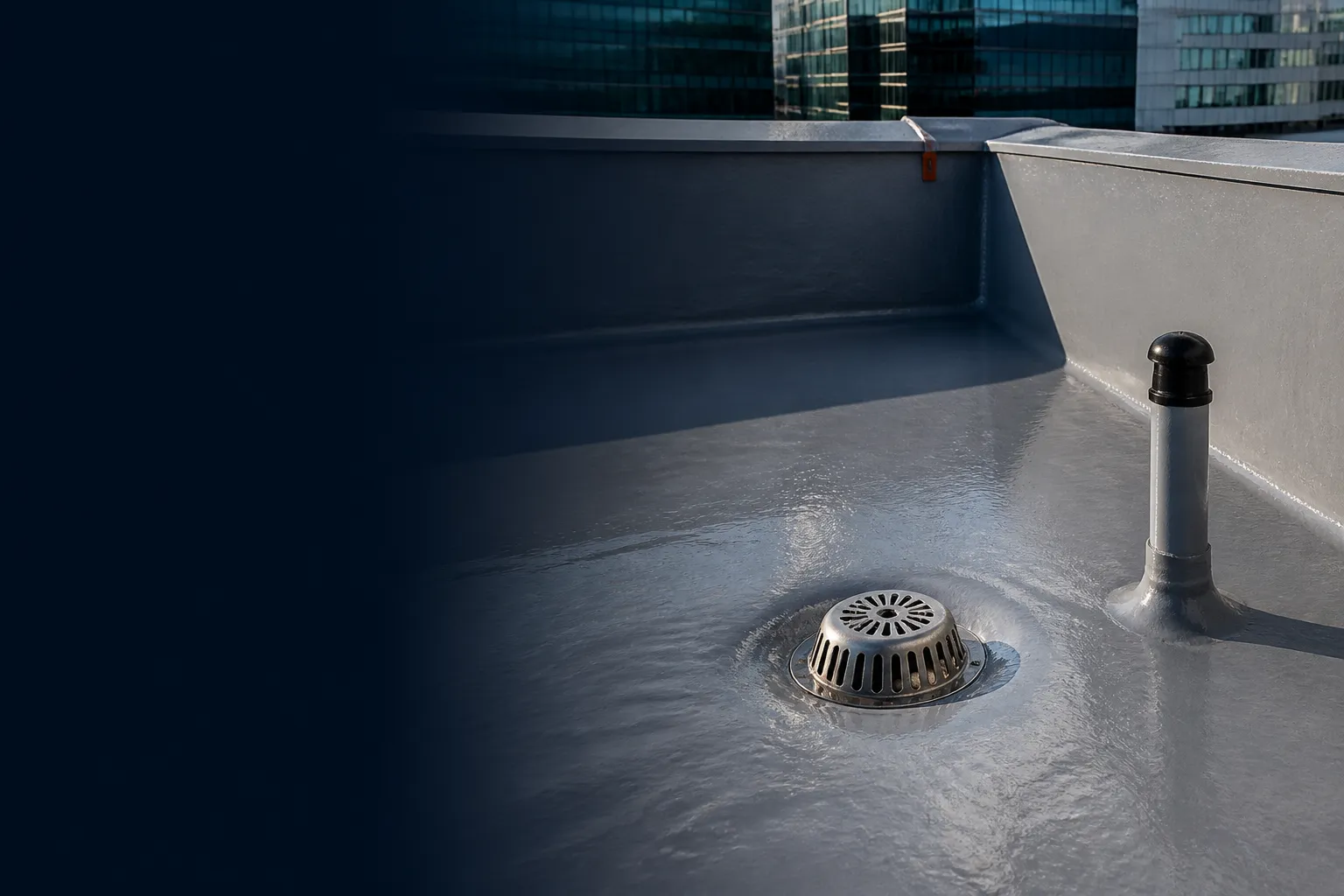
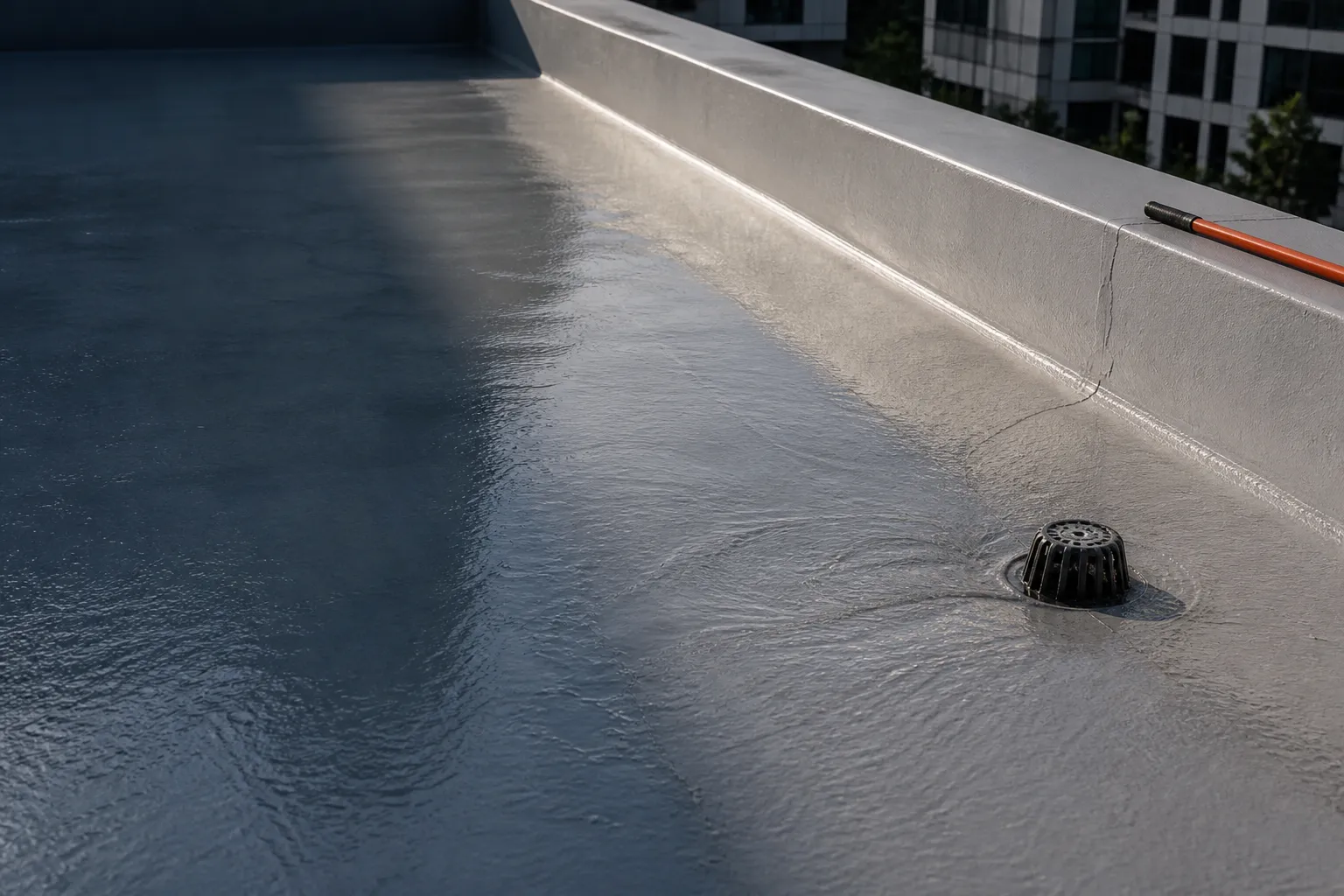
Illustration: a standing-seam metal roof over an industrial estate, wet after rain, with the seams and fasteners that are treated before waterproofing

Factories · Warehouses · Logistics hubs

Industrial roof waterproofing in Singapore.

Keep the stock dry. Keep the line running.

A metal roof that leaks at the laps, a gutter that overflows, an RC roof with plant on it, or a roof about to carry solar panels. Get it surveyed before choosing the system. Rayson supplies the membranes and quotes the job; applicators from its network phase the work around production.

First response within one working day · Repair scope follows site assessment

Reviewed: October 2026

Quote on WhatsApp

Factory or warehouse roof? WhatsApp three photos, the roof plan and the area.

  1. The roof from above: a drone shot or the plan
  2. The leak, lap, gutter or outlet, close
  3. The area in m² and the building type
WhatsApp the photos Prefer a form? Send the brief

Reply within one working day, Mon–Fri. Rayson quotes; an applicator from its network inspects and installs.

The short answer

Treat the laps and gutters first. Then cover the field, bay by bay.

An industrial roof in Singapore is waterproofed from the outside, bay by bay, so the floor below keeps running: the laps, fasteners, gutters and outlets are treated first, then a cold-applied liquid membrane covers the field. A profiled or standing-seam metal roof takes SealForce RC40, a UV-stable polyurea membrane, over the anti-corrosion primer specified for the sheet, with every seam reinforced; a metal roof that drains freely and is not walked on can take the one-part acrylic SealForce AC10 instead. An exposed RC roof takes RC40 at 1 to 1.2 kg/m² in two layers, rain-resistant after 3 hours and hard in 7 days. A Singapore home-services platform's roof guide, checked in September 2026, puts roof waterproofing at S$8 to S$50 per m² by system; an industrial roof is quoted on inspection from its area, seam length, gutters, penetrations and access. Rayson makes the membranes, publishes their data sheets and quotes the job; an applicator in the Rayson network surveys the roof and installs it in phases around production, under the workmanship warranty set out in Rayson's quotation, and Rayson warrants its SealForce polyurea roof membranes for five years.

Roofs
Profiled and standing-seam metal roofs; exposed RC roofs; box gutters; plant decks and roof penetrations
Cost, by system
S$8 – 50 per m² in a Singapore platform's 2026 guide; an industrial roof is quoted on inspection
Material per 1,000 m²
RC40 1,000 – 1,200 kg (48 – 58 sets); AC10 two coats about 1,360 kg (68 pails); plan area, before profile and wastage
Programme
RC40 resists rain after 3 h, hard in 7 days; AC10 4 – 8 h between coats; no hot works; phased bay by bay
Warranties
Five years on SealForce polyurea roof membranes from Rayson, plus the workmanship warranty in the quotation, both in writing
Who installs
An applicator in the Rayson network, quoted by Rayson; a tender that requires BCA CR13 goes to a CR13-registered applicator
Start with your roof

Five industrial roofs, five different first steps.

Each one ends at a membrane on a roof that drains. What changes is what has to be fixed first, and how the work is phased around the floor below.

01 / METAL

A profiled or standing-seam metal roof over a factory or warehouse

Leaks start at the laps, the fasteners and the rusted cut edges, not in the sheet. Rust and loose fixings treated, the seams reinforced, then RC40 over the metal primer; a freely draining sheet can take AC10.

See where metal roofs fail 
02 / RC ROOF

A flat RC roof of a flatted factory or logistics hub, with plant on it

Outlets, upstands and plinths make it an RC40 roof: one seamless film into every detail. A large open field can be spray-applied with SP200 by a specialist crew.

How a concrete roof is assessed 
03 / GUTTERS

Box gutters and outlets that overflow in a storm

Most industrial leaks are gutters: undersized outlets, blocked sumps, split joints. Falls and outlets corrected, then the gutter lined with RC40 as one film, fabric-reinforced at every joint.

Why roof waterproofing fails 
04 / SOLAR

A roof about to carry solar panels

An array stays for twenty years or more, and the membrane under it must too. Waterproof first, detail every mounting point, and keep walkway strips for inspection.

Waterproof before solar: the guide 
05 / LIVE FLOOR

Production or storage below that cannot stop

Cold-applied membranes need no hot works. The applicator works from the roof, bay by bay, with a weather window and rain protection planned for each bay.

How the job runs 
Where industrial roofs leak

Where will the storm find the weakness?

Choose the roof condition. The image, the technical priority and the enquiry brief change with it.

01 / METAL SHEET

The sheet is sound. The laps and fasteners are not.

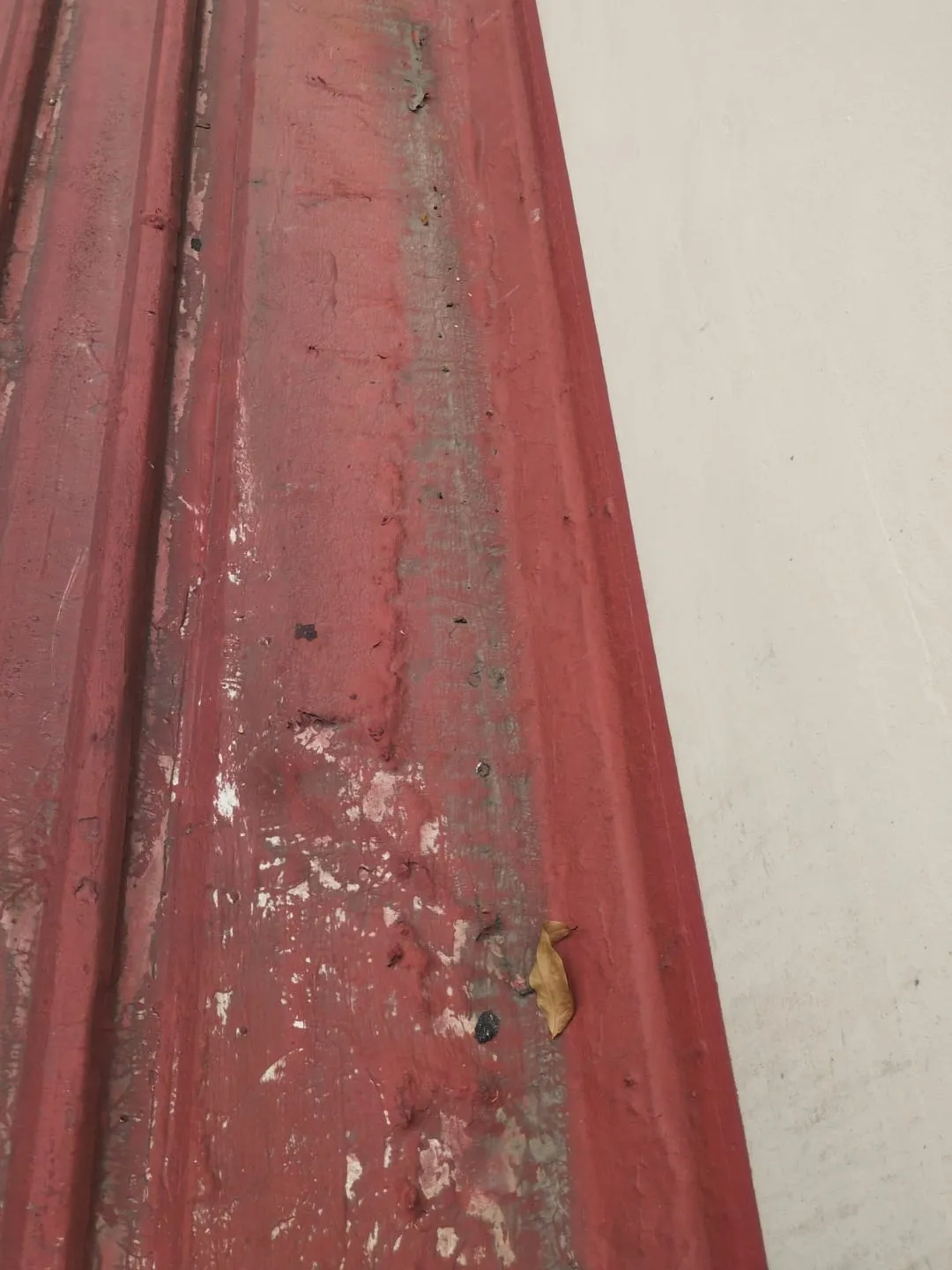
Profiled and standing-seam roofs move with every heat cycle. Side laps open, fastener washers perish, cut edges rust. Each one is treated and reinforced before the membrane covers the field.

  • Side and end laps
  • Fastener heads
  • Cut edges and rust
  • Thermal movement
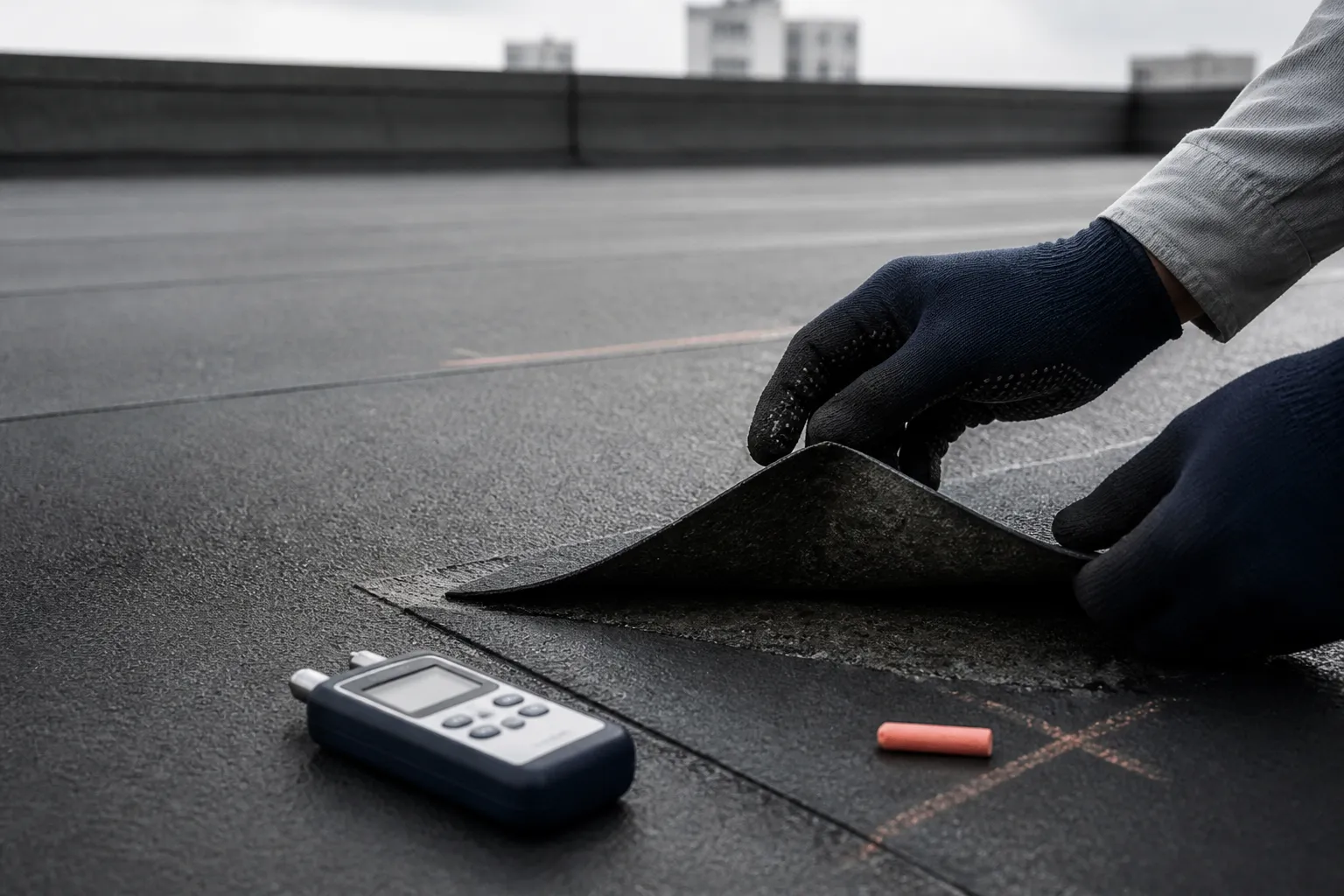
Worn red coating on a profiled metal roof sheet in Singapore, photographed before an application trial
The numbers

What it costs, what 1,000 m² takes, how the programme runs.

The market range is from a Singapore home-services platform's roof guide, updated August 2026 and checked on 28 September 2026; not a Rayson quotation. The material and timing lines come from the SealForce RC40, AC10 and AP05 data sheets.

WHAT IT COSTS
Roof waterproofing, by system
S$8 – 50 / m²
An industrial roof
On inspection
What sets the price
Area, laps, gutters, penetrations, access, phasing
Quoted as
Repairs, details, membrane: separate lines
The full cost tables and their sources
WHAT 1,000 m² TAKES
SealForce RC40, two layers
1,000 – 1,200 kg (48 – 58 sets of 21 kg)
SealForce AC10, two coats
About 1,360 kg (68 pails of 20 kg)
AC10, three coats with fleece
About 2,040 kg (102 pails)
SealForce AP05 primer
100 – 300 kg
Basis
Plan area, before profile and wastage
SealForce RC40 TDS (PDF)
HOW THE PROGRAMME RUNS
RC40 resists early rain after
About 3 hours
RC40 recoat
About 18 h at 23 °C
RC40 fully hard
About 7 days
AC10 between coats
4 – 8 hours
Hot works
None: cold-applied
SealForce AC10 TDS (PDF)
The roof must drainEvery working life assumes falls and outlets that work. Ponding in a gutter or behind a plinth is corrected first, never hidden under another coat.
Bay by bayEach bay gets its own weather window and rain protection, so an open bay is never caught by a storm and the floor below keeps working.
Book around the monsoonSingapore averages 2,113 mm of rain a year over 171 rain days, heaviest from November to January. Survey and book in the drier months.
For tendersBCA workhead CR13, Waterproofing Installation: the grade sets the applicator's tendering limit, S$0.8 million at L1 to S$16 million at L5 for 2026–27. Ask for it with the quotation.
Published system evidence

Two membranes for the field. Three products for what sits around it.

Starting routes, not a specification. The applicator's first choice is a Rayson product; where a roof is not a SealForce job, the applicator says so and specifies another suitable system.

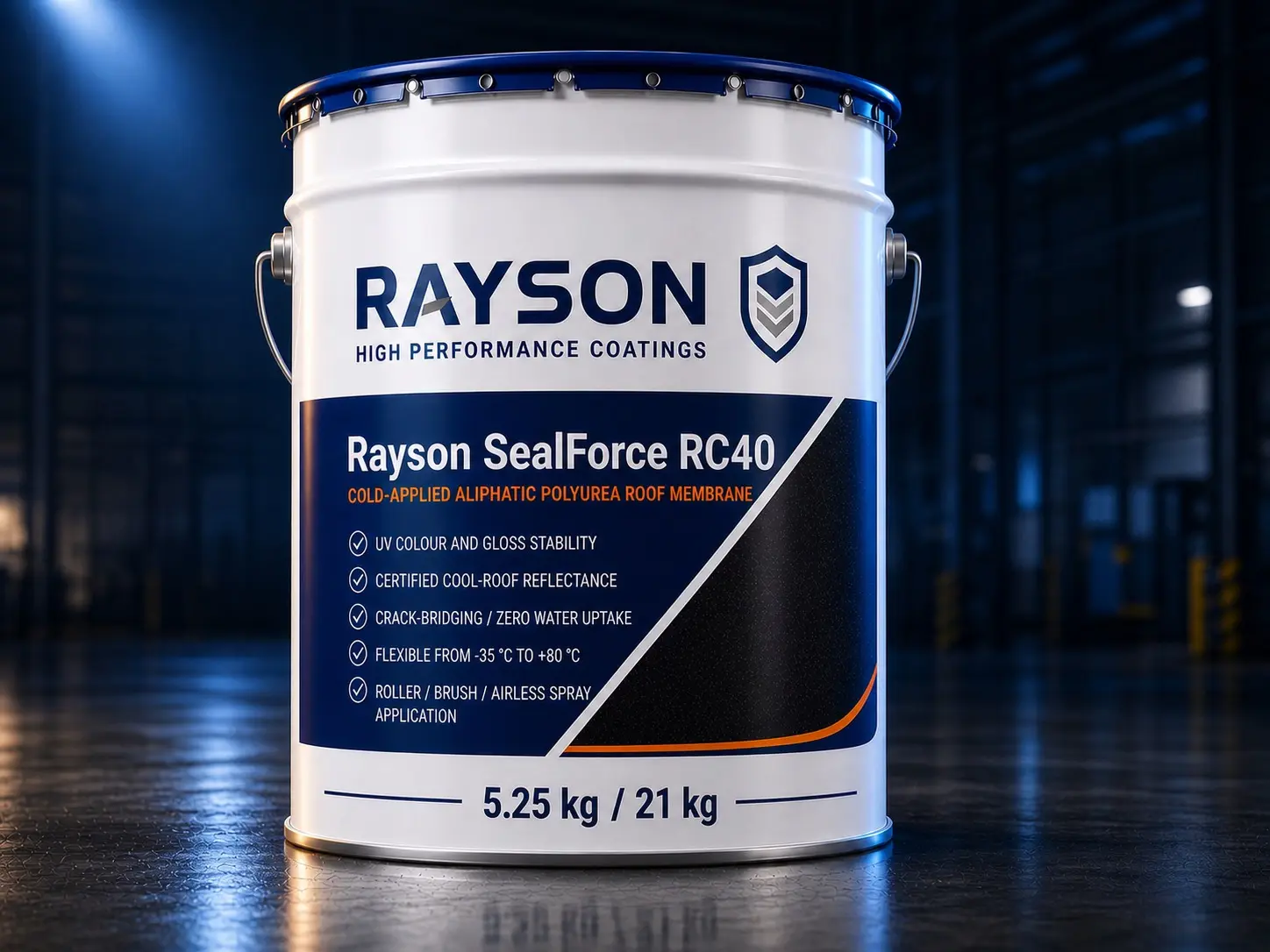
SealForce RC40 polyurea roof membrane pailMETAL + EXPOSED RC ROOFS / COLD-APPLIED POLYUREA

SealForce RC40

Two-component aliphatic polyurea membrane, applied cold by roller, brush or spray in two layers at 1 to 1.2 kg/m² in total over the matched primer, fabric-reinforced at laps, gutters and details. UV-stable and walkable, elastic from −35 °C to +80 °C, over metal, concrete, screed, old membranes, PU foam or bitumen. In white, a reflective finish.

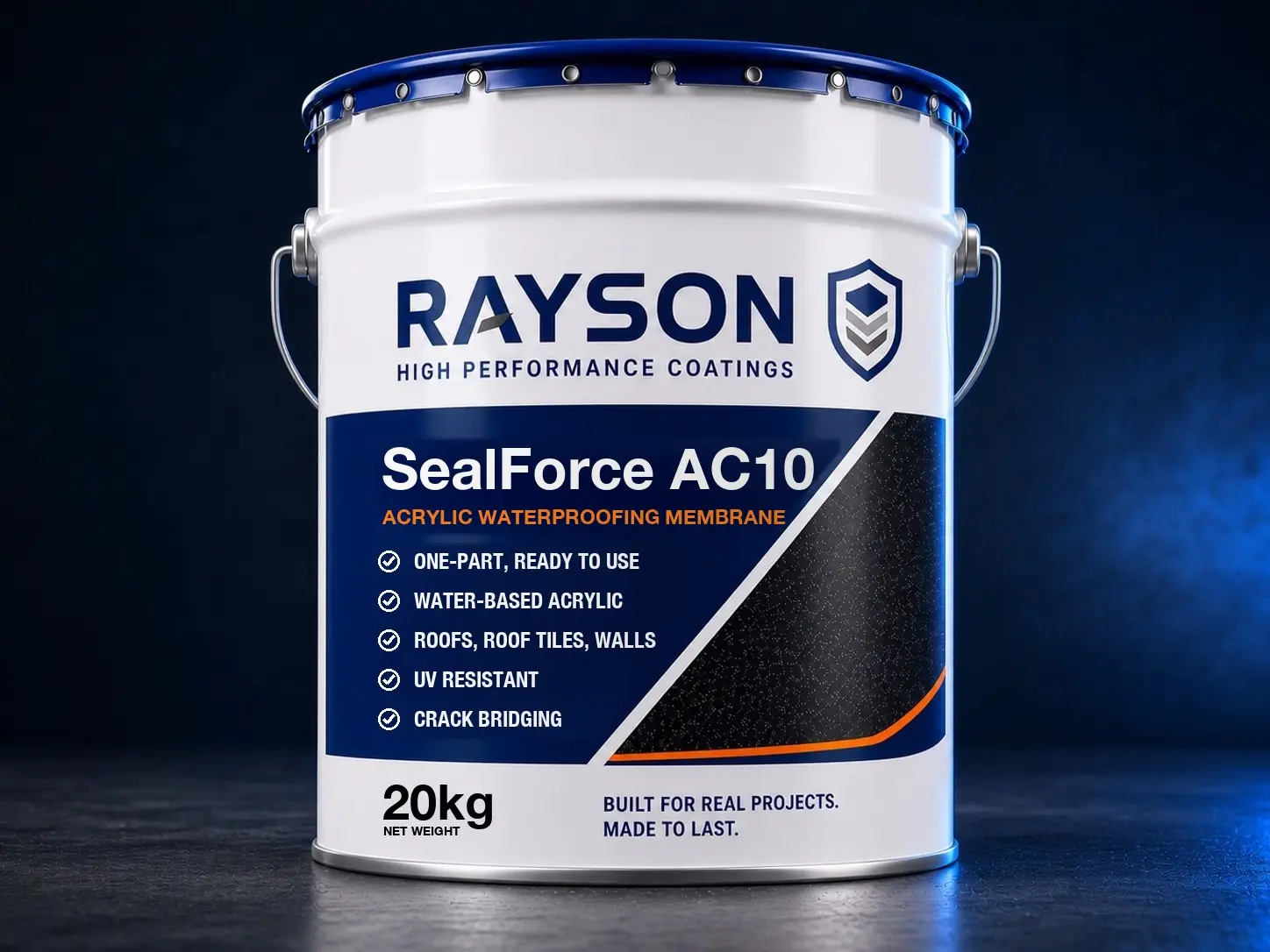
SealForce AC10 acrylic waterproofing coating, 20 kg pailFREELY DRAINING METAL ROOFS / ONE-PART ACRYLIC

SealForce AC10

One-part, water-based acrylic membrane, applied cold from the pail by brush, roller or airless spray at about 0.68 kg/m² per coat over the matched primer: two coats as a roof coating, three with reinforcing fleece as waterproofing. UV-resistant and elastic, for roofs that drain freely and are not walked on. Not for roofs that pond.

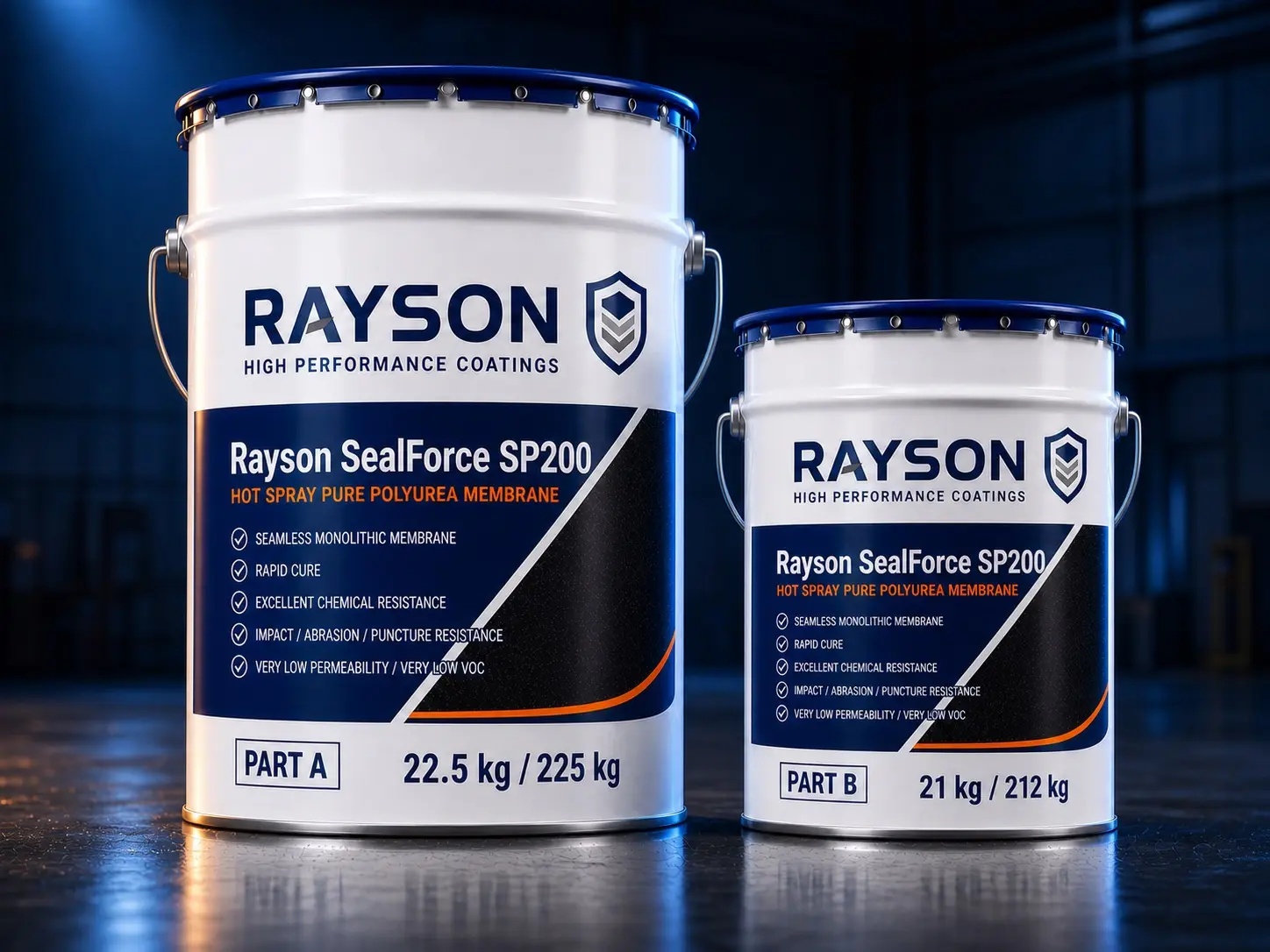
SealForce SP200 spray polyurea membrane, Part A and Part B pailsLARGE OPEN ROOFS + TANKS / SPRAY-APPLIED

SealForce SP200

Hot spray-applied pure polyurea at 1.5 to 3 mm, walkable in minutes, for large open roofs, tanks and containment where a specialist crew and a fast return to service are wanted.

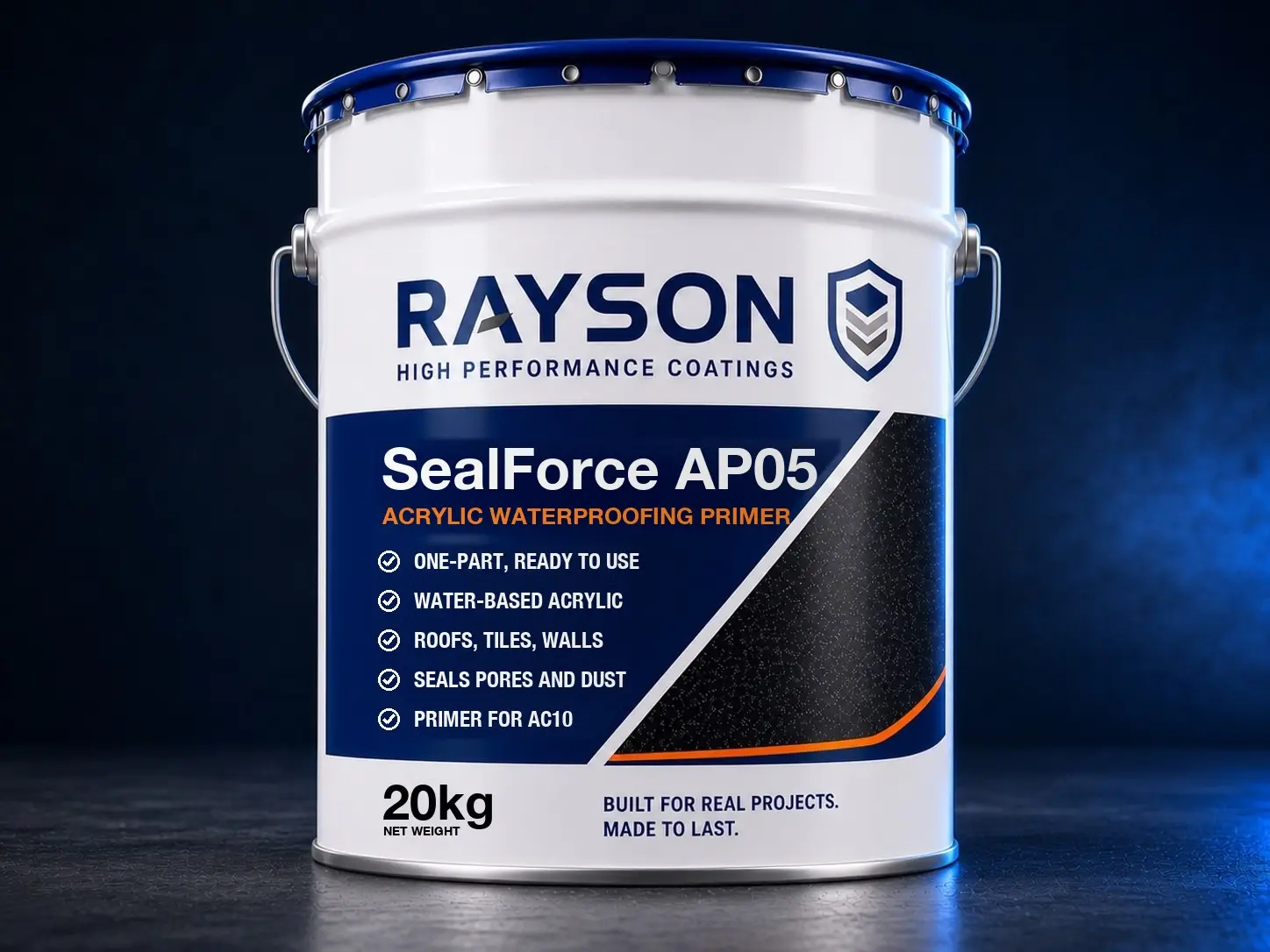
SealForce AP05 acrylic primer, 20 kg pailABSORBENT SURFACES / PRIMER

SealForce AP05

Water-based acrylic primer at 0.1 to 0.3 kg/m² for concrete, render and sound old coatings before AC10. Bare metal takes the anti-corrosion primer specified for the sheet.

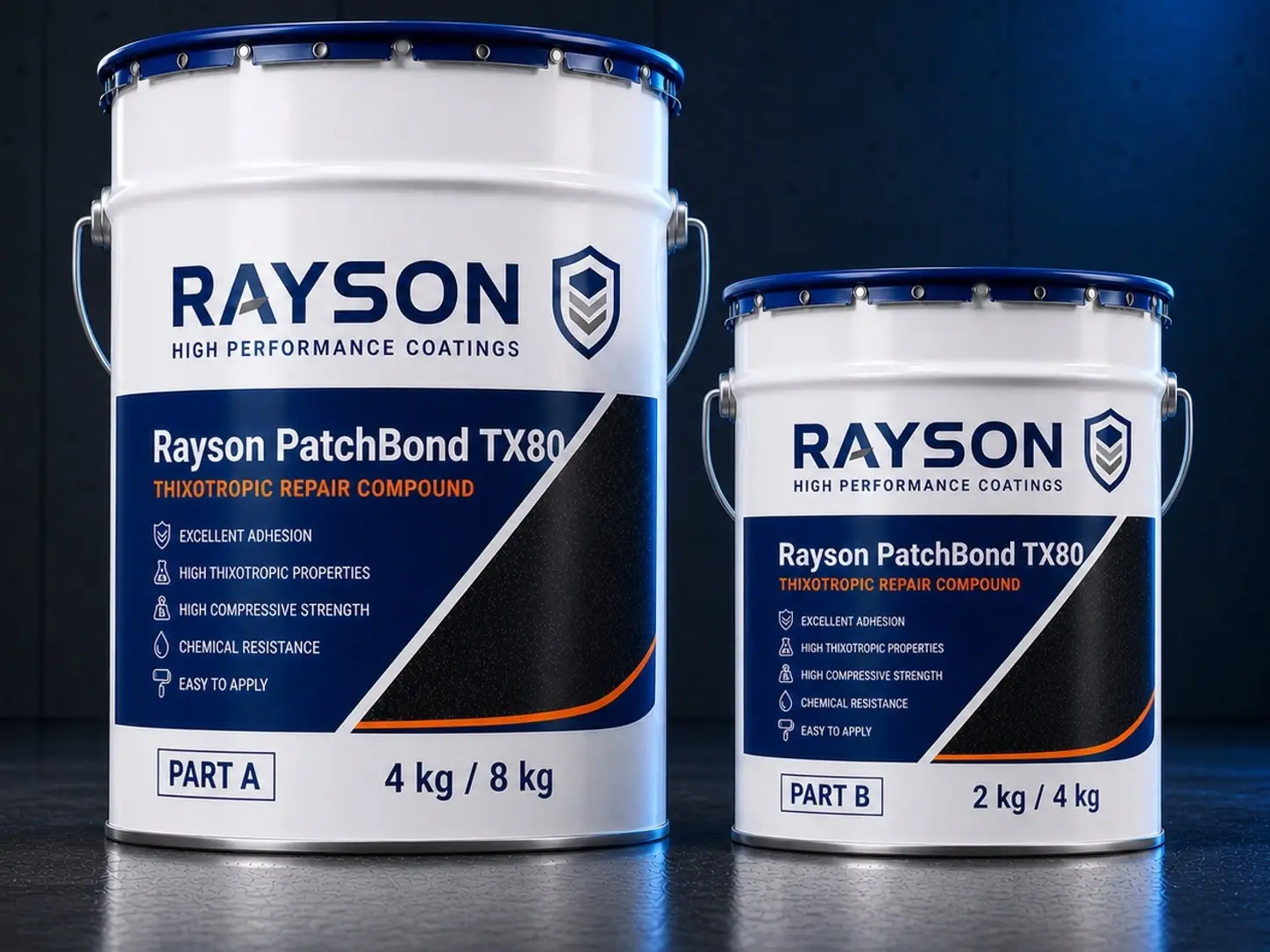
PatchBond TX80 epoxy repair compound, Part A and Part B packsCRACKS, FILLETS AND SPALLS / REPAIR

PatchBond TX80

Non-sag epoxy repair compound for reinstating cracks, spalls and fillets at plinths and upstands on an RC roof before the membrane goes on.

Choose the system

Which system for which industrial roof, and where SealForce is not the answer.

An honest placement of polyurea and acrylic beside spray polyurea, sheet and re-sheeting. Rayson makes the polyureas and the acrylic; where another route is the better fit, the table says so.

2,113 mmrain a year, 1991–2020 mean, over 171 rain days
82%mean relative humidity; above 90% before sunrise
23 – 33 °Cair, every day; a dark metal roof runs far hotter by afternoon
UV 11+extreme category reached at midday; daily maximum usually 6 – 9
RoofUsually points toSealForce build-upWhy, and the honest limit
Metal roof that is walked on for maintenance, carries plant, or ponds at the guttersCold-applied aliphatic polyurea with lap and fastener treatmentRC40 over the anti-corrosion metal primer; laps and fasteners reinforced with fabric, then two layers over the fieldMovement lives at the laps and fasteners; walkable, UV-stable, resists ponding. Needs a dry, primed sheet.
Metal roof that drains freely, not walked on, wanting an economical recoatOne-part acrylic liquid membraneThe matched metal primer, then AC10: two coats at about 0.68 kg/m² each, or three coats with reinforcing fleeceRolled from the pail at lower cost. Not for roofs that pond or are walked on; each coat needs dry weather until it has dried. The October 2026 trial shows the sequence.
Exposed RC roof with plant, outlets and upstandsCold-applied aliphatic polyurea; aliphatic PU is the common alternativeRC40, two layers at 1 – 1.2 kg/m² in total over the matched primer, fabric-reinforced at detailsOne seamless film into every detail; needs falls that drain and substrate moisture below 4%. Details follow SS 637:2018.
Box gutters and outlets, on any roofLiquid membrane lined as one piece, after falls, outlets and overflows are correctedRC40 fabric-reinforced at every joint and outletA lined gutter still needs an overflow; a storm finds the lap otherwise.
Large open RC roof needing a fast return to serviceHot-spray pure polyureaSealForce SP200 at 1.5 – 3 mm, walkable in minutesSpecialist heated plural-component plant; aromatic chemistry needs a UV-stable topcoat if left exposed.
Roof about to carry solar panelsWaterproof first, then detail every mounting pointRC40 or AC10 by roof type; fabric at each fixing; walkway strips kept clear for inspectionThe array stays for twenty years or more; the fixing method is agreed with the solar installer before the membrane goes on.
Sheet that is corroded through, or a large open roof to be re-sheetedRe-sheeting, or sheet membrane on a new deckNot a SealForce roof; RC40 only on the gutters and details that remainA coating does not replace a sheet that has lost its section. The applicator says so rather than forcing a fit.

Working life: Singapore guides quote 8 – 15 years for liquid PU, 20 years or more claimed for aliphatic polyurea and 10 – 25 for sheet, always on the condition that the roof drains. How long waterproofing lasts, by system and exposure

Who you are

Facility manager, property manager or consultant: what each of you gets.

The same roof, three different briefs. Rayson supplies the membranes and the documents and quotes the job; the applicator surveys and installs.

FACILITY MANAGERS

Keep the line running

Send a drone shot or the roof plan and photos of the leaks. The applicator maps the leaks bay by bay, Rayson quotes repairs, details and membrane as separate lines, and the work is phased so production and storage below carry on. You receive a photographic record of each bay and two warranties in writing.

How the job runs
PROPERTY MANAGERS + REITS

One roof, many tenants, written records

A survey report with photos, an itemised quotation per bay, the system named, the data sheets attached, and the material and workmanship warranties in writing so they sit in the building file. Where a roof is not a SealForce job, the quotation says so and names the alternative.

What a waterproofing quotation must show
CONSULTANTS + MAIN CONTRACTORS

Data sheets first, then the applicator

Technical and safety data sheets for RC40, AC10, AP05 and SP200, the application sequence per product, and RC roof details to SS 637:2018. For a tender, the applicator's BCA CR13 grade and bizSAFE status come with its quotation. Rayson supplies the material; the applicator installs.

Ask for the documents
System build-up

Five steps make one continuous roof.

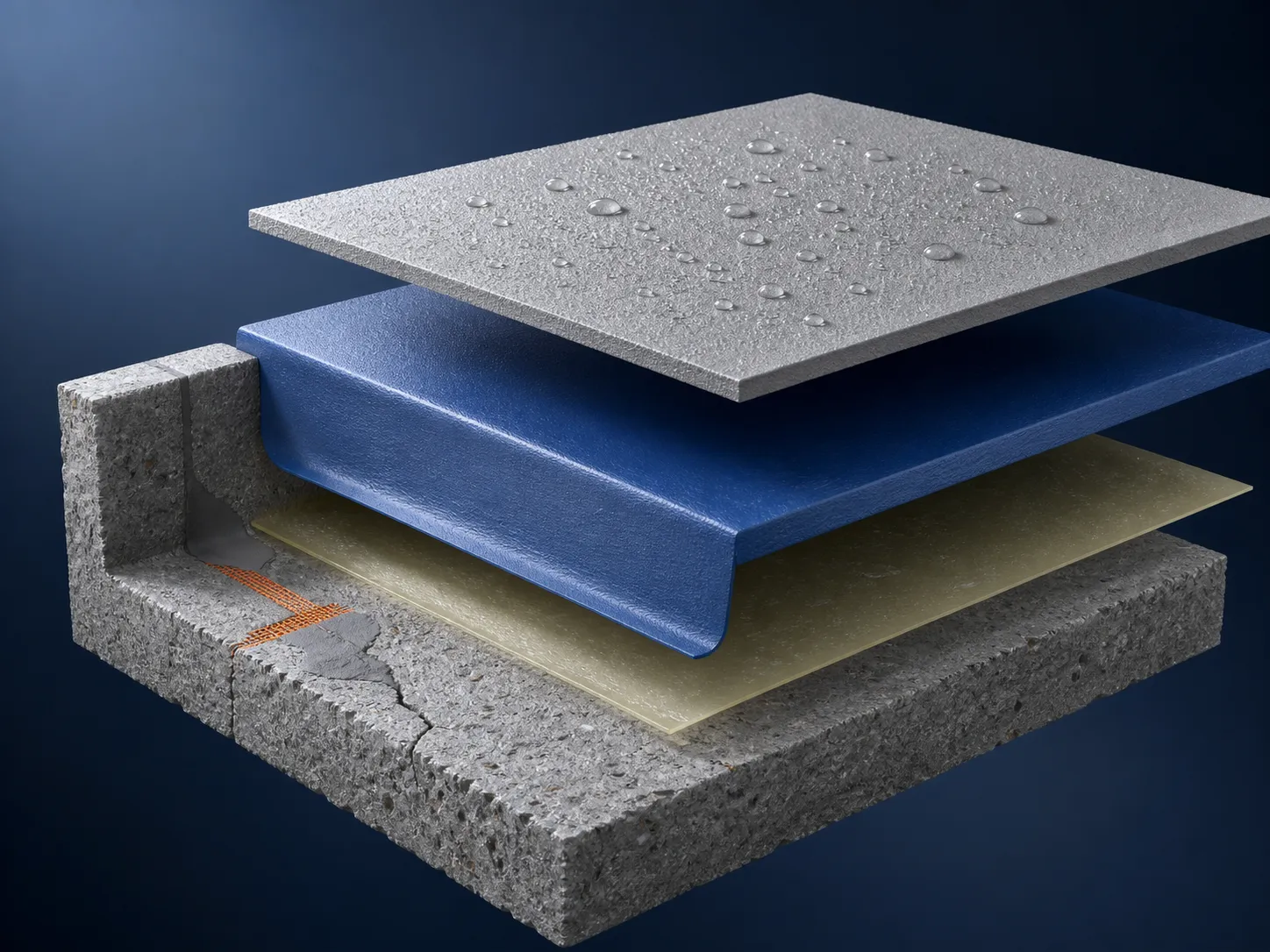
Resolve the sheet, the gutters and the details first, then build the compatible membrane over them, bay by bay. The illustration explains the roles, not a universal specification.

Review surface-preparation principles
Exploded roof waterproofing build-up showing substrate, repair, preparation, membrane and exposed surface layers
Concept build-up. Confirm the project-specific sequence against the selected product TDS.
  1. 01SurveyLaps, gutters, moisture, falls
  2. 02TreatRust, fasteners, laps, cracks
  3. 03DetailGutters, outlets, penetrations, mountings
  4. 04MembraneTwo layers, bay by bay
  5. 05VerifyCoverage, continuity, records
How the job runs

From the roof plan to two written warranties, in six steps.

  1. 01
    Send the roof plan and photos

    A drone shot or the plan, the leaks and the area below them, the laps, gutters and outlets, the plant and penetrations. Rayson reviews them and replies within one working day.

  2. 02
    Site survey

    An applicator in the Rayson network walks the roof bay by bay: laps and fasteners, rust, gutters and outlets, falls and ponding, moisture, the existing coating, access and safety at height.

  3. 03
    Itemised, phased quotation

    Repairs, details and membrane as separate lines, per bay, with the system named and the sequence around production set out. Where a SealForce membrane is not the right fit, the quotation says so and names the alternative.

  4. 04
    Treat and detail first

    Rust treated, fixings replaced or sealed, laps and gutter joints reinforced, cracks and plinths reinstated, falls and overflows corrected, before any field membrane goes on.

  5. 05
    Membrane bay by bay, then verification

    Two layers to the data sheet in each bay, with coverage, continuity and the weather on the day recorded, and a flood test of the gutters where the roof allows it.

  6. 06
    Two warranties in writing

    Rayson's five-year material warranty on SealForce polyurea roof membranes, and the workmanship warranty set out in Rayson's quotation, with the photographic record for the building file.

Ready for a useful first review?

Send the roof plan before the next storm does the survey for you.

Send a drone shot or the roof plan, photos of the leaks, laps, gutters and outlets, the approximate area, whether production below continues, and your work window. We respond within one working day, arrange a survey by an applicator from our network, and quote the job. Consultants and contractors: ask for the data sheets and material pricing direct.

Frequently asked questions

How much does industrial roof waterproofing cost in Singapore?

A Singapore home-services platform's roof guide, updated August 2026, puts roof waterproofing at S$8 to S$50 per m² depending on the system, from a basic coating to a premium membrane. That is a market range, not a Rayson quotation. An industrial roof is quoted on inspection: the area, the number of laps and fasteners, the condition of the gutters and outlets, the penetrations and plant plinths, access and safety at height, and whether the work must be phased to keep production running all set the price. Send a drone shot or the roof plan, close-ups of the leaks and details, and the approximate area, and the quotation lists repairs, details and membrane as separate lines.

Can the roof be waterproofed without stopping production?

In most cases, yes. SealForce RC40 and AC10 are cold-applied, so there are no hot works; the applicator works from the roof, bay by bay, with a weather window and rain protection planned for each bay, and the production or storage below carries on. RC40 resists early rain about 3 hours after application, so a layer laid in the morning is rain-resistant by the afternoon and the second layer follows the next day; AC10 takes 4 to 8 hours between coats. Where a gutter has to be replaced in one piece, the quotation says what downtime that needs.

How is a factory metal roof waterproofed?

Movement on a metal roof lives at the laps and fasteners, not in the sheet. Corrosion is treated, loose or perished fixings are replaced or sealed, cut edges are cleaned, then the anti-corrosion primer specified for the sheet goes on, then SealForce RC40 with every seam reinforced with fabric before the field is coated. A metal roof that drains freely and is not walked on can take SealForce AC10 instead: AP05 or the matched metal primer, then two coats of acrylic, three with reinforcing fleece as waterproofing. The October 2026 application trial on an old metal roof records that sequence.

Acrylic or polyurea for a metal roof?

It depends on whether water stands on the roof and whether anyone walks on it. The polyurea, SealForce RC40, is walkable, resists ponding and stays elastic from −35 °C to +80 °C, so it suits roofs with maintenance access, plant or gutters that hold water. The acrylic, SealForce AC10, is one-part, water-based and rolled from the pail at lower cost, and suits a roof that drains freely and is not walked on; it must not be used where water ponds or on roofs with foot traffic, and each coat needs dry weather until it has dried.

What about the gutters?

Most industrial roof leaks start in the gutters: undersized outlets, blocked sumps, split joints and no overflow. Falls are corrected, outlets cleared or enlarged and overflows added, then the gutter is lined with SealForce RC40 as one continuous film, fabric-reinforced at every joint. A lined gutter still needs an overflow; without one a storm puts water over the lap.

Should we waterproof before installing solar panels?

Yes. JTC's SolarRoof programme and Singapore's target of 3 GWp of solar by 2030 are putting panels on leased factory roofs. An array stays for twenty years or more, and lifting it to repair the roof later is expensive. Choose the system by roof type first (RC40 or AC10 on metal, RC40 on RC), detail every mounting point, and keep walkway strips for inspection. The applicator coordinates the fixing method with the solar installer.

How long does an industrial roof membrane last?

The same platform's guide gives working lives by system: cementitious 5 to 8 years, bituminous 10 to 15, liquid polyurethane or acrylic up to about 20, and sheet up to about 25, all on the condition that the roof drains. Rayson warrants its SealForce polyurea roof membranes against manufacturing defects for five years from the date of supply, provided they are stored and applied to the technical data sheet; the workmanship warranty is set out separately in the quotation.

How much material does a 1,000 m² roof take?

From the data sheets, on plan area: SealForce RC40 at 1 to 1.2 kg/m² in total over two layers is 1,000 to 1,200 kg, 48 to 58 sets of 21 kg, rounded up. SealForce AC10 at about 0.68 kg/m² per coat is about 1,360 kg for two coats (68 pails of 20 kg) and about 2,040 kg for three coats with fleece (102 pails). AP05 primer at 0.1 to 0.3 kg/m² is 100 to 300 kg. A profiled sheet has more surface than its plan area, so the applicator measures the profile and adds wastage.

Does a white membrane cool the building?

A reflective roof surface cuts the solar heat the roof absorbs, which lowers the surface temperature and the heat passed into the building; how much depends on roof colour, construction and ventilation. In its white shade SealForce RC40 is a reflective finish. Take the reflectance figure from the current technical data sheet rather than from a product name.

Who does the work, and what do we check for a tender?

Rayson quotes and contracts the job, and an applicator in the Rayson network surveys and installs it; the workmanship warranty is set out in Rayson's quotation, and Rayson makes the membranes and publishes their data. Public tenders and many owners' panels ask for BCA Contractors Registry workhead CR13, Waterproofing Installation: the grade sets the tendering limit, from S$0.8 million at L1 to S$16 million at L5 for July 2026 to June 2027. Where a tender requires CR13, the applicator bids and contracts directly under its own registration, with Rayson supplying the material and the documents; ask it for its CR13 grade and bizSAFE status with the quotation.

What does the consultant or main contractor get?

The technical data sheets and safety data sheets for SealForce RC40, AC10, AP05 and SP200, and the application sequence per product: substrate conditions, primer, consumption, interval between layers, rain resistance and full cure. RC roof details follow SS 637:2018, the Singapore code of practice for waterproofing reinforced-concrete buildings. Ask through the enquiry form for the documents for a specification or tender pack.

What should we send for a quote?

A drone shot or the roof plan, photos of the leaks and of the area below them, close-ups of the laps, fasteners, gutters and outlets, the plant and penetrations, the approximate area, the roof type (metal, RC or both), whether production below continues during the work, and your work window. We respond within one working day and arrange the site survey by an applicator from our network.