Frequently asked questions
How much does wall crack repair cost in Singapore?
It depends on which kind of crack it is. A Singapore repair platform's price page, read on 20 October 2026, puts cosmetic crack filling, skim coat and touch-up at S$180 to S$380 per job. A crack that moves is cut, sealed and bridged with fleece inside the coating, and a crack that seeps is injected first: one waterproofing contractor's 2026 guide lists injection at S$300 to S$1,200 per job. A full elastic coating of an external wall is quoted by area and by the access needed. These are published market ranges, not Rayson quotations.
Is a hairline crack dangerous?
Usually not. HDB's maintenance guide says wall cracks typically result from the natural expansion and contraction of building materials, and that hairline cracks can be sealed with a flexible sealant or an elastomeric paint. The cracks to take seriously are wider than about 1 mm, run diagonally across several walls, step along the blockwork, or come with doors and windows that stick: those are a structural question for HDB or a professional engineer, not a coating job.
Why does the crack come back after I paint over it?
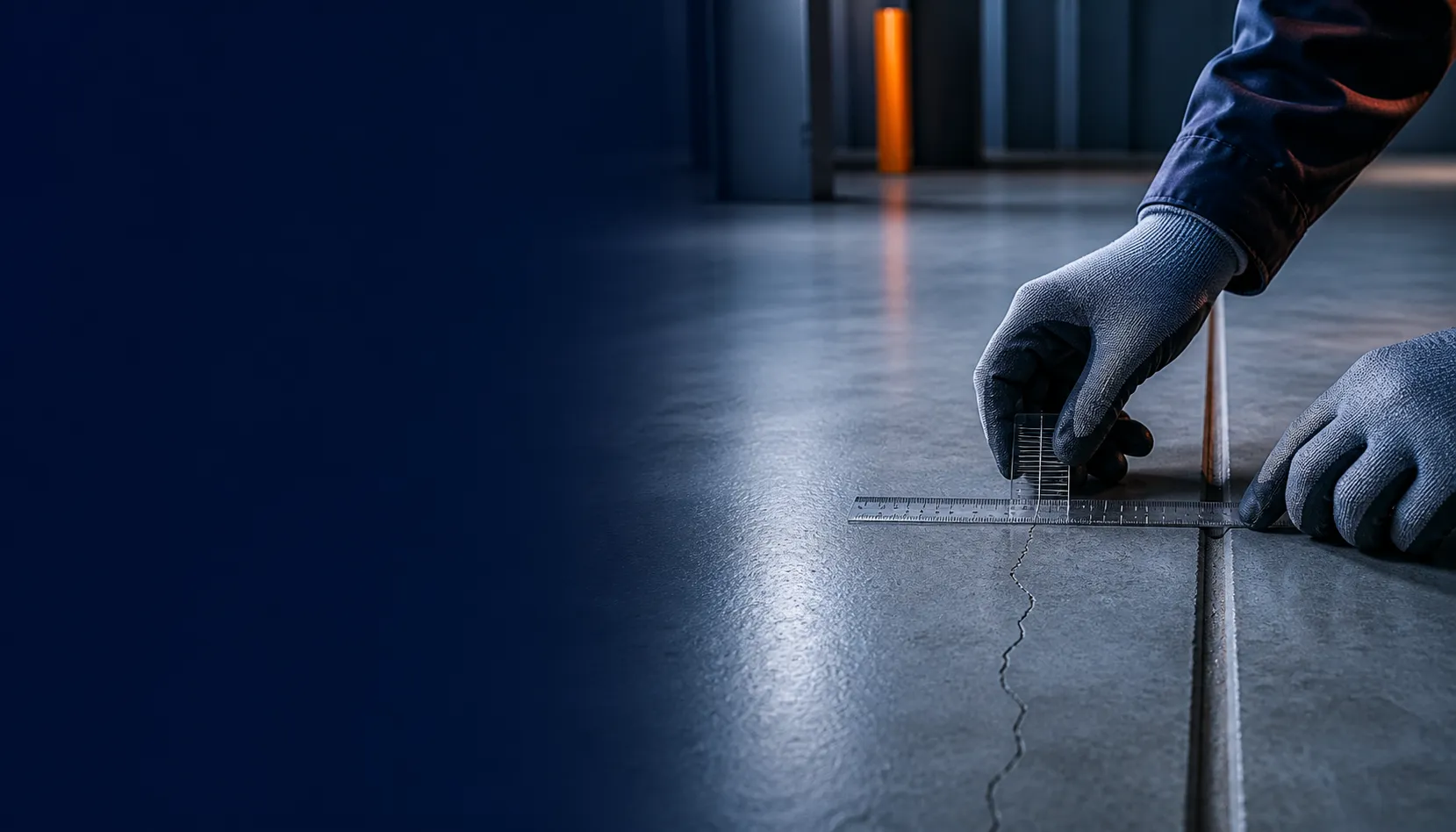
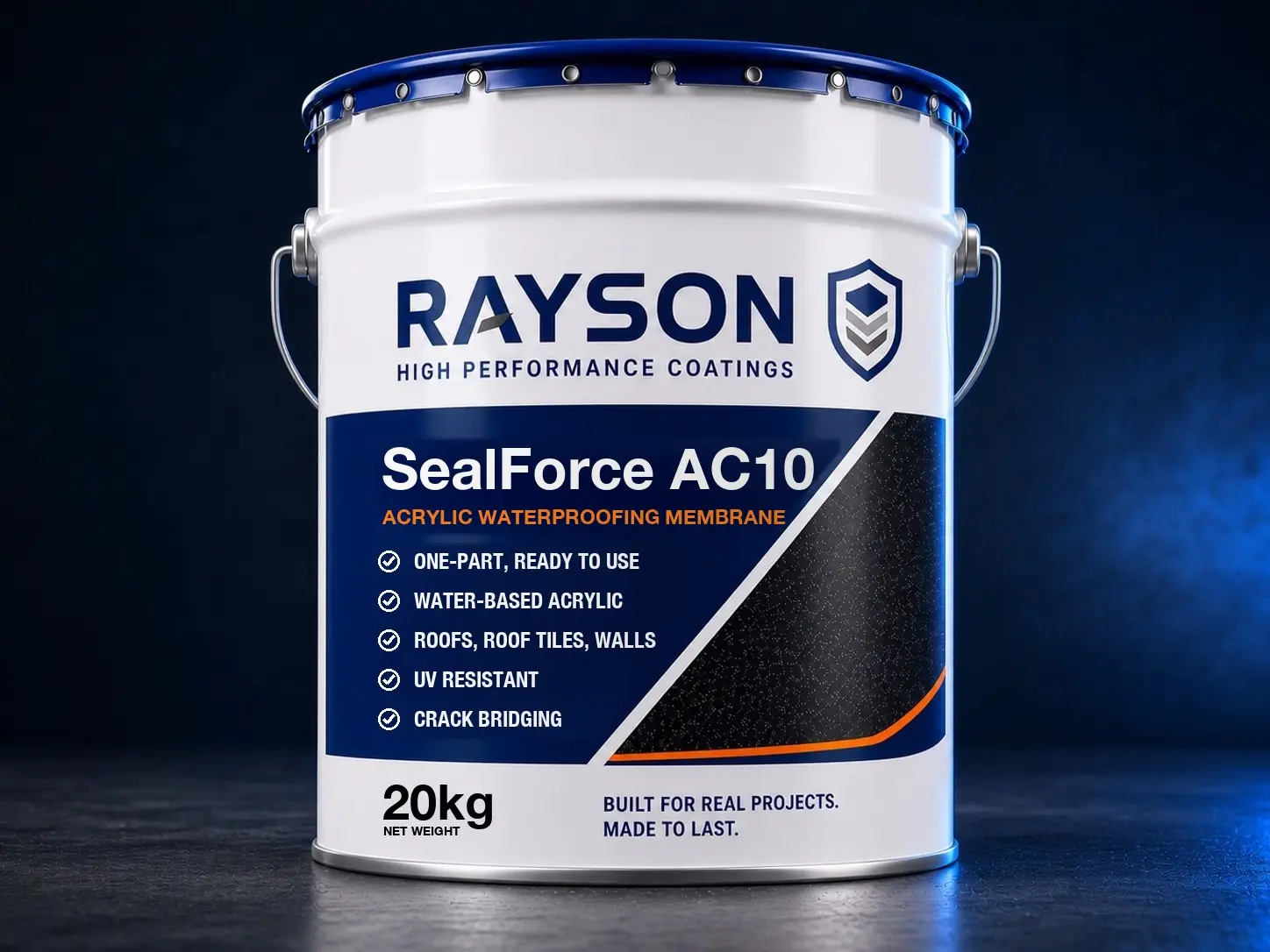
Because the crack opens and closes with the sun and the rain, and filler and paint are rigid. A moving crack is treated as a joint: a groove is cut along it, filled with a flexible sealant, and a strip of fleece is bedded over it inside an elastic coating such as SealForce AC10, which stretches at least 180%. Another coat of paint on its own opens again at the next heat cycle.
How do I tell a window leak from a wall leak?
By where and when the water shows. Water at the corners of the frame, under the sill or along the junction of frame and wall points to failed perimeter sealant, blocked weep holes or a sill that does not throw water off. A damp patch away from the window that spreads after rain, with no crack to see, points to porous render or microcracks. A wet line running down from a crack is that crack. Watch the wall in driving rain, and the applicator checks the outside.
How is a leaking window fixed?
The failed sealant around the frame is cut out, the joint cleaned and primed, a backer rod fitted where the gap is deep, and a flexible sealant applied and tooled; the weep holes in the frame are cleared and the sill checked for its fall and flashing. A Singapore repair platform's price page, read on 20 October 2026, puts window sealant replacement at S$5 to S$15 per metre depending on the material. Cracks in the wall around the frame are treated as wall cracks. The applicator specifies the sealant; HDB asks owners to check their windows at least every six months and to use a BCA-approved window contractor from its directory.
Who repairs a leaking external wall in an HDB flat?
HDB's maintenance guide, updated 17 August 2026, places the external façade walls under the Town Council and tells owners to contact the Town Council for investigation and repair of external cracks. New flats carry a five-year warranty on external seepage and a ten-year warranty on spalling concrete. Windows are fittings within the flat, and the owner maintains them.
Who repairs a leaking external wall in a condominium?
BCA's Strata Management Guide 13 on water seepage, first published November 2023: the external wall is common property, and where seepage originates from common property it is the management corporation's duty to keep it in good and serviceable repair. Whether the windows belong to the unit depends on the development's strata title and by-laws. Disputes that cannot be settled go to the Strata Titles Board.
What is BCA's periodic façade inspection, and what does it have to do with cracks?
Since 1 January 2022, a building taller than 13 metres and older than 20 years must be inspected every seven years by a professional engineer or registered architect holding a façade-inspection certificate, and any deterioration found must be rectified within the period BCA sets; about 30,000 buildings fall in the first cycle, and landed houses used solely as homes are exempt. Crack lines, failed sealant joints and porous render are routine findings, and their rectification is the work on this page.
How long does an elastic wall coating last?
As long as the preparation and the crack treatment under it. SealForce AC10 is a one-part, water-based acrylic that resists UV and mould, lets the wall breathe, stretches at least 180% and bridges cracks wider than 2 mm; on a sound, primed wall it forms a lasting elastic film, but it does not replace crack repair, injection or window sealing. Take the figures from the current technical data sheet.
Can I just paint a waterproofing paint over a wet wall?
No. A coating over a wall that is still taking water hides the symptom and then blisters off. Find where the water gets in first, a crack, the window frame or porous render, treat that, and apply AC10 to a dry, primed wall afterwards.
Who does the work, and what if Rayson has no product for part of it?
Rayson quotes and contracts the job, and an applicator in the Rayson network inspects and does the work; the workmanship warranty is set out in Rayson's quotation. Rayson makes the primer, the wall coating and the repair compound and publishes their data sheets; the flexible sealant and the injection resin are not Rayson products today, so the applicator specifies a suitable material and says so. Rayson's material warranty applies to Rayson products.
What should I send for a quote?
Photos of the crack or stain inside, ideally one taken after rain; photos of the same spot on the outside, wall or window; the crack's rough length and width; the property type and floor; when the water appears; and whether the building has a façade-inspection finding to rectify. We respond within one working day and arrange the site inspection by an applicator from our network.