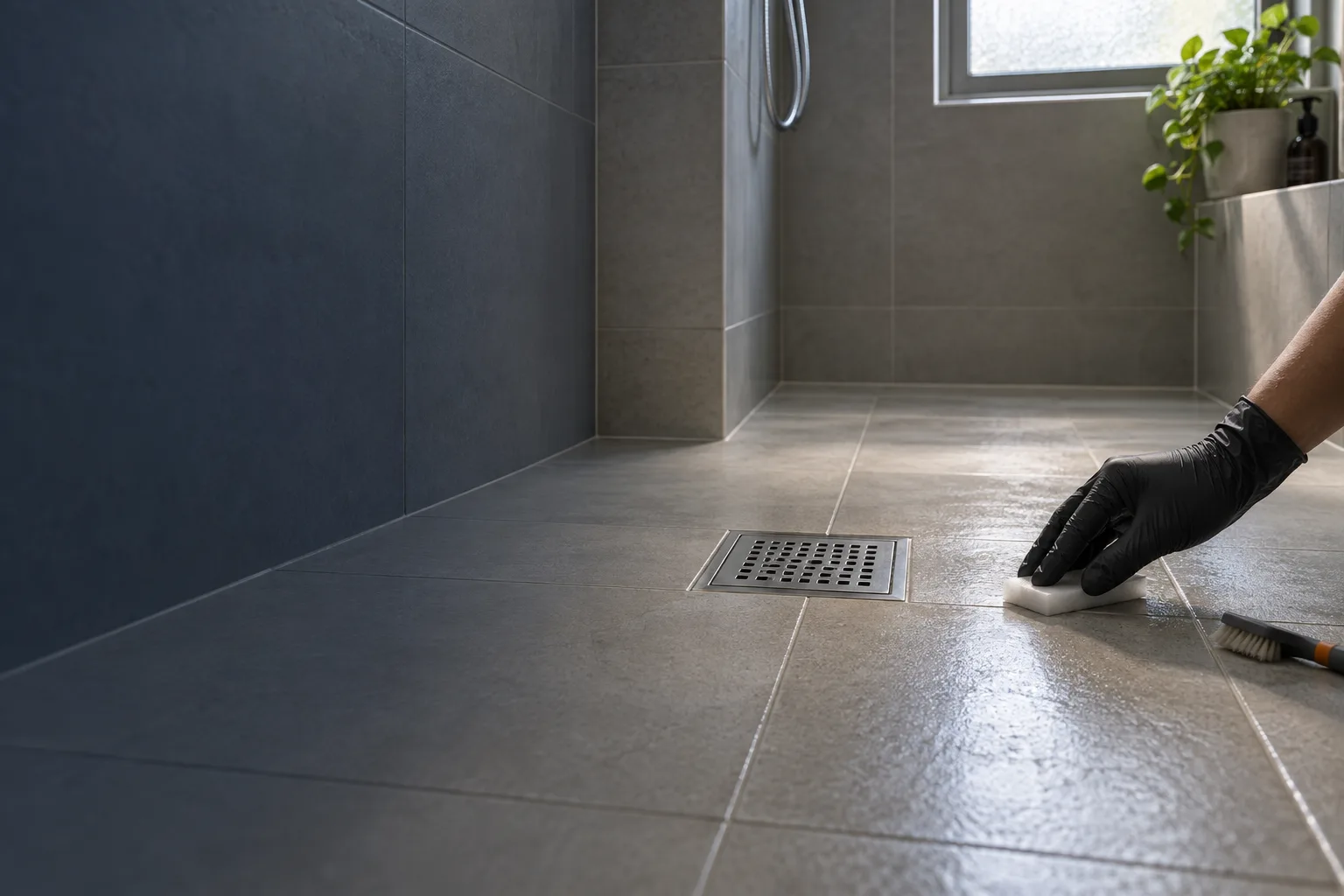
Illustration: a gloved hand assessing an existing tiled Singapore bathroom floor beside a drain
AI-generated illustration · Not a project photograph

HDB & condo bathrooms · Kitchens · Shared spaces

Anti-slip floor treatment in Singapore.

Keep the floor. Rethink the grip.

Slippery tiles do not always need replacing. Start with the surface, the cause of the slip risk and a test patch—then choose the right treatment.

First response within one working day

01 / Start with the surface

One problem. Two very different approaches.

Anti-slip floor treatment aims to improve the grip of an existing surface. Suitable tiles may be treated without replacement after a test patch; concrete and asphalt may need a textured coating. Rayson supplies coating materials and introduces independent applicators for assessment and installation. Tile-treatment products are supplied by the applicator.

01 / Existing tiles

Treat the surface you have.

For bathroom, kitchen and corridor tiles. The applicator checks the tile finish, contamination and treatment compatibility before you commit.

  • Approve a discreet test patch
  • Check appearance and wet performance
  • Agree cleaning and return-to-use instructions

Polished stone and sensitive finishes need a separate compatibility check.

Review my tiled floor
02 / Concrete & asphalt

Build texture into a coating.

For walkways, playgrounds and suitable ramps. Heavier traffic, grease or hot wash-down may need a textured epoxy or PU-cement system instead.

  • Assess preparation and repairs first
  • Match texture to traffic and cleaning
  • Confirm the complete system and cure time

GripSafe AP12 contains 0.5–1.5 mm silicate quartz. It is not a treatment for glazed tiles.

Review my concrete floor
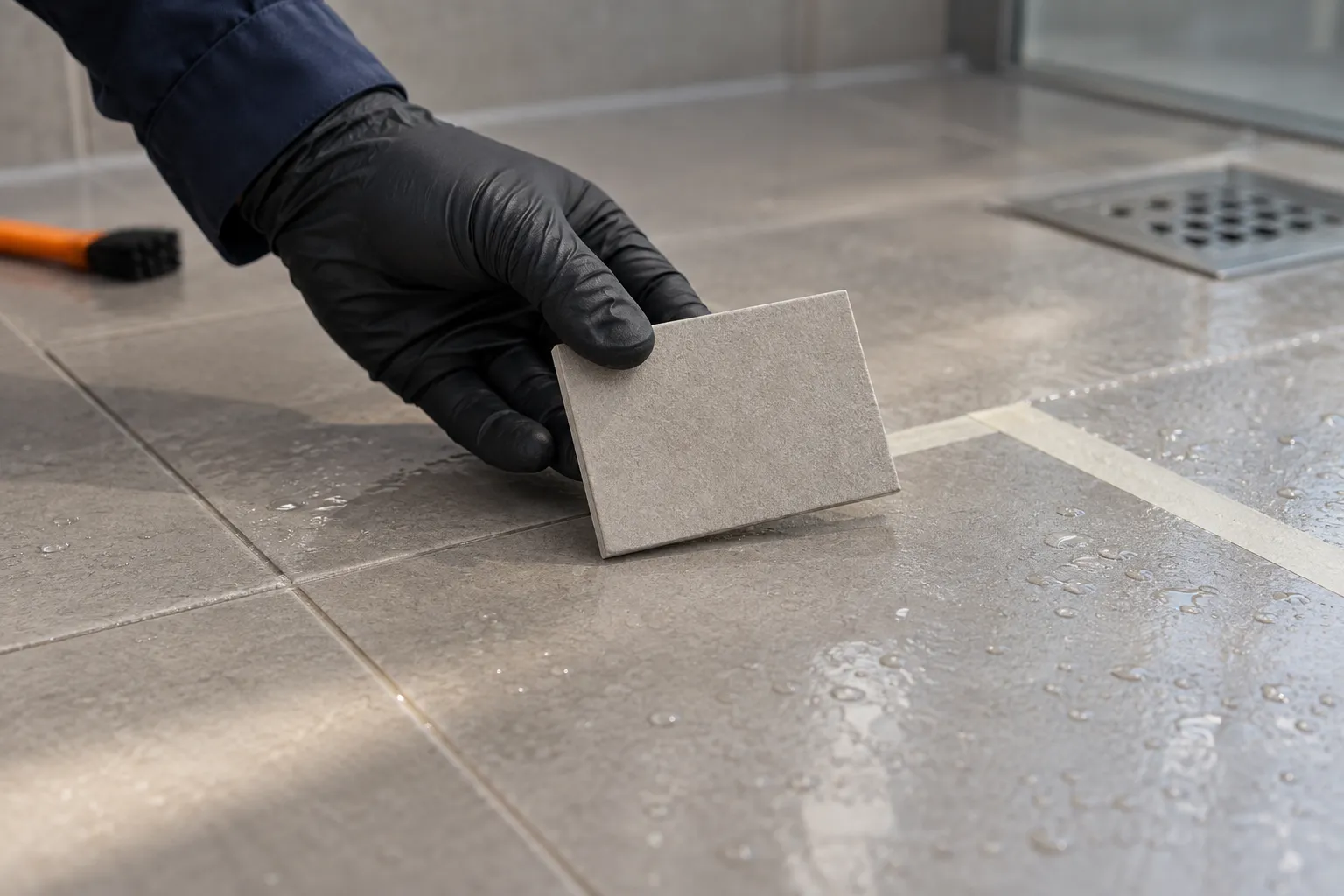
Illustration: checking a tile sample beside a marked test area
AI-generated illustration · Not a project photograph

02 / See it before you commit

One small patch. A much clearer decision.

A treatment should suit the way you use the room—and the finish you want to keep.

  1. 01

    The finish

    Check colour, sheen and any change to the tile or stone.

  2. 02

    The conditions

    Assess the real wet or contaminated condition—not a dry showroom sample.

  3. 03

    The upkeep

    Agree how to remove soap, grease and residue after treatment.

Need a specified slip-resistance rating?

Agree the test method, wet or contaminated condition, and acceptance criteria before work. A wet pendulum result and an R rating are not interchangeable. A photograph or a hand-check is not certified test evidence.

Read the slip-resistance testing guide →

03 / A clear process

From a slippery floor to a considered plan.

You do not need to know the product name. Start with what happens on your floor.

  1. 01

    Show us the floor

    Send a wide photo, a surface close-up and the wet or problem area.

  2. 02

    Assess & test

    An independent applicator checks suitability and proposes a test patch.

  3. 03

    Agree the scope

    Receive the product, preparation, price and access plan in writing.

  4. 04

    Treat & maintain

    Follow the agreed return-to-use time and cleaning instructions.

04 / Budget with the scope in view

A useful price starts with the actual floor.

Tile treatment and a new textured coating are different jobs. Ask what the rate includes before comparing the numbers.

  • Surface cleaning, preparation and repairs
  • Test patch, treatment and required testing
  • Minimum charge, access and return-to-use time

Published guide figures · Not a Rayson quotation

Chemical tile treatmentExisting suitable tiles

S$2–4per sq ft

Aggregate coatingA new textured coating system

S$3–6per sq ft

Figures from Goodrich Global’s 10 April 2026 guide, not a verified market average. Small bathrooms may have a minimum charge. An independent applicator provides your written project quotation.

Source and limitations

One distributor’s published guide cannot establish the scope or price of your job. Confirm product, preparation, repairs, testing, taxes and warranty in the quotation.

View the dated source ↗

05 / The coating route

Real products. Open technical data.

These are materials to assess for a specified coating system—not four interchangeable tile treatments. Product selection and availability are confirmed for your project.

06 / Your next step

Show us where it gets slippery.

A few clear photos are enough to start the conversation. We will help identify the route and introduce an independent applicator for assessment.

First response within one working day

Frequently asked questions

What is anti-slip floor treatment?

Anti-slip floor treatment aims to improve the grip of an existing surface. Suitable tiles may be treated without replacement after a test patch; concrete and asphalt may need a textured coating. Rayson supplies coating materials and introduces independent applicators for assessment and installation. Tile-treatment products are supplied by the applicator.

Can HDB bathroom tiles be treated without hacking?

Suitable, sound tiles may be treated without removal. The applicator must first identify the tile, assess residues and test a small area. Loose tiles, drainage problems or damaged surfaces may need repair instead. Surface treatment does not repair a failed waterproofing layer.

Will anti-slip treatment change the tile appearance?

It can. The result depends on the treatment and surface; a polished finish may lose sheen or change appearance. Approve a discreet test patch before full application. Natural stone needs its own compatibility assessment.

How long does anti-slip treatment last?

There is no single lifespan for every floor. Treatment chemistry, traffic, cleaning and contamination affect performance. Ask the applicator for care instructions, inspection intervals and written warranty terms for the specific treatment.

How much does anti-slip floor treatment cost in Singapore?

Goodrich Global’s 10 April 2026 guide lists tile treatment at S$2–4 per sq ft and aggregate coatings at S$3–6 per sq ft. These are guide figures, not Rayson prices or a verified market average. Small bathrooms may have a minimum charge. The applicator quotes for your surface and agreed scope.

Can the floor be used on the same day?

Some tile treatments allow a short return-to-use period, but it depends on the product, cleaning, rinsing and drying requirements. Coatings need their specified cure period. Obtain the applicable time in writing before scheduling the work; do not assume same-day access.

What about eldercare corridors and wet kitchens?

Assess each zone separately. Barefoot use, mobility aids, grease, hot wash-down and cleaning methods can require different finishes. Existing tiles need a compatibility test; a heavily used kitchen being refurbished may need a textured epoxy or PU-cement system. Plan access around the people using the space.

Is GripSafe AP12 a treatment for glazed bathroom tiles?

No. GripSafe AP12 is an acrylic primer filler containing 0.5–1.5 mm silicate quartz for suitable substrates including concrete and asphalt. A treatment for glazed tiles is a separate product supplied by the independent applicator. Consult the product TDS for the coating route.

Does treatment guarantee a slip-resistance rating?

No rating should be assumed from a product name or photograph. Specify the required test method, condition and acceptance criteria. Wet pendulum results and shod ramp R ratings measure different conditions and are not interchangeable. Where a project needs documented performance, agree appropriate testing and a report.

Who installs the treatment and provides the warranty?

Rayson supplies coating materials and introduces independent applicators. The applicator assesses, quotes, invoices, installs and provides its own workmanship warranty. For glazed tiles, the applicator supplies its selected treatment product; it is not a Rayson tile-treatment product.