Trading continuity
Put isolation, noise, odour, cure, cleaning, inspection and reopening on one overnight programme.
TRADING CONTINUITY · NIGHT WORK · ENTRANCE SAFETY · APPEARANCE
Close the aisle tonight. Reopen ready for trade.
Entrances, main aisles, checkouts, F&B tenancies and service routes face different rain, traffic, trolley, cleaning and appearance demands. Build the brief around trading risk and the work window first—then choose the system.
01 · Start with trading requirements
This industry page defines trading continuity, customer safety, appearance and maintenance ownership. The office-and-retail application page then examines substrate, coating build-up, installation and technical evidence—without making both pages answer the same question.
Put isolation, noise, odour, cure, cleaning, inspection and reopening on one overnight programme.
Review colour, gloss, staining, wheel marks and wet grip under the actual lighting—not only against a colour card.
Inspect entrance matting, thresholds, tenancy lines, movement joints, drains, gradients and finish transitions separately.
Plan daily cleaning, priority inspections, local repair and finish renewal before wear reaches the body coat.
02 · Map the retail zones
These four zones translate real operations into a project brief. They are not a remote specification and do not imply one product throughout.
Tropical rain, entrance matting, turning, thresholds, first impressions and wet-slip exposure.
Continuous footfall, trolley wheels, movable displays, cleaning machines and appearance under bright lighting.
Concentrated standing, sharp turns, trolley parking, black-rubber marks and frequent local cleaning.
Drinks and oils, waste movement, wash-down, drains, wall-floor junctions and tenant work windows.
03 · Rain enters at the door
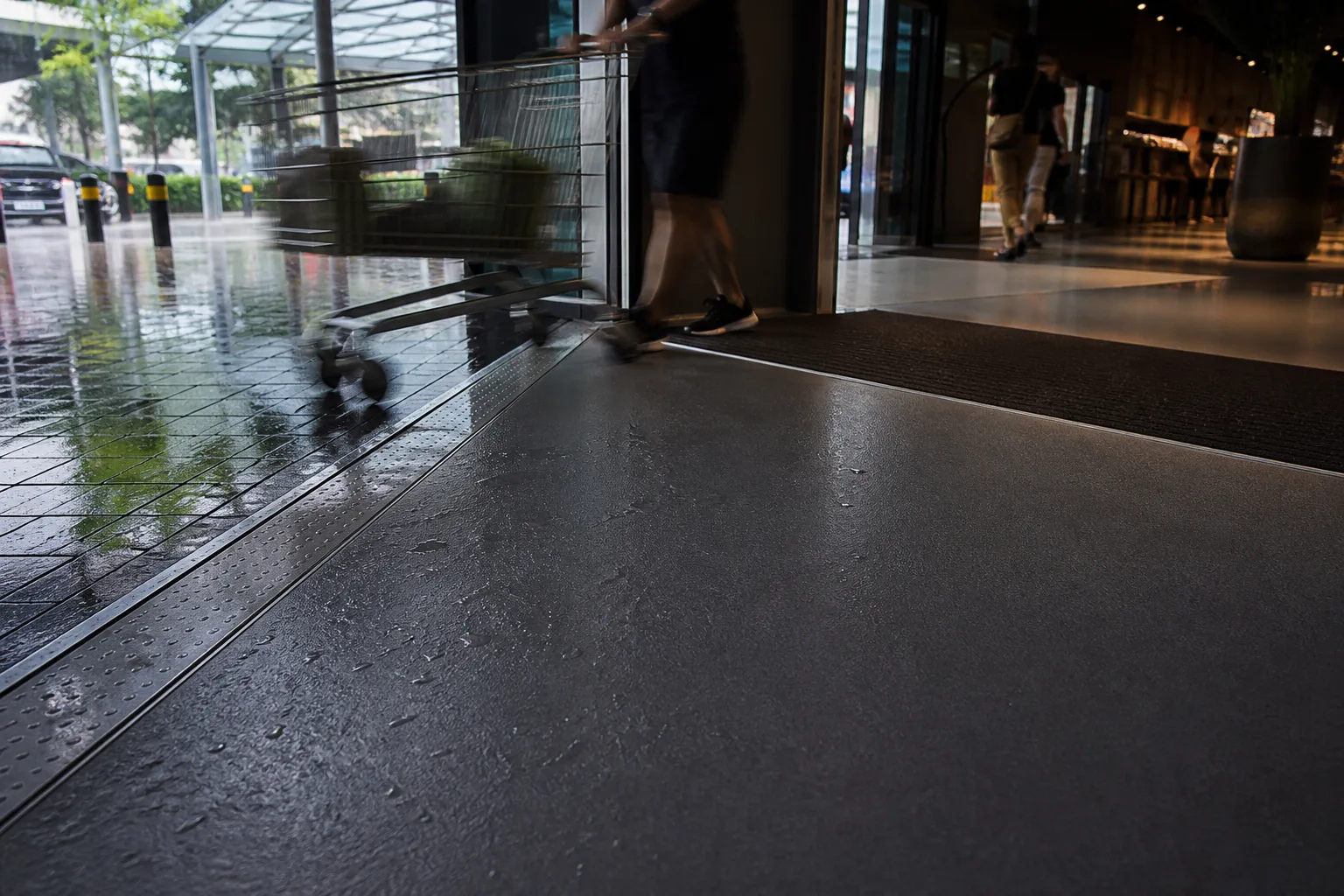
A Singapore retail entrance has to coordinate canopy cover, mat length, threshold drainage, contamination, cleaning and coating texture. Too little texture may not address wet use; too much can raise the daily cleaning burden.
Inspect the canopy, drainage, entrance matting and traffic direction before discussing coating texture.
Clean water, drinks, oils and detergent residue create different grip and cleaning requirements.
Review colour, gloss and texture under the project lighting, cleaning machine and wet-service condition.
Preparation, every coat, cure, inspection, cleaning and the trading handback must fit the available window.
04 · Enter the right specialist path
The industry page defines commercial operating requirements. These routes separately address application, system selection and failure—without repeating the same page.
Build the application route around substrate, low odour, appearance, cleaning and access.
Open retail application↗Assess contaminants, wet service, texture and cleanability for entrances and F&B areas.
Open anti-slip guide↗Compare water-based, roller-applied and self-levelling epoxy routes with public data.
Open epoxy guide↗Identify the mechanism first when a floor is blistering, peeling, cracking or wearing.
Open failure guide↗Published technical evidence
These products are retail-project discussion entry points, not a universal specification. Confirm the system against substrate, zone, wet risk, lighting, cleaning, work window and the relevant TDS.
05 · Build the retail brief
Choose the closest trading conditions. The information transfers into the technical project brief, so it does not need to be entered again. Rayson will provide a first response within one working day.
Ask on WhatsApp first↗Quick technical answers
First check preparation, every coat, cure, inspection, cleaning and reopening. The viable window depends on substrate, area, system, temperature, humidity and the relevant TDS—not application time alone.
No. Gloss affects reflected lighting, wheel marks, scratching and cleaning appearance. Entrances and F&B areas must also balance wet grip with cleanability. Review a sample under the project lighting.
It can be reviewed, but isolation, pedestrian routes, odour, ventilation, noise, wet-coating security, cure and phased handback must be planned. Water-based or lower-odour direction does not remove site controls.
Control tracked-in water, matting, thresholds and drainage first. Then select texture around contamination, cleaning and use intensity, with a recognised test approach appropriate to the project risk.
First assess adhesion, contamination, moisture, hollow areas, joints, cracks and substrate strength. Those findings determine removal, repair, mechanical preparation and primer direction.
This industry page defines trading hours, customer safety, zone risk and maintenance. The application page goes deeper into substrate, coating build-up, installation and technical evidence.
Rayson assistant
Answers from Rayson's own product information
Guidance only — confirm specifications with the Rayson technical team.