Holiday window
Put preparation, installation, cure, inspection and reopening on one programme.
CAMPUS TRAFFIC · LOW ODOUR · WET SAFETY · HOLIDAY WINDOWS
The calendar is part of the specification.
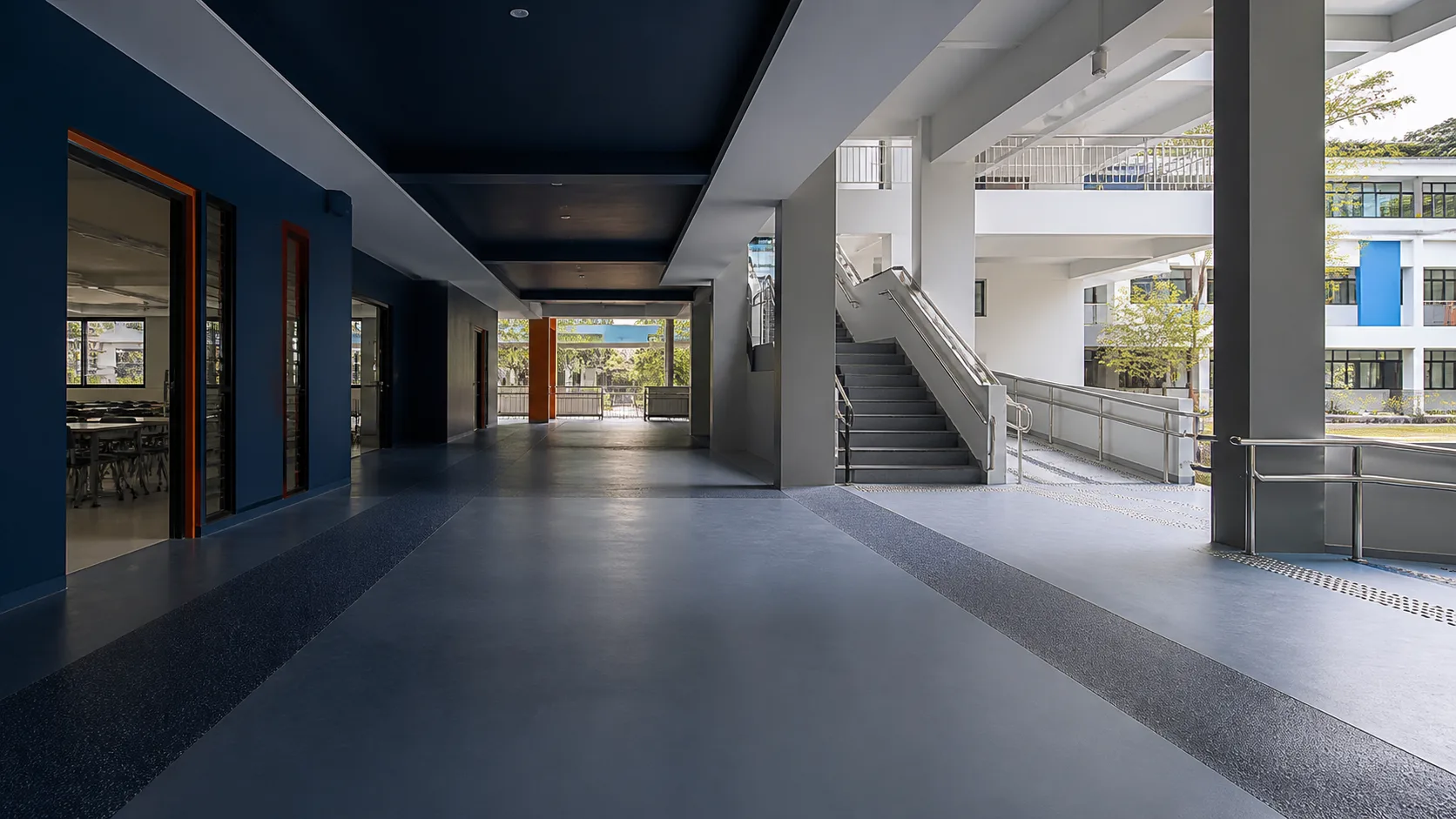
Classroom corridors, stairs and ramps, canteen wet zones and sports spaces face different traffic, cleaning, slip and access constraints. Map the campus by zone and term calendar first, then enter the appropriate specialist technical path.
01 · Start with campus operations
This industry page helps school leaders, facilities teams, consultants and contractors define how the campus operates. The educational-facilities application page then examines substrate, coating route, programme and handback requirements.
Put preparation, installation, cure, inspection and reopening on one programme.
Odour, ventilation, isolation, noise and safe routes shape phased work.
Ramps, stairs, entrances and wet areas need texture assessed against contaminants, drainage and cleaning.
Inspect wear, stair nosings, ramp texture and local damage each term; plan renewal in longer breaks.
02 · Map the campus zones
These four zones help the project team form one useful brief. They are not a remote specification and do not imply one product across the campus.
Between-class surges, chair legs, bags, cleaning trolleys and frequent mopping.
Food and drink contamination, wet cleaning, drainage, rain entry and cleanable grip.
Nosings, turning, gradient, tracked-in rain, accessible routes and emergency movement.
Sports texture, line marking, point loads, trolleys, event changeovers and exposure.
03 · Keep the floor ready for every term
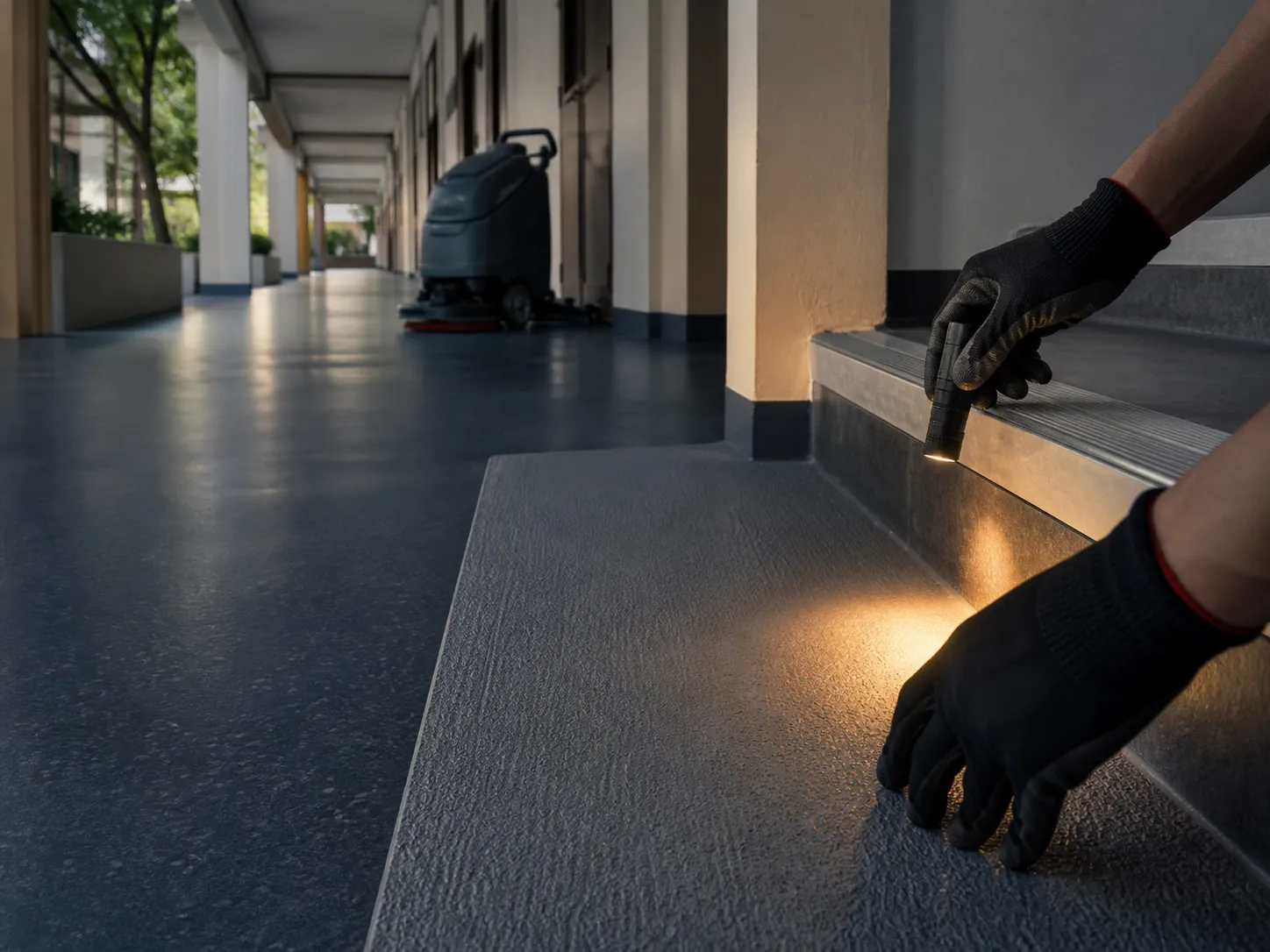
Use the right cleaning method, inspect nosings, ramps and wet routes each term, and record renewal scope before longer breaks. That turns emergency patching into planned work.
Record wear, slip complaints, dusting, cracks, peeling and lost line marking.
Use detergents, machines and pads suited to the coating without residue or excessive abrasion.
Check entrances, ramps, stairs, canteens and peak-change corridors first.
Confirm area, isolation, substrate, cure and reopening before procurement.
04 · Enter the right specialist path
Each path answers a different procurement and design question, keeping the industry overview, application selection and single-system content distinct.
Build the full brief around substrate, zone, low-odour needs, cleaning and holiday access.
Open education application↗Assess contaminants, texture and cleanability for ramps, entrances, canteens and wet routes.
Open anti-slip guide↗Compare water-based, thin-film and self-levelling epoxy routes with public data.
Open epoxy guide↗Address court substrate, ponding, texture, colour, line marking and external exposure.
Open sports application↗Published technical evidence
These are project discussion entry points, not a campus-wide specification. Confirm the system against zone, substrate, cleaning, slip risk, work window and relevant TDS.
05 · Build the campus brief
Choose the closest campus conditions. The information transfers into the technical project brief, so it does not need to be entered again. Rayson will provide a first response within one working day.
Ask on WhatsApp first↗Quick technical answers
The window must include preparation, every coat, cure, inspection, cleaning and reopening. Selecting from application time alone can miss the real handback date.
This industry page defines campus zones, operations, maintenance and calendar constraints. The application page goes deeper into substrates, coating routes, programme and technical evidence.
Entrances, ramps, stairs, canteens, wash areas and any route exposed to rain or wet cleaning should be assessed against the actual contamination, drainage and cleaning method.
No. Lower-odour direction does not remove the need to plan ventilation, isolation, safe work, cure and reopening.
First assess adhesion, contamination, moisture, dusting, cracks and substrate strength. Those findings determine removal, repair, preparation and primer direction.
Send a zone plan, area by zone, existing-surface photographs, cleaning routine, traffic, wet areas, available work dates and the required reopening date.
Rayson assistant
Answers from Rayson's own product information
Guidance only — confirm specifications with the Rayson technical team.