Cuts water penetration through cement renders, screeds, slurry coats and grout
Waterproofing additive for cement renders, plaster and screeds
Rayson SealForce RW1 is a one-part latex waterproofing and bonding additive for cement-based work — mixed into renders, screeds, slurry coats, tile adhesives and grout to cut water penetration, strengthen the mortar and improve its bond and flexibility.
Best for the cement layers of wet areas and renovations — water-resistant render, screed and slurry coats, tile bedding and grout, tiling over existing tiles and bonding new work to old concrete — alongside a SealForce membrane wherever the waterproofing has to bridge cracks.
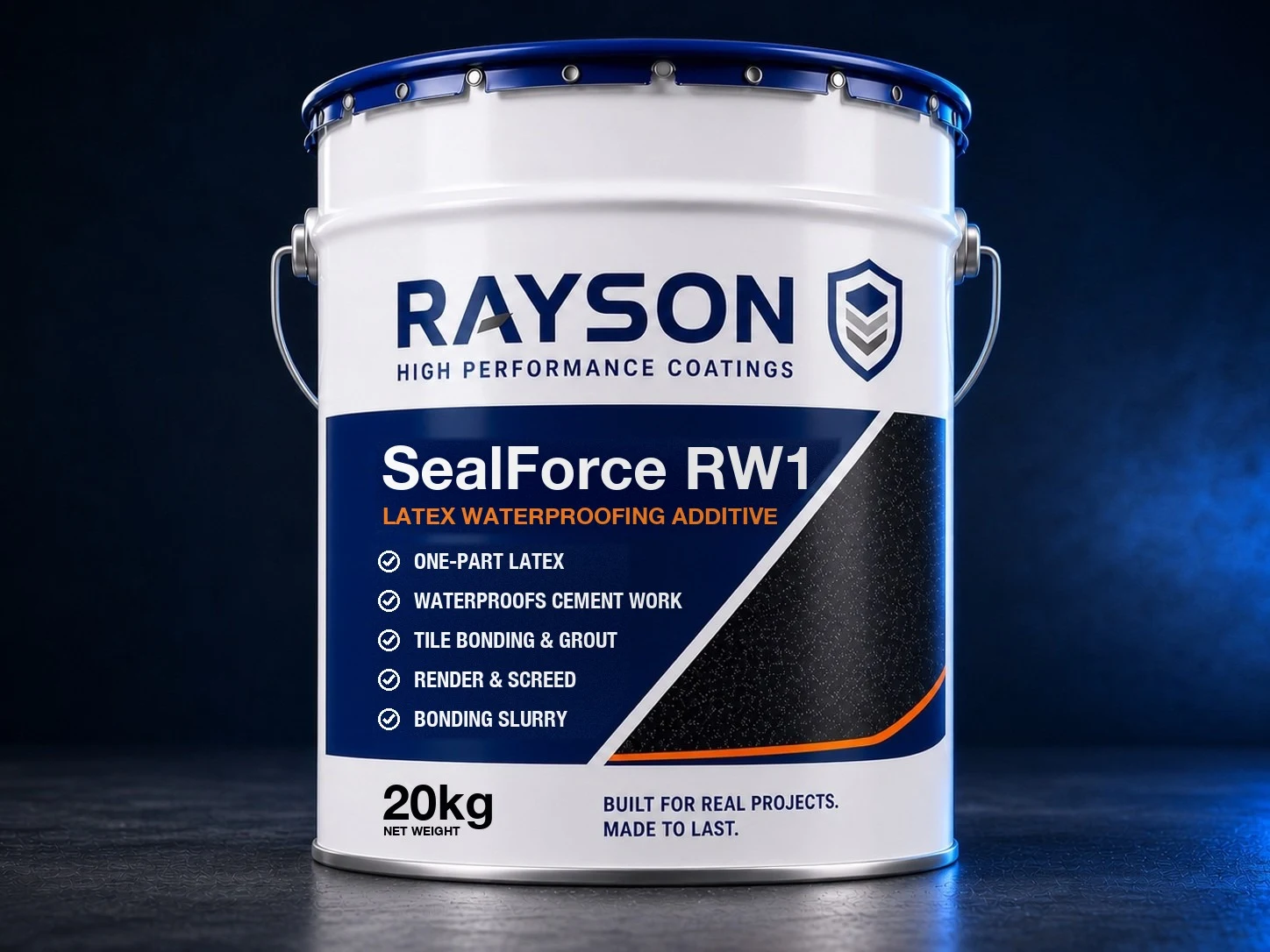
Rayson SealForce RW1 is a one-part latex waterproofing and bonding additive for cement-based work — mixed into renders, screeds, slurry coats, tile adhesives and grout to cut water penetration, strengthen the mortar and improve its bond and flexibility. Best for the cement layers of wet areas and renovations — water-resistant render, screed and slurry coats, tile bedding and grout, tiling over existing tiles and bonding new work to old concrete — alongside a SealForce membrane wherever the waterproofing has to bridge cracks.
Waterproofing additive for cement renders, plaster and screeds
Slurry coat that seals concrete and masonry, and bonds new render, screed or tiles to old concrete
Additive for cement-sand mortars and tile adhesives: ceramic and homogeneous tiles, marble, granite and natural stone
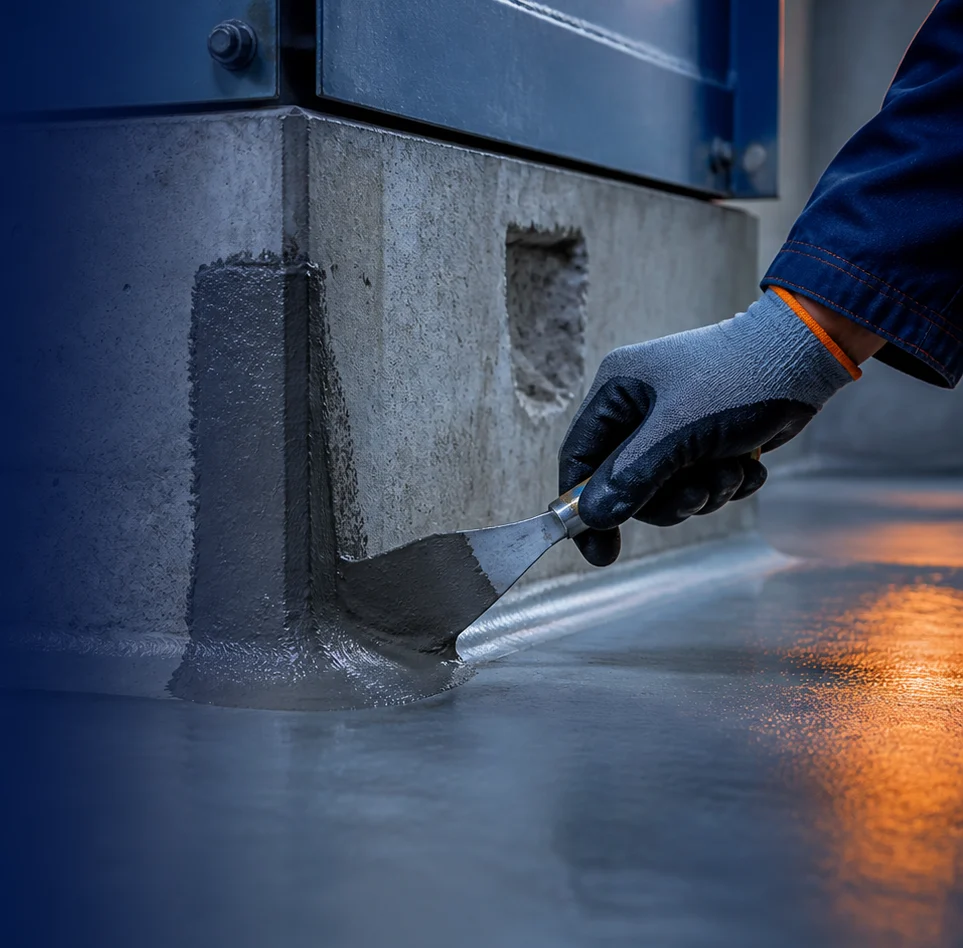
A one-part latex additive that waterproofs and strengthens renders, screeds, slurry coats, tile beds and grout, and bonds new cement work to old.
This sequence supports early planning. It does not replace the current Technical Data Sheet, approved method statement or project-specific technical review.
Concrete at least 28 days old, and render at least 7 days old
One part. Stir before use, then mix it in at the stated ratio by volume; use fine sand under 0.5 mm for thin-set mortar and grout. Add no extra water beyond the stated dilution
Recommended methods: Mixed into mortar, Brush (slurry coat), Roller (primer). Confirm coat count and thickness for the project.
Lay render, screed or tiles onto a slurry coat while it is still wet, never over a dried slurry. Grout no sooner than 24 hours after tiling, and keep traffic off for at least 48 hours after grouting. Protect fresh work from rain, direct sun and drying wind
This diagram explains a typical system position, not a fixed specification. Primer, body coat, finish, thickness and detailing must be confirmed for the project.
Rayson SealForce RW1 serves as the additive. Confirm the complete build-up against the substrate, exposure and project requirements.
Review primers, body layers, finishes or specialist components connected to this product.
These current product figures support early selection. Confirm the final build-up, quantity and application conditions against the Technical Data Sheet and site conditions.
Set by the mix rather than the area: in a slurry coat or thin-set tile mortar, 1 part RW1 to 1 part cement and 1 part sand by volume; in renders, screeds and grout, RW1 diluted 1:1 with water in place of the mixing water; as a primer or sealer, RW1 diluted with up to an equal volume of water. Rayson estimates the quantity for each job
One part. Stir before use, then mix it in at the stated ratio by volume; use fine sand under 0.5 mm for thin-set mortar and grout. Add no extra water beyond the stated dilution
Lay render, screed or tiles onto a slurry coat while it is still wet, never over a dried slurry. Grout no sooner than 24 hours after tiling, and keep traffic off for at least 48 hours after grouting. Protect fresh work from rain, direct sun and drying wind
20 kg pail
These links continue the comparison; they are not automatic substitutes. Confirm the substrate, exposure and complete build-up before selection.
Send the area, substrate condition, expected traffic or exposure, required finish and programme. The technical team can help review the system build-up and estimated quantity.
It is mixed into cement-based work to make it more water-resistant, stronger and better bonded: renders, plaster and screeds; slurry coats that seal a surface and bond new work to old; tile adhesives and thin-set mortar, including tiles over existing tiles; tile grout; and patching and re-pointing. Diluted, it is also a primer and sealer for absorbent cement surfaces, and an injection that re-bonds hollow plaster and screed.
Yes, for cement work: mixed into a render, screed, slurry coat, tile bed or grout, it cuts water penetration and makes the layer denser and stronger. What it cannot do is bridge a crack that moves, so where the waterproofing has to survive movement — a toilet, bathroom or balcony under tiles, a flat roof or a planter — the membrane is SealForce WB20, AC10 or RC30, and RW1 waterproofs and strengthens the cement layers around it.
By volume. Slurry coat or thin-set tile mortar: 1 part RW1, 1 part cement and 1 part sand, with fine sand under 0.5 mm for thin-set work. Renders, screeds and grout: RW1 diluted 1:1 with water, used in place of the mixing water. Primer or sealer: RW1 diluted with up to an equal volume of water and rolled onto a clean surface. Add no extra water.
Yes, if the old tiles are sound and firmly bonded: replace any hollow ones, clean, degrease and abrade the glaze, brush on an RW1 slurry coat and bed the new tiles while it is still wet. Trial the bond on very smooth or polished tiles first. Overlaying is also how a new HDB flat is re-tiled in its first three years, when hacking the bathroom tiles is not allowed.
Grout no sooner than 24 hours after tiling, and keep traffic off for at least 48 hours after grouting. Lay render, screed or tiles onto a slurry coat while it is still wet, never over a dried slurry.
Yes. Clean and roughen the old surface, remove paint and contaminants, brush on a slurry coat of 1 part RW1, 1 part cement and 1 part sand, and place the new render, screed or concrete while the slurry is still wet.
RW1 strengthens cement-based patching, render and re-pointing — the economical repair for floors, walls and plaster. PatchBond TX80 is a two-component epoxy repair compound for higher-strength, non-sag repairs on vertical, overhead or mat-damp concrete.
SealForce RW1 is part of Rayson's upcoming waterproofing release. Send the project details and your required date, and Rayson will confirm supply timing, quantities and, where you need one, an applicator in the Rayson network before you commit.
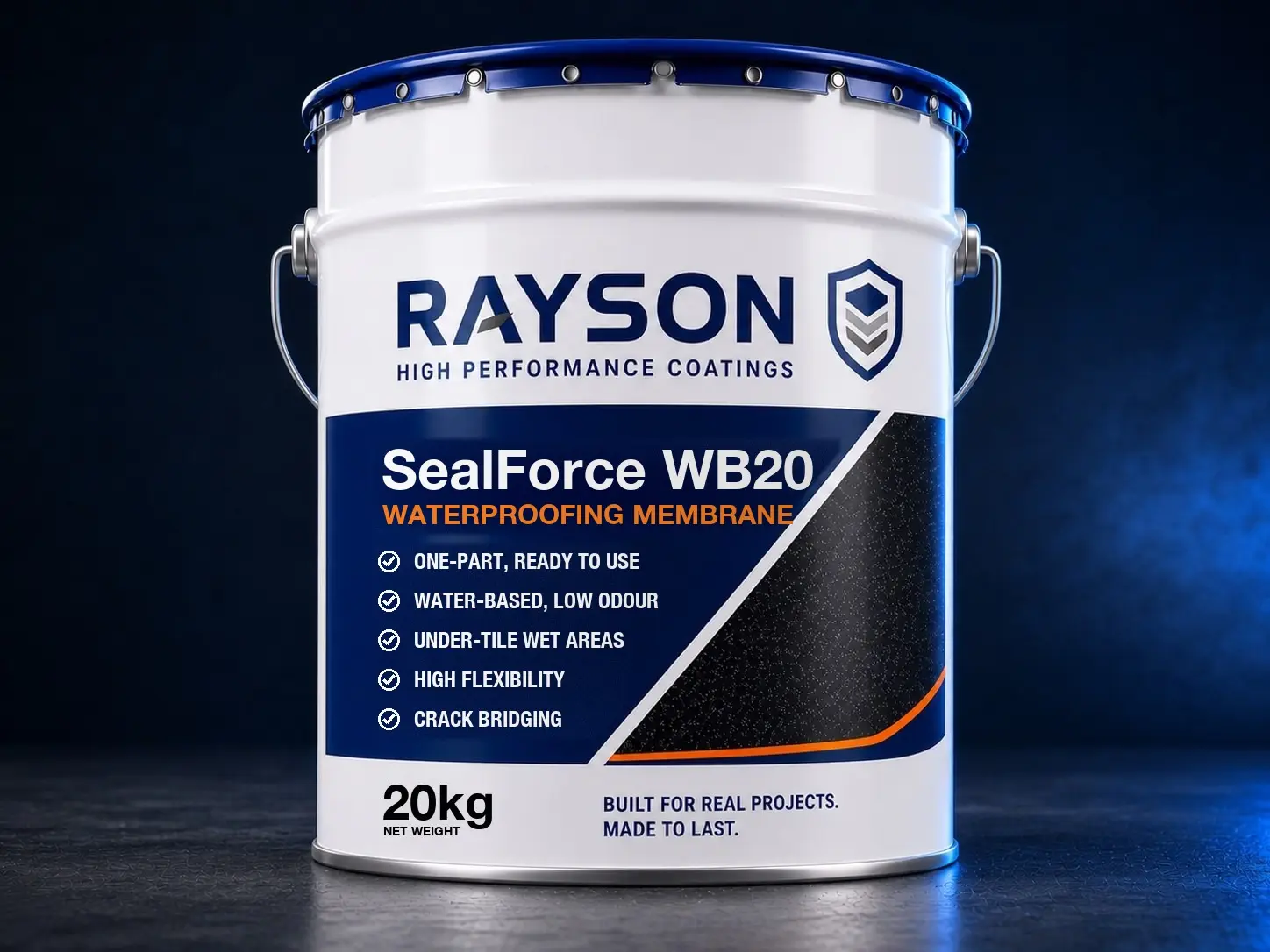
One-part · water-based · 20 kg
Rayson SealForce WB20 is a one-part, water-based, polyurethane-modified waterproofing membrane for toilets, showers, bathrooms, balconies and other interior wet areas — rolled or brushed on in two coats and concealed beneath the tiles, screed or render.
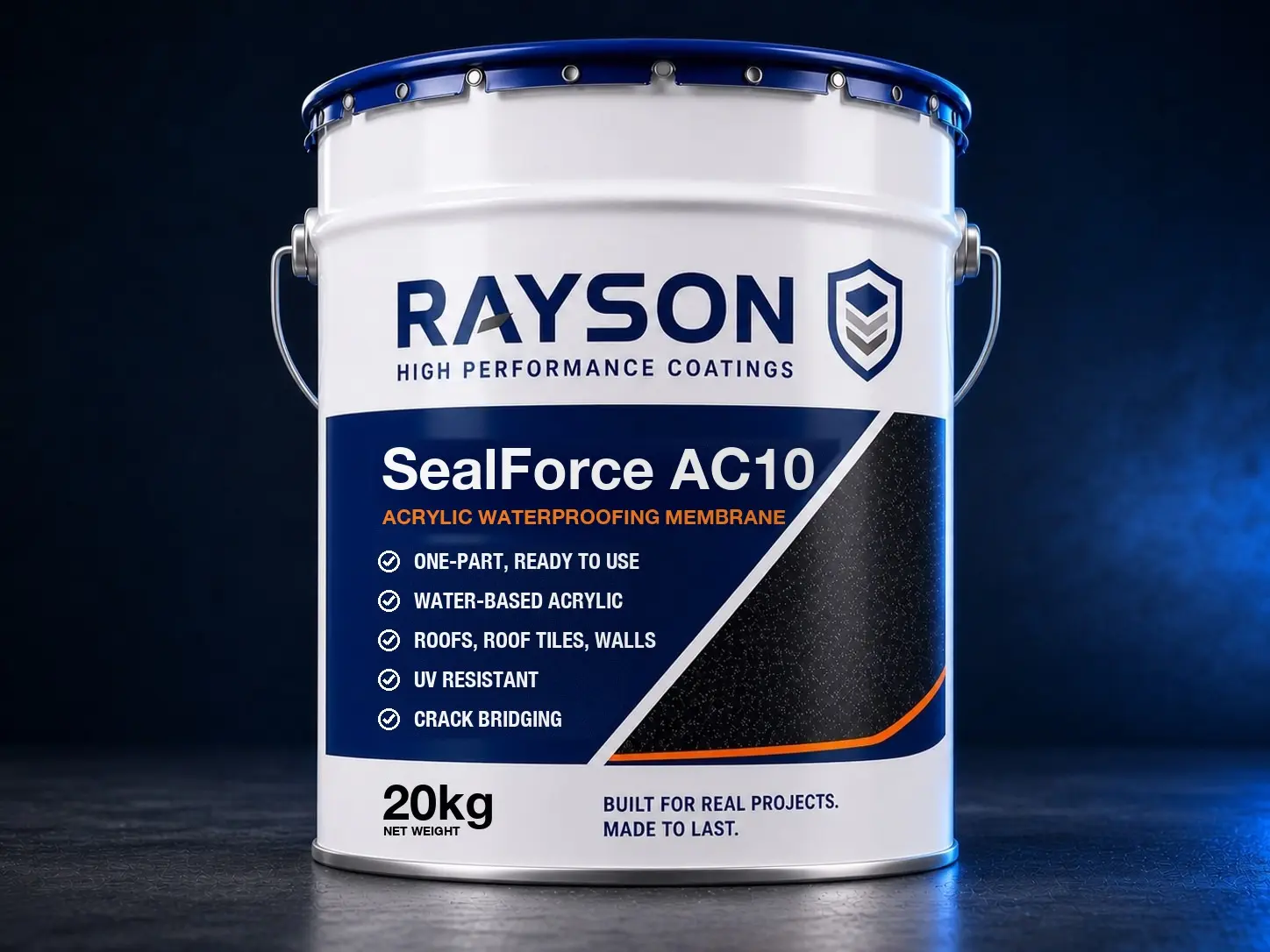
One-part acrylic · 20 kg
Rayson SealForce AC10 is a one-part, water-based acrylic waterproofing membrane for exposed roofs, old roof tiles and external walls — applied cold, straight from the pail, by brush, roller or airless spray, and drying to a seamless, elastic, UV-resistant film.
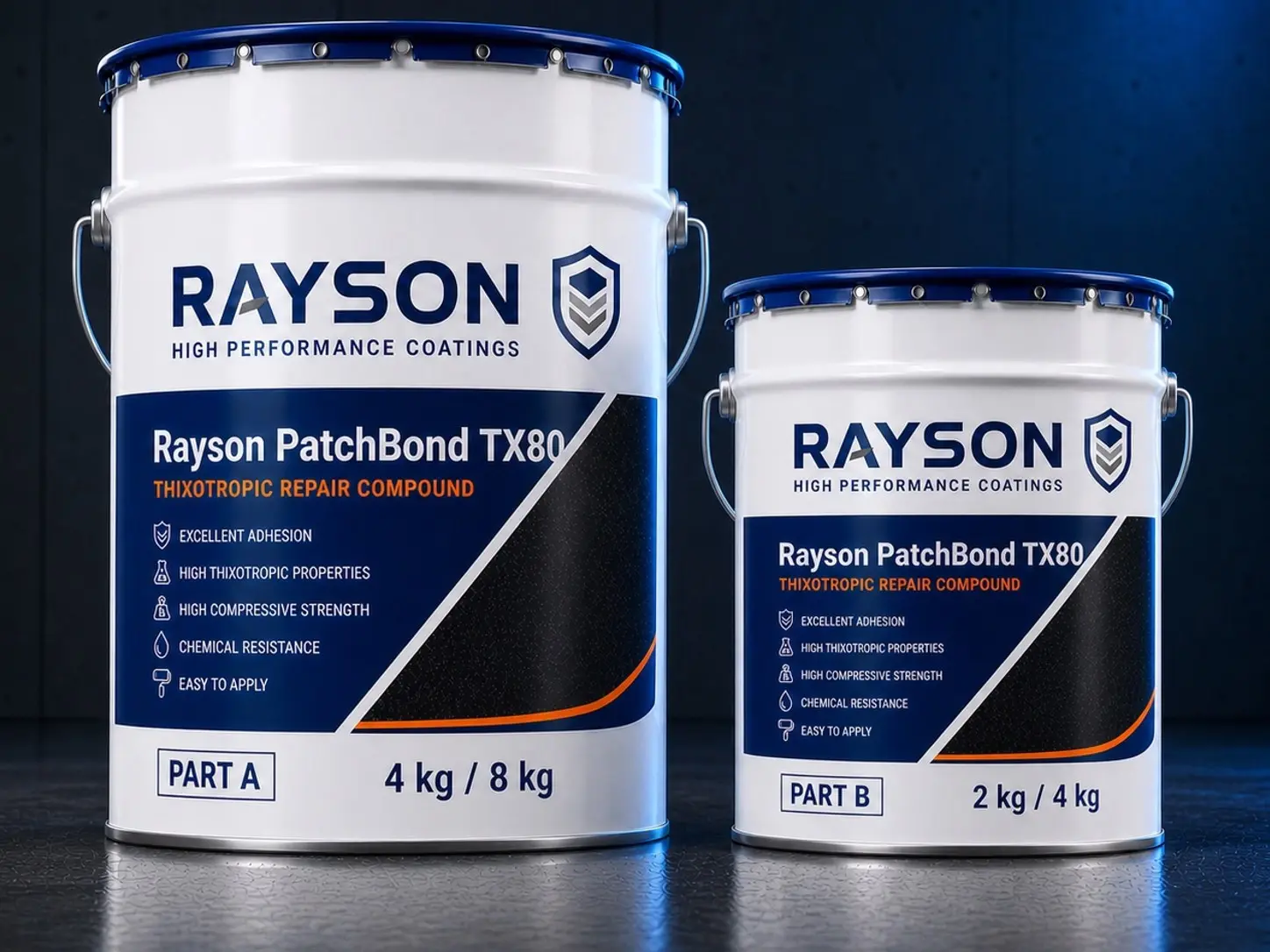
Two-part epoxy repair system
Rayson PatchBond TX80 is a two-component, solvent-free thixotropic epoxy adhesive and repair compound with exceptional sag resistance that bonds and fills on vertical, overhead and even mat-damp concrete surfaces.
Rayson assistant
Answers from Rayson's own product information
Guidance only — confirm specifications with the Rayson technical team.