Highly elastic (>500% elongation), hydrophobic membrane
Waterproofing beneath tiling and in bathrooms and wet areas
Rayson SealForce PA525-S is a two-component, roller-applied polyurea-based liquid waterproofing membrane — highly elastic and hydrophobic, bonding strongly to concrete, tile, metal and asphalt for wet areas, roofs and car parks.
Best for concealed and exposed waterproofing under tiles, in bathrooms and wet areas, on roofs, and within car park, bridge and tunnel deck systems.
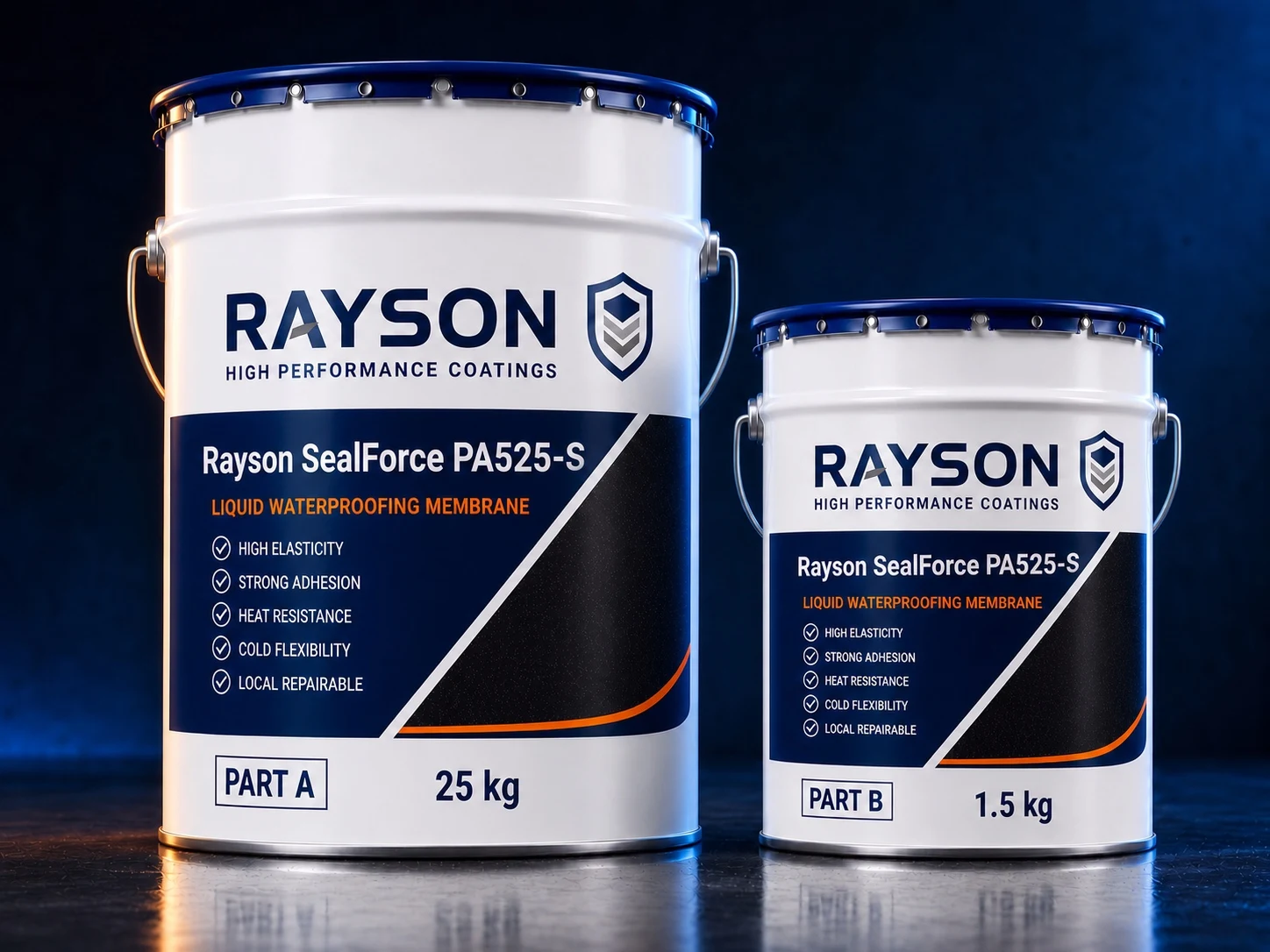
Rayson SealForce PA525-S is a two-component, roller-applied polyurea-based liquid waterproofing membrane — highly elastic and hydrophobic, bonding strongly to concrete, tile, metal and asphalt for wet areas, roofs and car parks. Best for concealed and exposed waterproofing under tiles, in bathrooms and wet areas, on roofs, and within car park, bridge and tunnel deck systems.
Waterproofing beneath tiling and in bathrooms and wet areas
Roof waterproofing
Primary waterproofing membrane in car-park deck systems
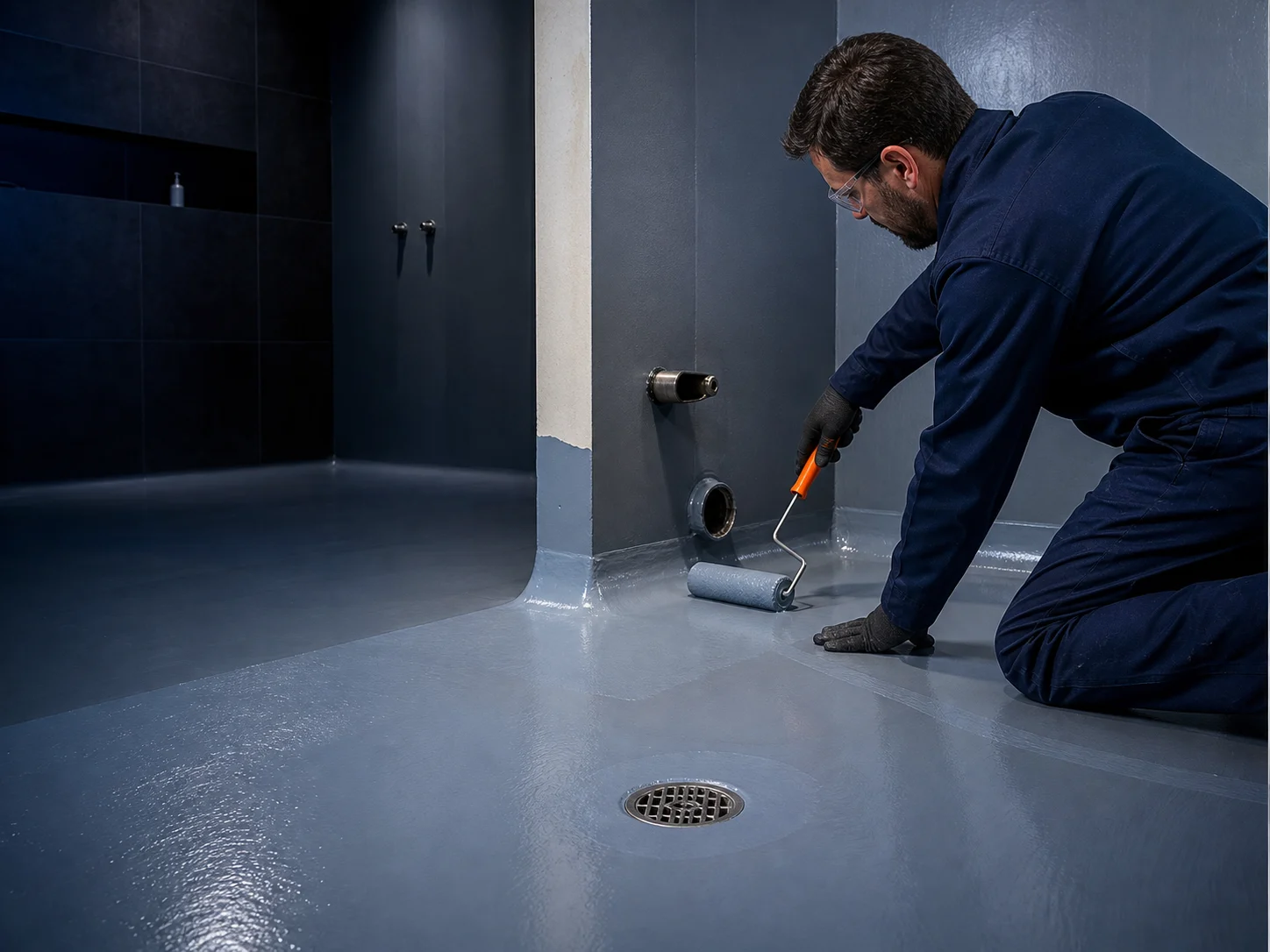
A highly elastic roller-applied membrane for wet areas, roofs, decks and junctions across concrete, tile, metal and asphalt.
This sequence supports early planning. It does not replace the current Technical Data Sheet, approved method statement or project-specific technical review.
Sound concrete of at least 25 N/mm² compressive strength and 1.5 N/mm² pull-off
Two components; add Part B to Part A and mix with a low-speed mixer (~300 rpm) for 2–3 minutes to a uniform colour; prepare only what can be used within the pot life
Recommended methods: Roller, Brush. Confirm coat count and thickness for the project.
Pot life ~30 minutes; 4–6 hours to cure; 6–12 hours between coats; final cure 7 days
This diagram explains a typical system position, not a fixed specification. Primer, body coat, finish, thickness and detailing must be confirmed for the project.
Rayson SealForce PA525-S serves as the standalone coating. Confirm the complete build-up against the substrate, exposure and project requirements.
Review primers, body layers, finishes or specialist components connected to this product.
These current product figures support early selection. Confirm the final build-up, quantity and application conditions against the Technical Data Sheet and site conditions.
1.5–1.8 kg/m² total (typically two coats at 0.75–0.9 kg/m² each)
Two components; add Part B to Part A and mix with a low-speed mixer (~300 rpm) for 2–3 minutes to a uniform colour; prepare only what can be used within the pot life
Pot life ~30 minutes; 4–6 hours to cure; 6–12 hours between coats; final cure 7 days
Part A 25 kg + Part B 1.5 kg
These links continue the comparison; they are not automatic substitutes. Confirm the substrate, exposure and complete build-up before selection.
Send the area, substrate condition, expected traffic or exposure, required finish and programme. The technical team can help review the system build-up and estimated quantity.
Yes — it is commonly used as a concealed waterproofing membrane beneath tiling in bathrooms and wet areas. Allow it to cure, then fix tiles with a compatible adhesive.
No. Unlike thermoplastic membranes it does not soften — it serves continuously to around 90 °C and tolerates brief thermal shocks to 200 °C, while remaining flexible down to -40 °C.
The concrete should be sound, with at least 25 N/mm² compressive strength and a pull-off strength of at least 1.5 N/mm², prepared and primed for its absorbency and surface type.
Normally two coats at about 0.75–0.9 kg/m² each, for a minimum total of roughly 1.5–1.8 kg/m². Actual consumption depends on substrate texture.
Yes — it is used as the primary waterproofing membrane within car-park deck systems, finished with the specified wearing course and anti-slip topcoat for traffic.
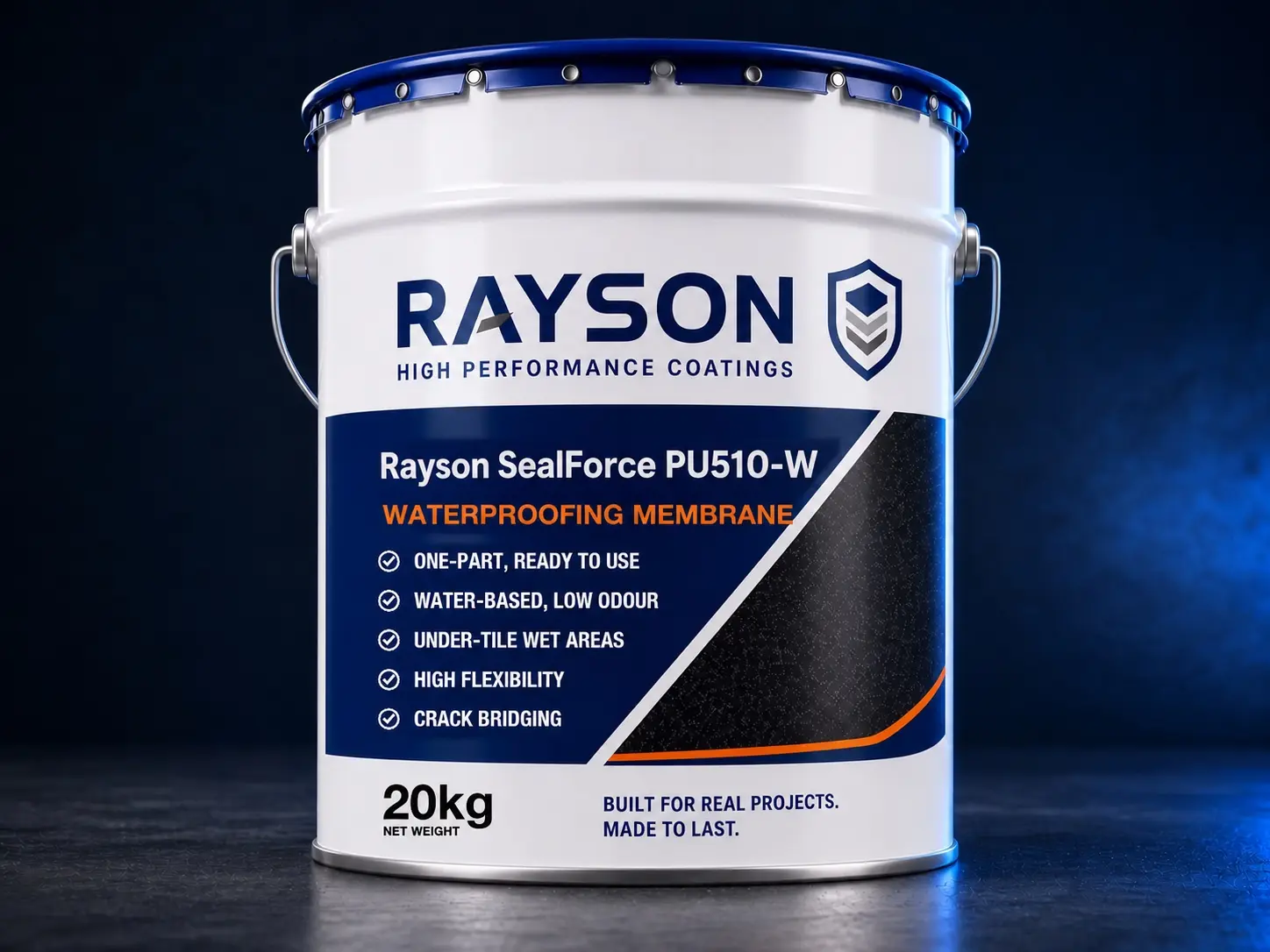
One-part · water-based · 20 kg
Rayson SealForce PU510-W is a one-part, water-based, polyurethane-modified waterproofing membrane for toilets, showers, bathrooms, balconies and other interior wet areas — rolled or brushed on in two coats and concealed beneath the tiles, screed or render.
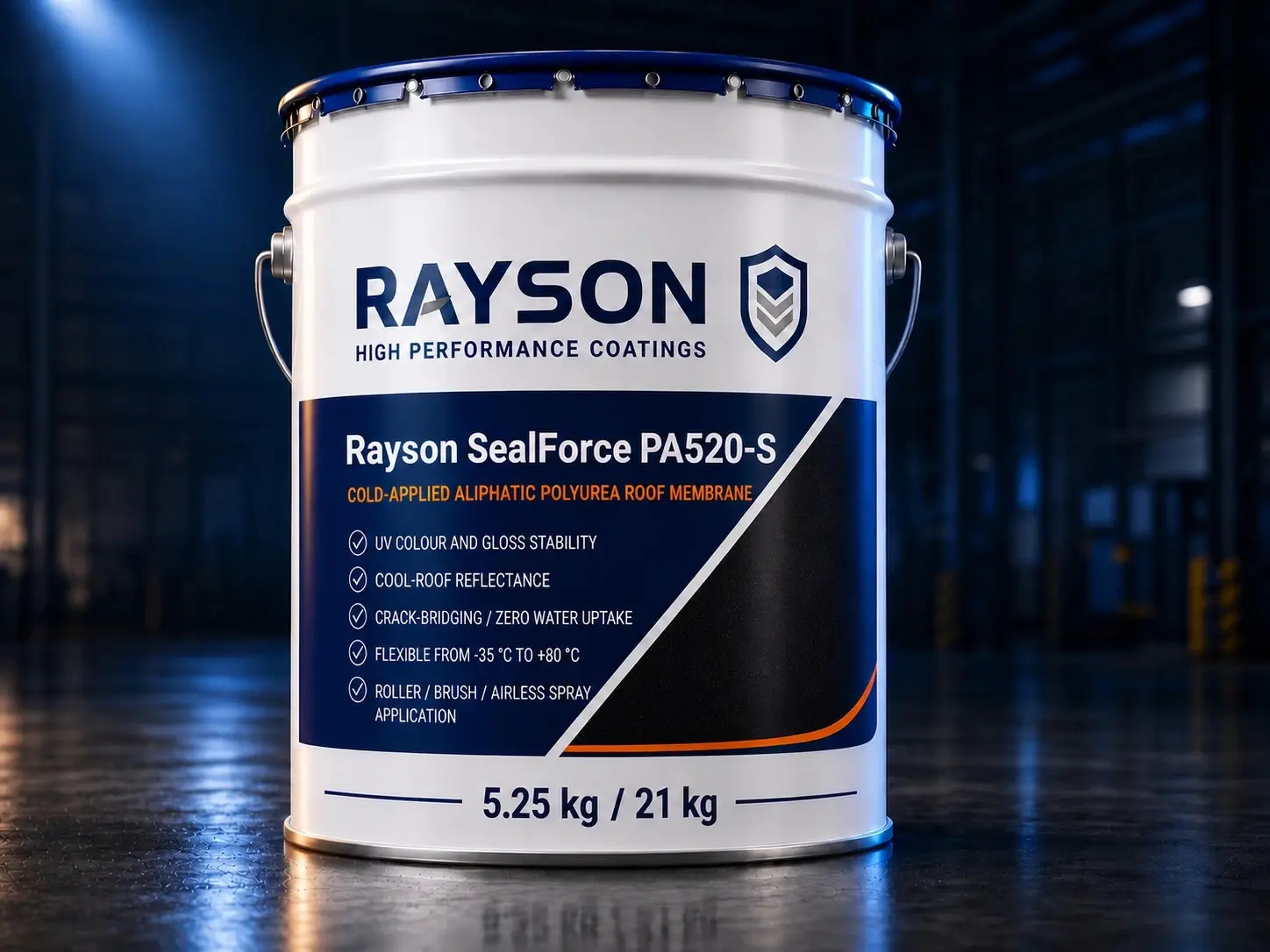
Two-component kit · 5.25 or 21 kg
Rayson SealForce PA520-S is a two-component, cold-applied aliphatic polyurea waterproofing membrane for exposed roofs — roller-, brush- or spray-applied, UV-stable and walkable, with certified cool-roof reflectance.
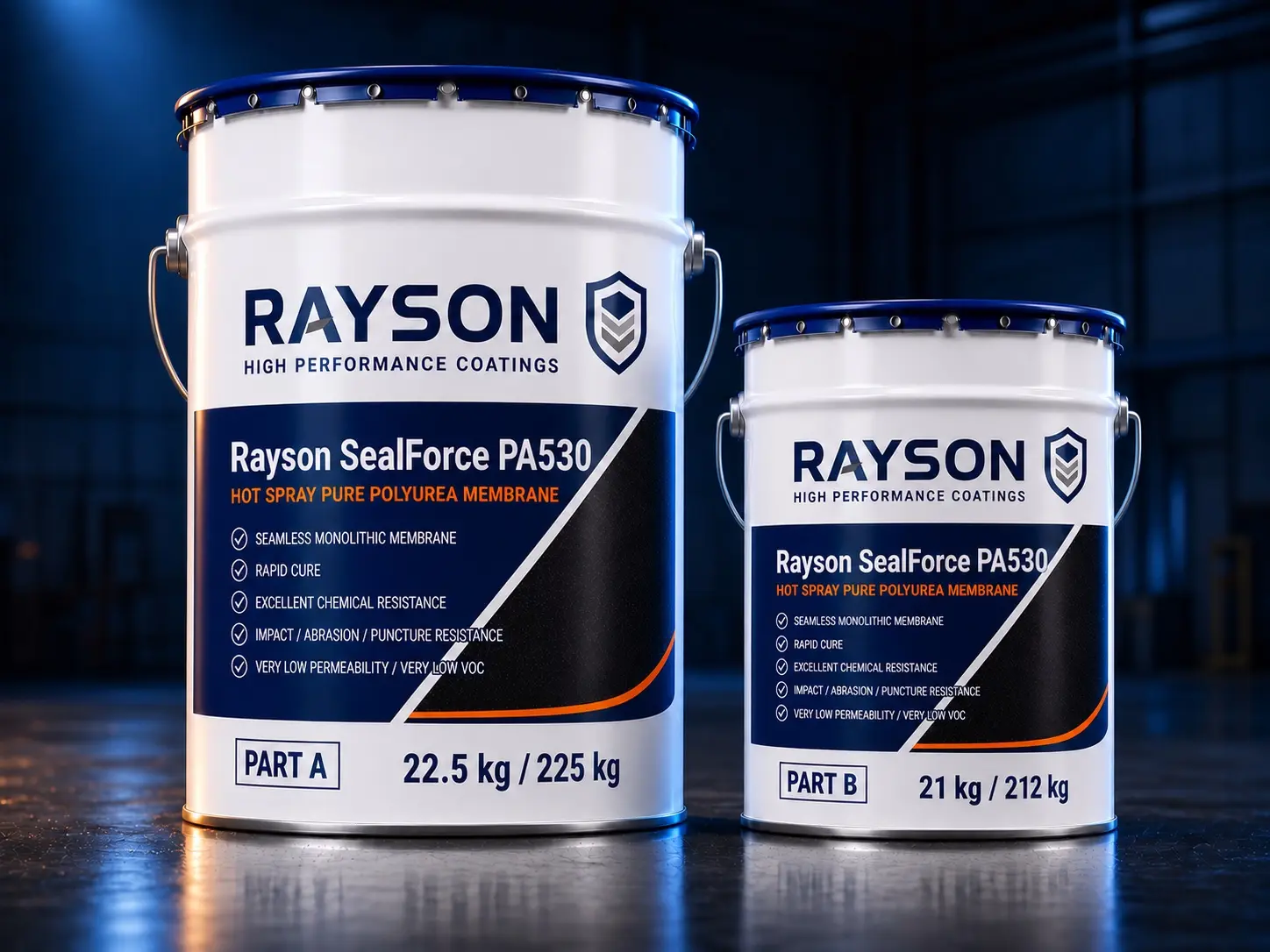
Fast-curing spray polyurea
Rayson SealForce PA530 is a hot spray-applied, 100% solids, rapid-curing pure polyurea membrane that forms a seamless, chemically resistant waterproof and protective lining on concrete and steel.
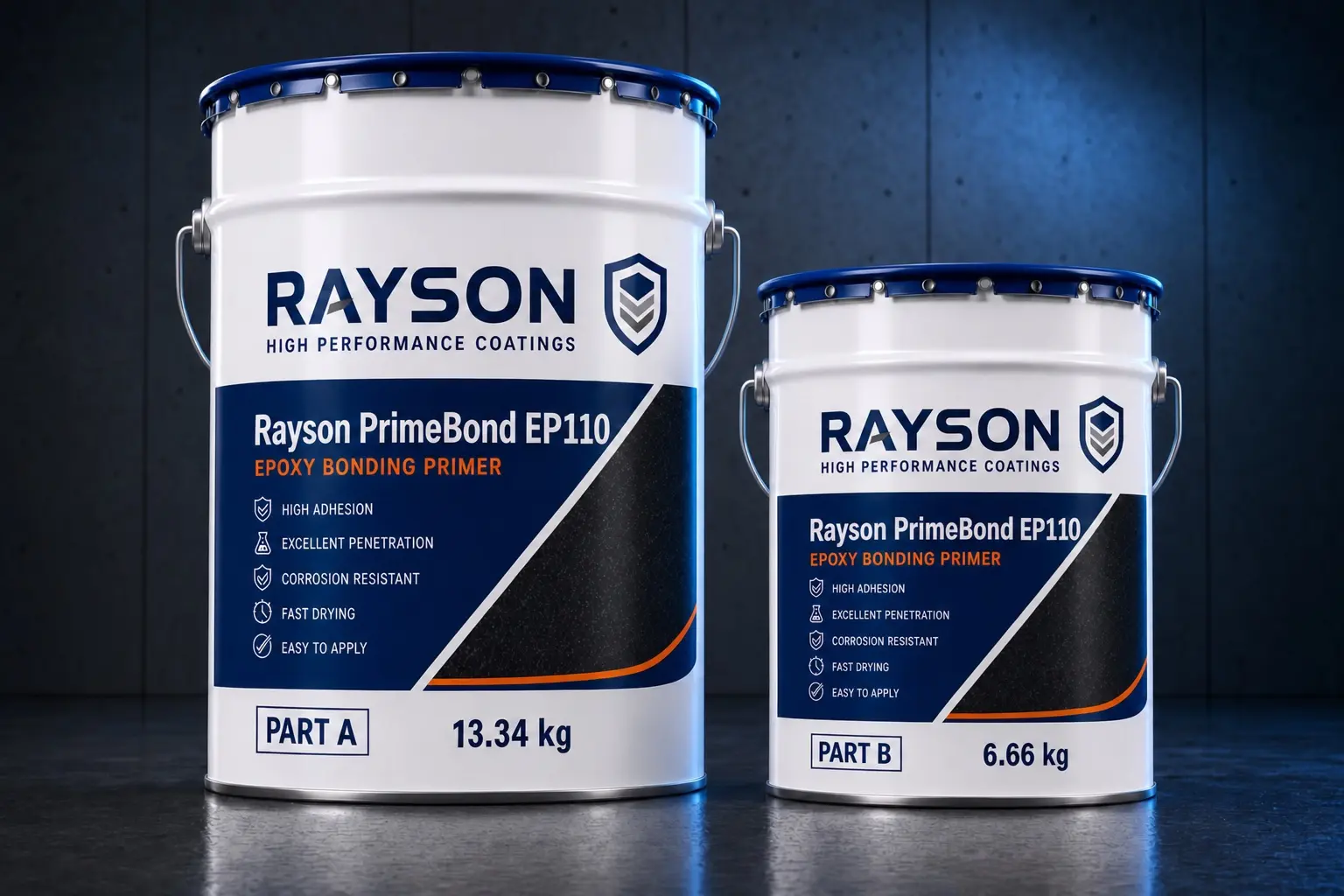
Solvent-free · damp tolerant
Rayson PrimeBond EP110 is a two-component, medium-viscosity, solvent-free epoxy bonding primer that anchors resin floor systems to concrete, screed, asphalt and prepared metal — on dry or damp substrates.
Rayson assistant
Answers from Rayson's own product information
Guidance only — confirm specifications with the Rayson technical team.