Manufacturing and production
Start with process liquids, cleaning, temperature, equipment bases and maintenance routes.
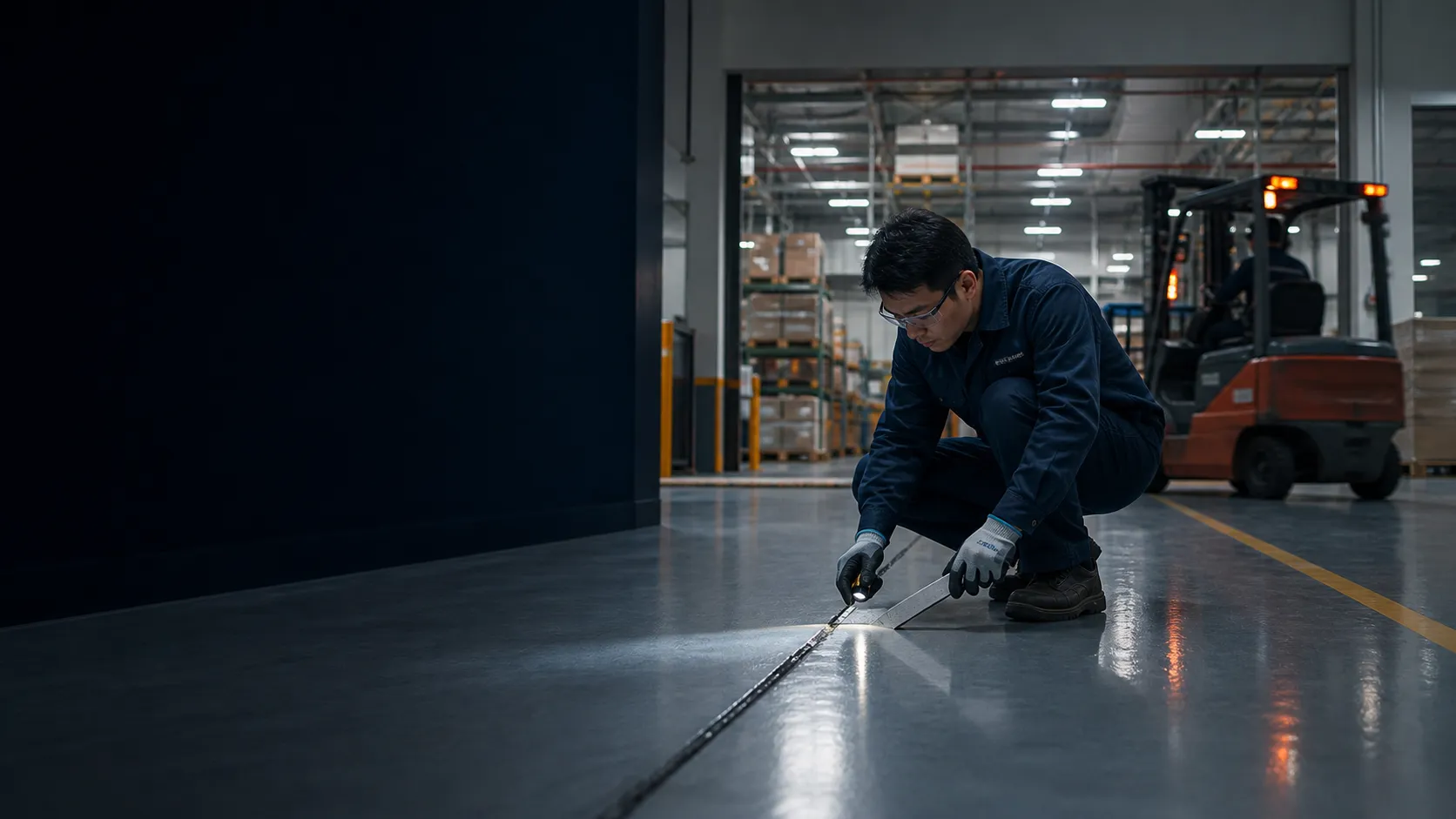
PRODUCTION DUTY · LOGISTICS TRAFFIC · OPERATIONAL ACCESS
Factories and warehouses can share a slab—but not the same primary risk.
Production zones start with process liquids, equipment details, temperature and cleaning. Logistics zones start with vehicles, wheels, turning, joints and loading thresholds. Separate the duties before discussing products.
01 · Separate the facility duties
Manufacturing floors are commonly directed by process contamination, machine bases, temperature, cleaning and maintenance access. Warehouse floors are commonly directed by vehicles, wheel types, traffic frequency, turning, loading thresholds and joints. Mixed facilities must define both—and the substrate and work window they share.
Start with process liquids, cleaning, temperature, equipment bases and maintenance routes.
Start with vehicles, wheel types, traffic frequency, turning, braking and loading thresholds.
Dusting, cracks, joint edges, contamination and existing coatings affect repair and primer direction.
Live operations, phased isolation and handover sequence belong in the system plan.
02 · One facility, different loads
Loading docks, main aisles, racking zones and production equipment do not fail in the same way. Select a zone to see what the project brief needs to establish.
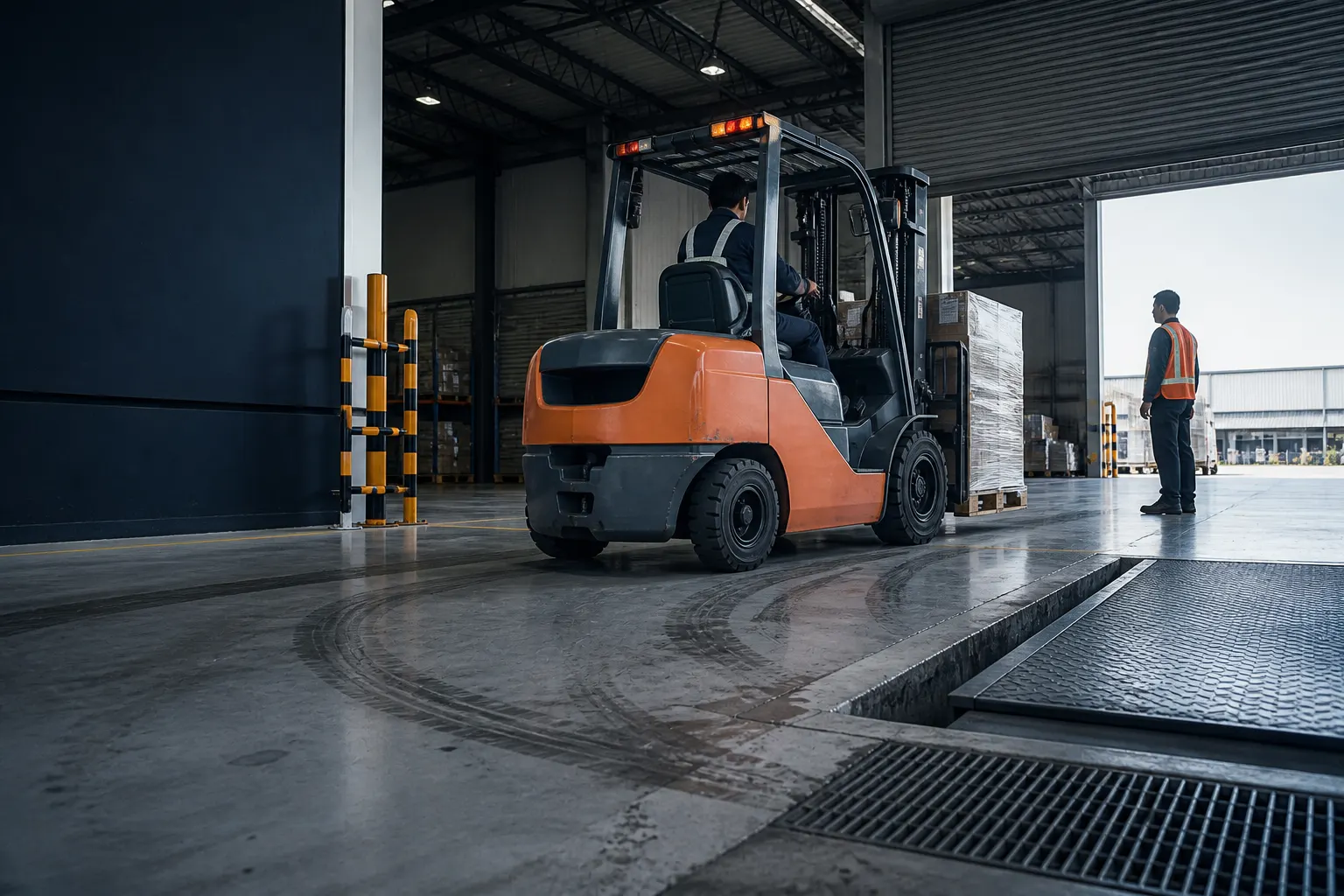
Braking, wet tracking and dock edges
Record vehicle type, movement frequency, rainwater tracking, dock edges and drainage. Texture, joints and details matter alongside abrasion resistance.
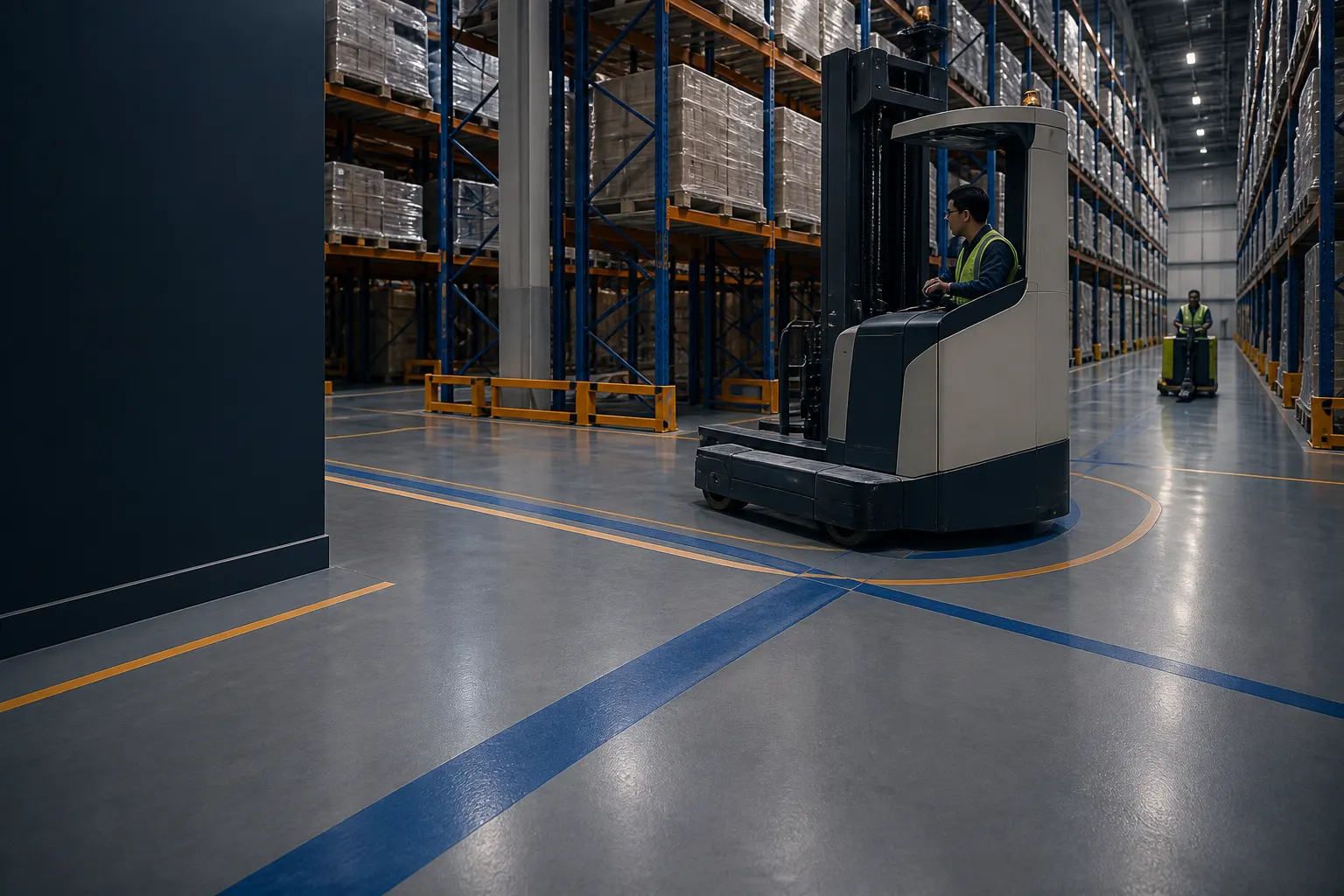
Repeated travel and turning
Map main routes, intersections, turning and braking points, then record shifts and traffic density. Include line marking and cleaning requirements.
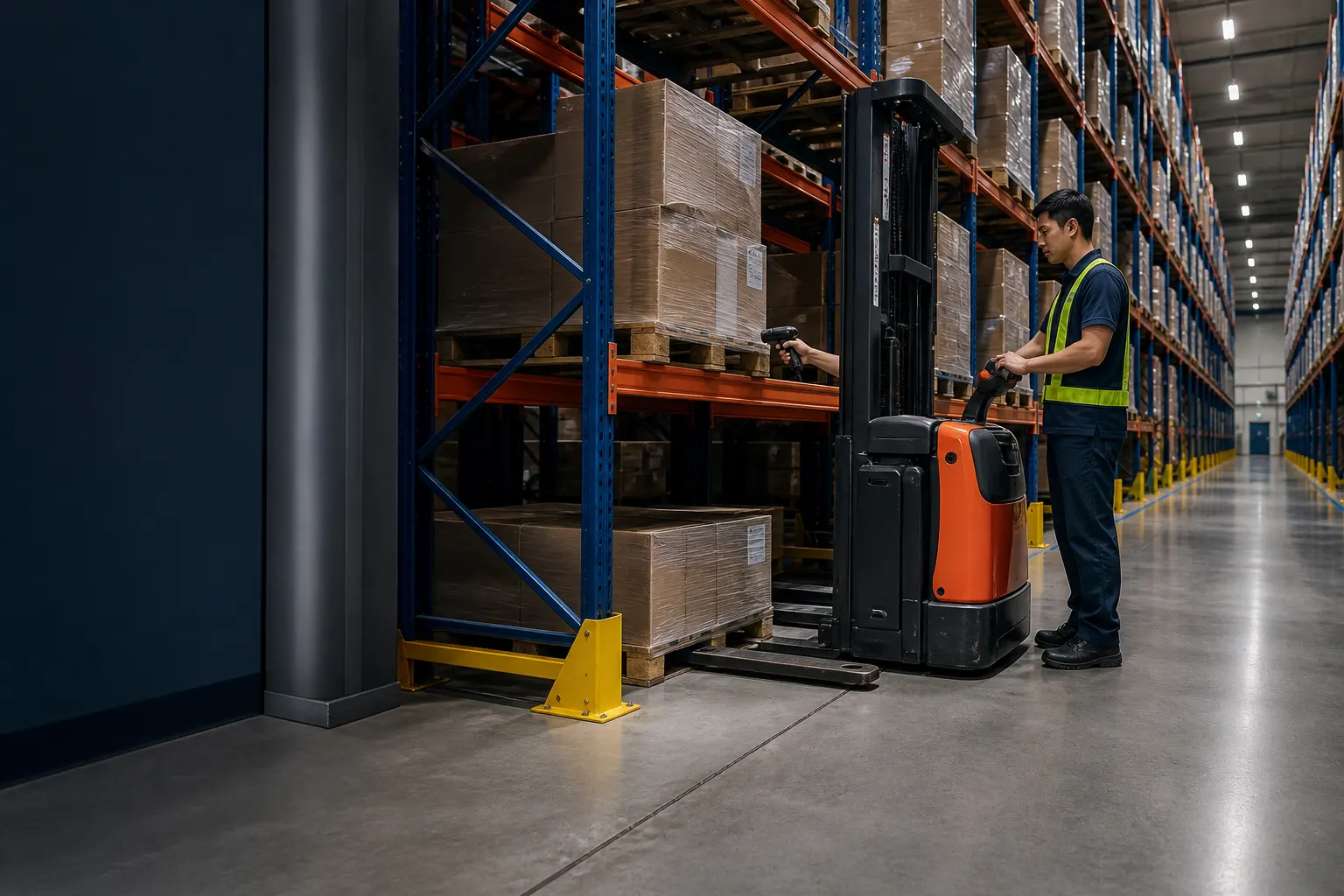
Point loads, dragging and narrow aisles
Define racking layout, base plates, pallet movement, picking equipment and slab joints. Repairs and joint treatment must sit inside the complete system.
Oil, coolant and equipment details
Provide oils, coolants, cleaners, temperature, contact time and equipment-base information. “Industrial floor” alone is not a specification.
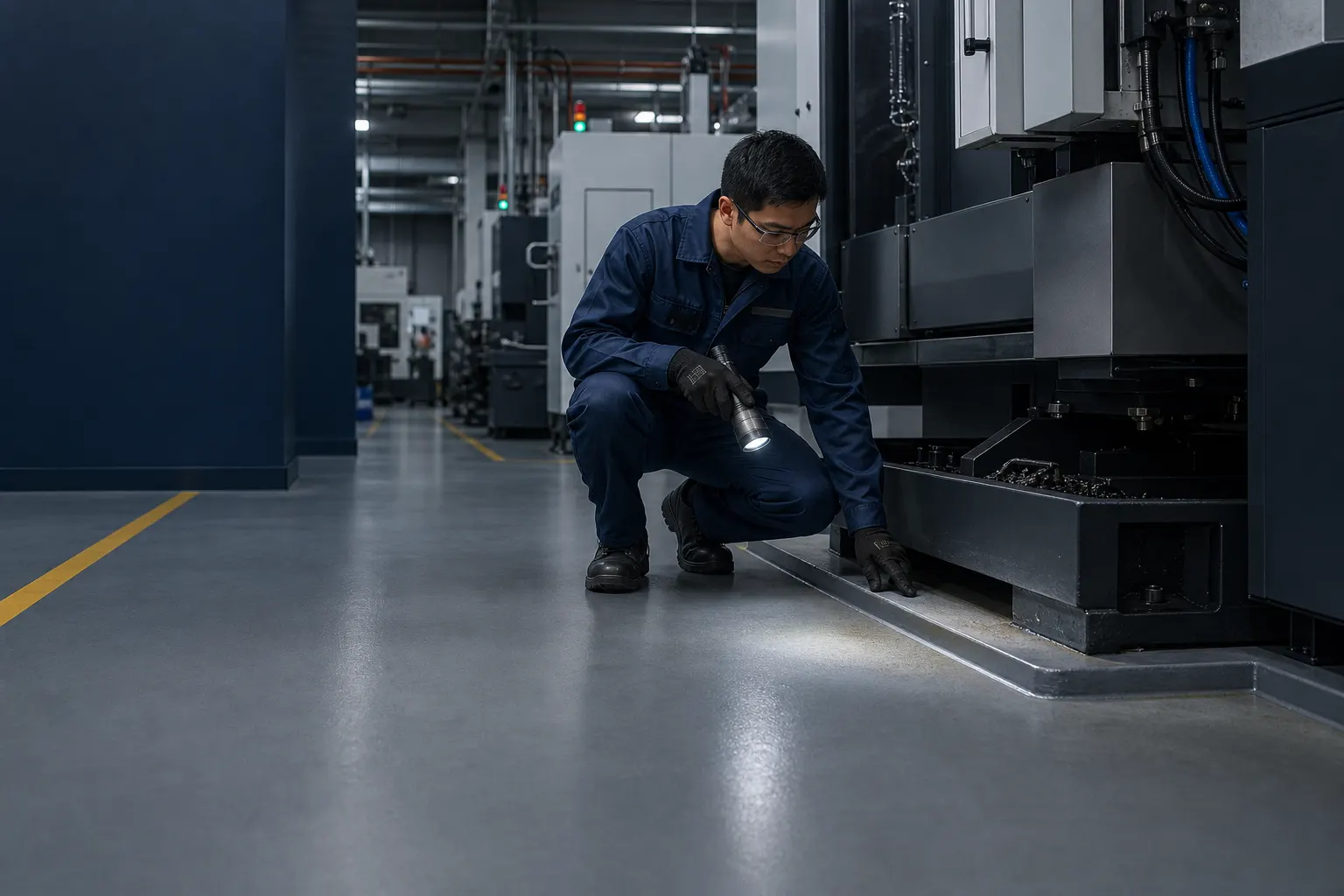
03 · Identify the failure mechanism
These are investigation directions, not a remote diagnosis. Photographs, traffic information and substrate checks help distinguish surface wear from deeper slab, joint or contamination problems.
Confirm whether the concrete surface is sound before discussing a coating.
Vehicle impact and slab movement require separate consideration.
Traffic density, wheels and turning determine where wear concentrates.
Contamination depth affects preparation, adhesion and system direction.
Plan demarcation around the cleaning and refurbishment cycle.
04 · From risk to system direction
These are discussion routes, not universal specifications. Final combinations must be checked against the substrate, traffic, exposure and relevant technical data sheets.
Assess joints, holes, edges and local defects before choosing the relevant repair direction.
Match the primer to the mechanically prepared substrate, including known dry or damp conditions.
Roller-applied or self-smoothing direction depends on traffic, profile, cleaning and project requirements.
Where chemical or heavier process exposure exists, evaluate PU-cement direction against the actual schedule.
05 · Plan around the operation
Divide work around traffic and production relationships.
Plan entrances, equipment access and handover order.
Record the surface, details and agreed project checks.
Inspect aisles, joints, transfer points and markings.
06 · Start the technical brief
Submit the closest operating conditions. We will carry them into the technical project brief so you do not type them twice. Rayson will provide its first response within one working day.
Ask on WhatsApp first↗Quick technical answers
Manufacturing zones commonly prioritise process liquids, temperature, cleaning, machine bases and maintenance access. Warehouse zones commonly prioritise vehicles, wheels, pass frequency, turning, loading thresholds and joints. Mixed facilities should be assessed zone by zone.
At minimum, separate production equipment, wet-cleaning or contamination zones, main logistics routes, turning and braking points, racking and picking areas, and loading thresholds. Different zones may require different repair, primer, texture or wearing-course directions.
Use the warehouse floor coating guide when forklift routes, logistics traffic and loading thresholds lead the project. Use the factory floor coating guide when production processes, oils, coolants, equipment and cleaning lead the project.
Provide the liquid type, concentration, temperature, contact time and cleaning method. Contamination depth and chemical exposure can change preparation, repair, primer and wearing-surface direction; an industry name alone is not enough.
Map the production, logistics and pedestrian routes that must remain available, then define isolation, preparation, vehicle diversion, coating sequence and handover. Reopening must follow the selected product TDS and actual site conditions.
Send the facility plan, production and storage zones, vehicles and wheels, process liquids, cleaning method, substrate and joint condition, failure photographs, approximate area and installation window.
Rayson assistant
Answers from Rayson's own product information
Guidance only — confirm specifications with the Rayson technical team.