Peeling, blistering, cracking and premature wear may look like product defects, but the visible damage does not prove the cause. A reliable diagnosis starts by locating where the bond or material has failed, then checking the slab, the interface, the coating build and the operating exposure.
Diagnose the visible symptom
Use the symptom to decide what to investigate first. It is a starting point, not a final diagnosis.
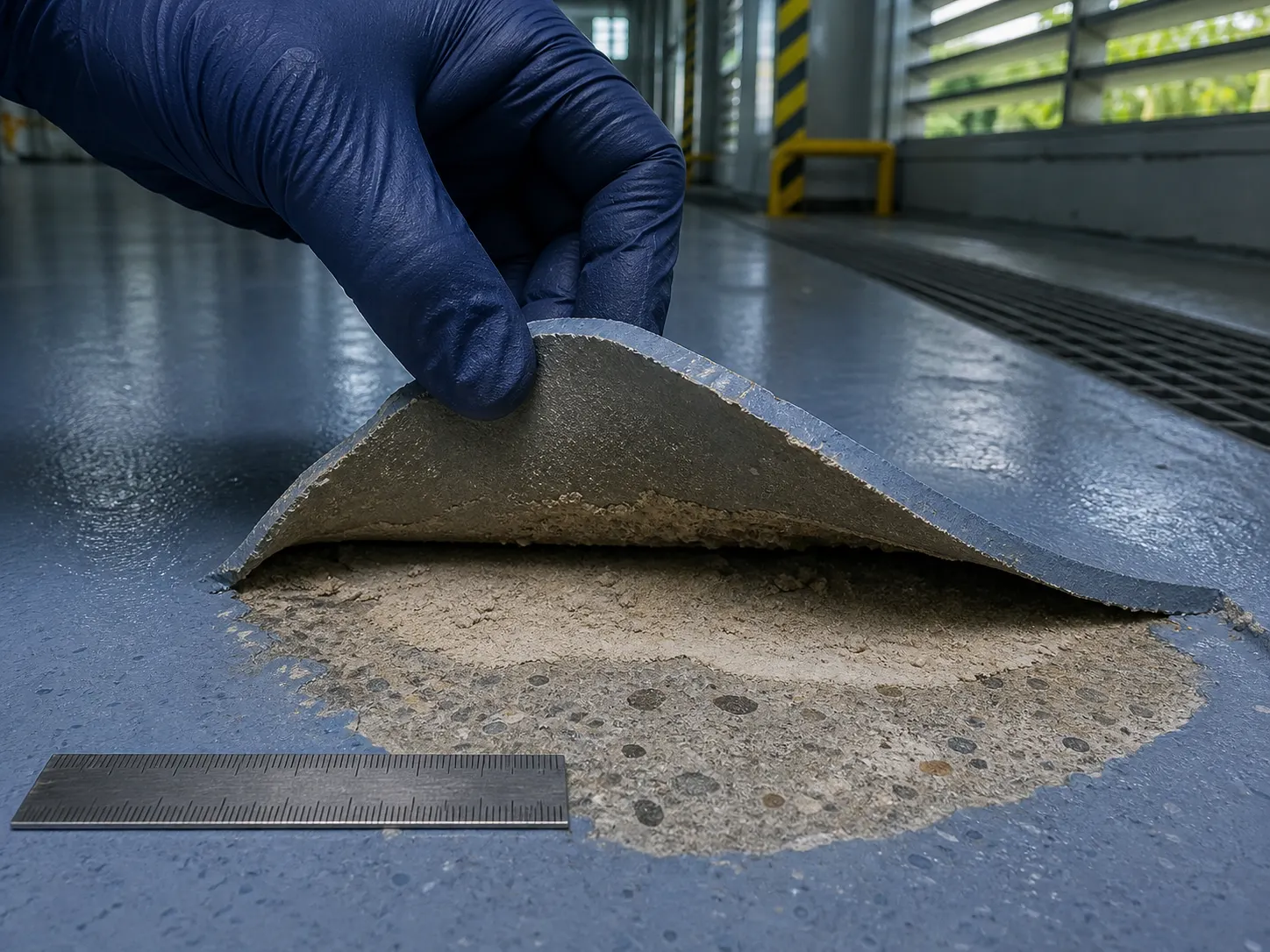
Open one before deciding why.
Possible causes: moisture movement, trapped air or application near dew point.
First check: inspect the underside and the exposed substrate.
Find the failure plane.
Possible causes: contamination, weak laitance, inadequate profile or moisture.
First check: identify whether concrete, dust or an earlier coat remains attached.
Trace it into the substrate.
Possible causes: slab or joint movement, impact or an unsuitable rigid build.
First check: establish whether the crack continues into the concrete.
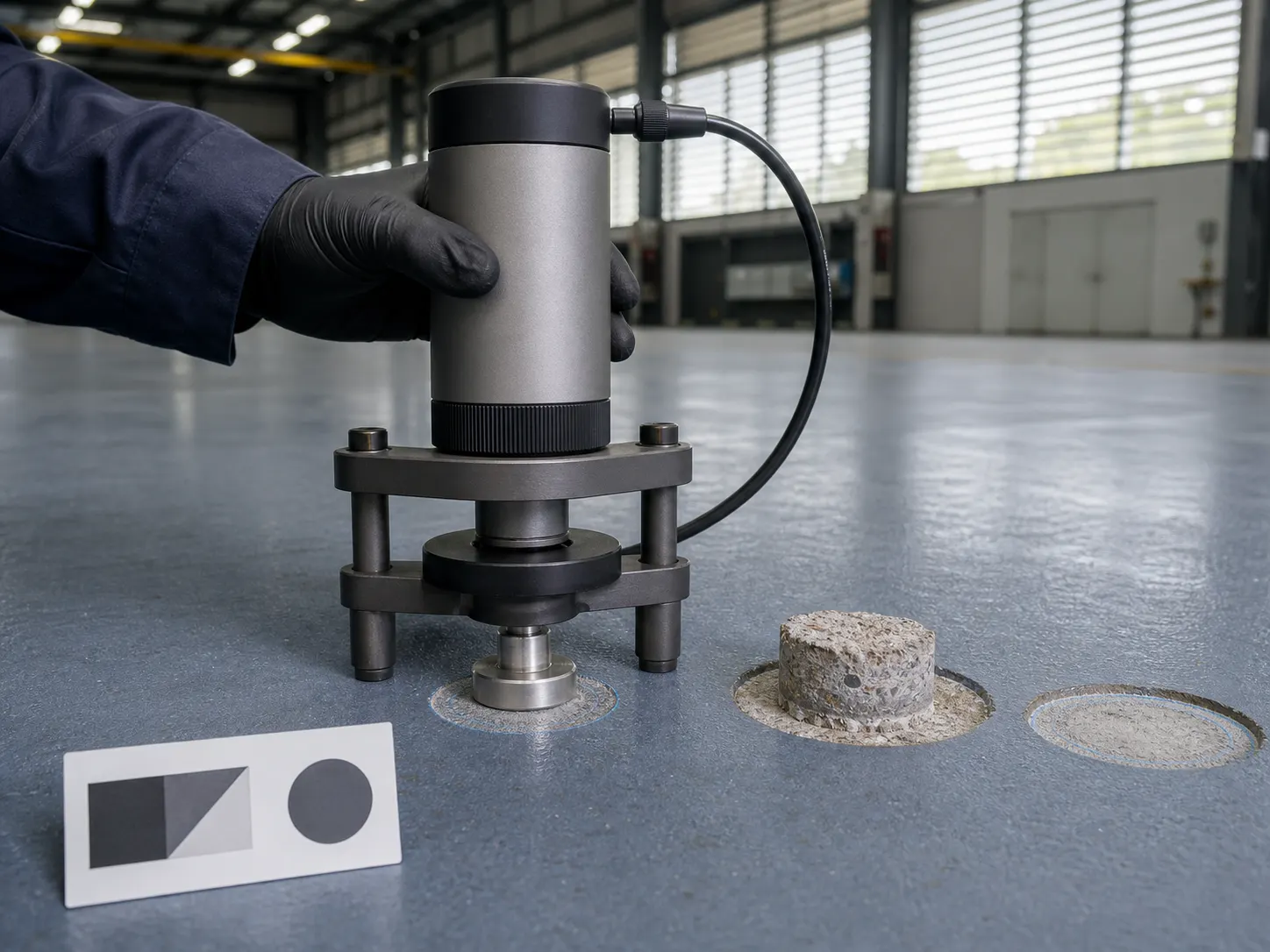
Confirm what is actually sound.
Possible causes: weak concrete, laitance or substrate deterioration.
First check: assess the exposed concrete, not only the coating edge.
Map wear against operations.
Possible causes: insufficient build, concentrated traffic, abrasive soil or unsuitable finish.
First check: compare wear with wheel paths, turning points and cleaning routes.
Do not diagnose from a photograph alone when safety, moisture or widespread delamination is involved. The same symptom can have more than one cause.
The five root causes
1. Moisture in the slab
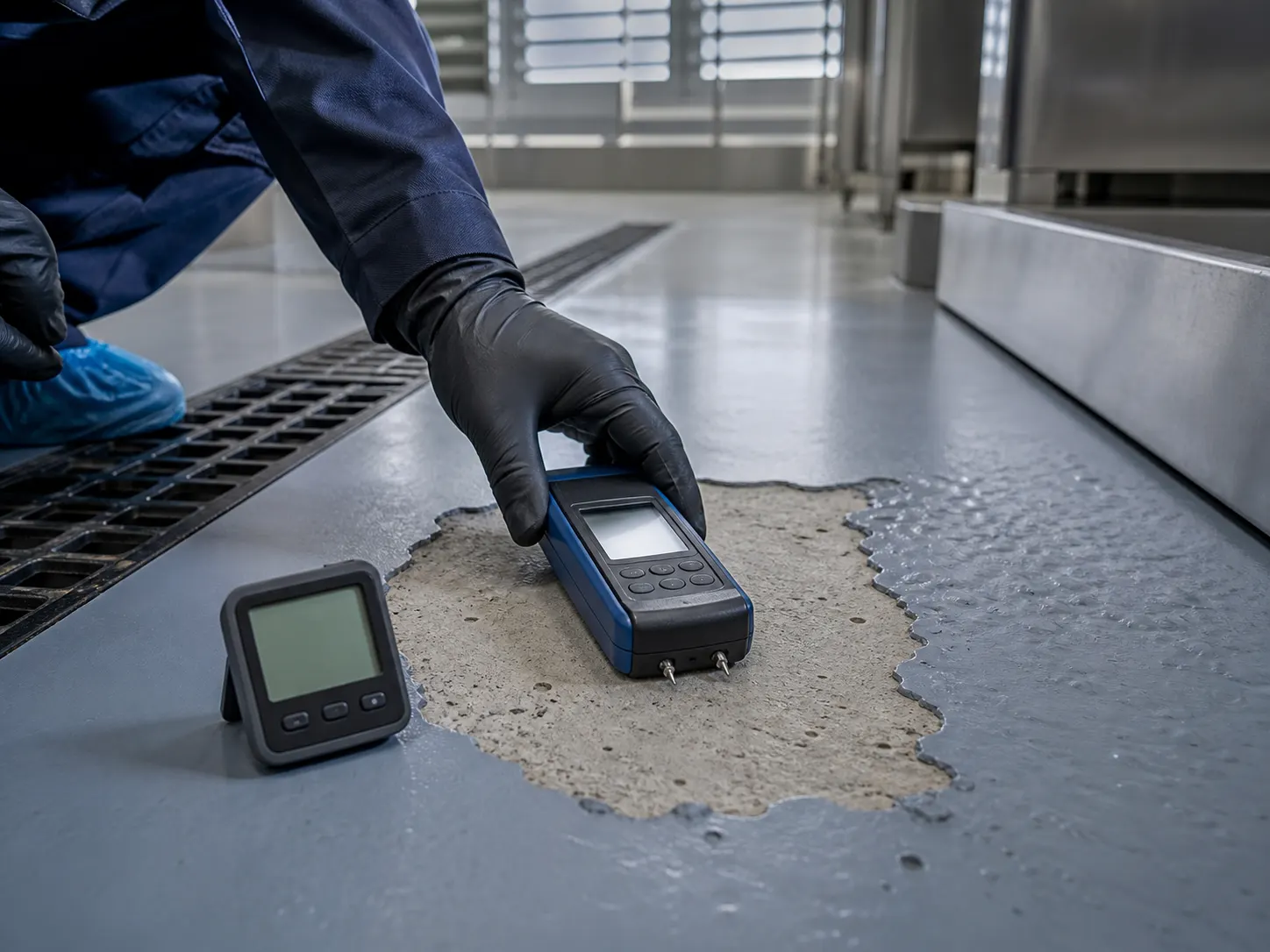
Moisture can move through concrete and collect beneath a low-permeability coating. The result may be blistering or loss of adhesion, but similar symptoms can also come from trapped air or contamination.
Verify: the location and pattern of failure, moisture condition using an appropriate method, the presence of standing water or active ingress, and whether a damp-proof membrane is known to exist.
Do not: assume a moisture-tolerant primer will solve active water ingress. The water source and the product limits still have to be established. Rayson PrimeBond E20 is specified for dry or damp surfaces; its current TDS defines the conditions and application requirements.
2. Surface contamination
Oil, grease, cleaning residues and process chemicals can prevent adhesion even when concrete looks clean. Contamination may extend below the visible surface and return after superficial cleaning.
Verify: the facility history, spill zones, cleaning chemicals and whether contamination remains after preparation.
Do not: rely on appearance or a single degreasing pass. Heavily contaminated concrete may need deeper removal or replacement before coating.
3. Inadequate mechanical preparation
The coating must bond to sound concrete, not to laitance, dust, weak material or an unsuitable previous finish. Mechanical preparation also creates the surface profile required by the selected system.
Verify: surface soundness, cleanliness, preparation method, resulting profile and edge or joint detailing.
Do not: specify one preparation method for every coating thickness. A thin roller coat, repair mortar and self-levelling system can require different profiles. Use the surface preparation guide alongside each product TDS.
4. Wrong chemistry for the operating exposure
A sound installation can still underperform when its chemistry or build does not match the environment. UV, hot wash-down, chemical contact, wet traffic, abrasion and substrate movement create different demands.
Verify: actual temperatures, chemical identity and concentration, exposure duration, wet or dry traffic, UV exposure, cleaning regime and required downtime.
Do not: choose only by colour or generic labels such as “epoxy floor.” Match the complete system to the exposure. Review the coating system selection guide or send Rayson the operating conditions.
5. Application and curing conditions
Mixing ratio, batch size, pot life, substrate temperature, humidity, dew point and recoat timing affect cure and intercoat adhesion. A correctly specified product can still fail when these controls are missed.
Verify: batch records, component ratio, mixing method, environmental readings, recoat interval and when the floor returned to service.
Do not: split multi-component packs by eye or extend working time with unapproved additions. Follow the current TDS for the exact product and pack.
What Singapore conditions change
Singapore conditions do not automatically make a coating fail. They change what must be measured and controlled.
- Ambient humidity: Meteorological Service Singapore publishes station-level relative-humidity observations, but the relevant values for coating work are the conditions measured at the actual substrate and time of application. Record air temperature, substrate temperature, relative humidity and dew-point margin against the product TDS.
- Moisture in cementitious substrates: BCA flooring guidance states that high moisture or dampness in concrete and cement-sand substrates should be resolved before levelling work. That guidance is not a resin-coating specification, but it supports the same diagnostic discipline: identify the moisture condition and source before covering the substrate.
- Wet or contaminated operating areas: Singapore’s Workplace Safety and Health Council identifies wet, oily, damaged and irregular floors as workplace hazards. A repair decision therefore has to consider drainage, housekeeping and required slip resistance—not adhesion alone.
The site reading and the current product TDS govern the coating decision. A national climate description cannot replace measurements taken on the floor.
Where the system can fail
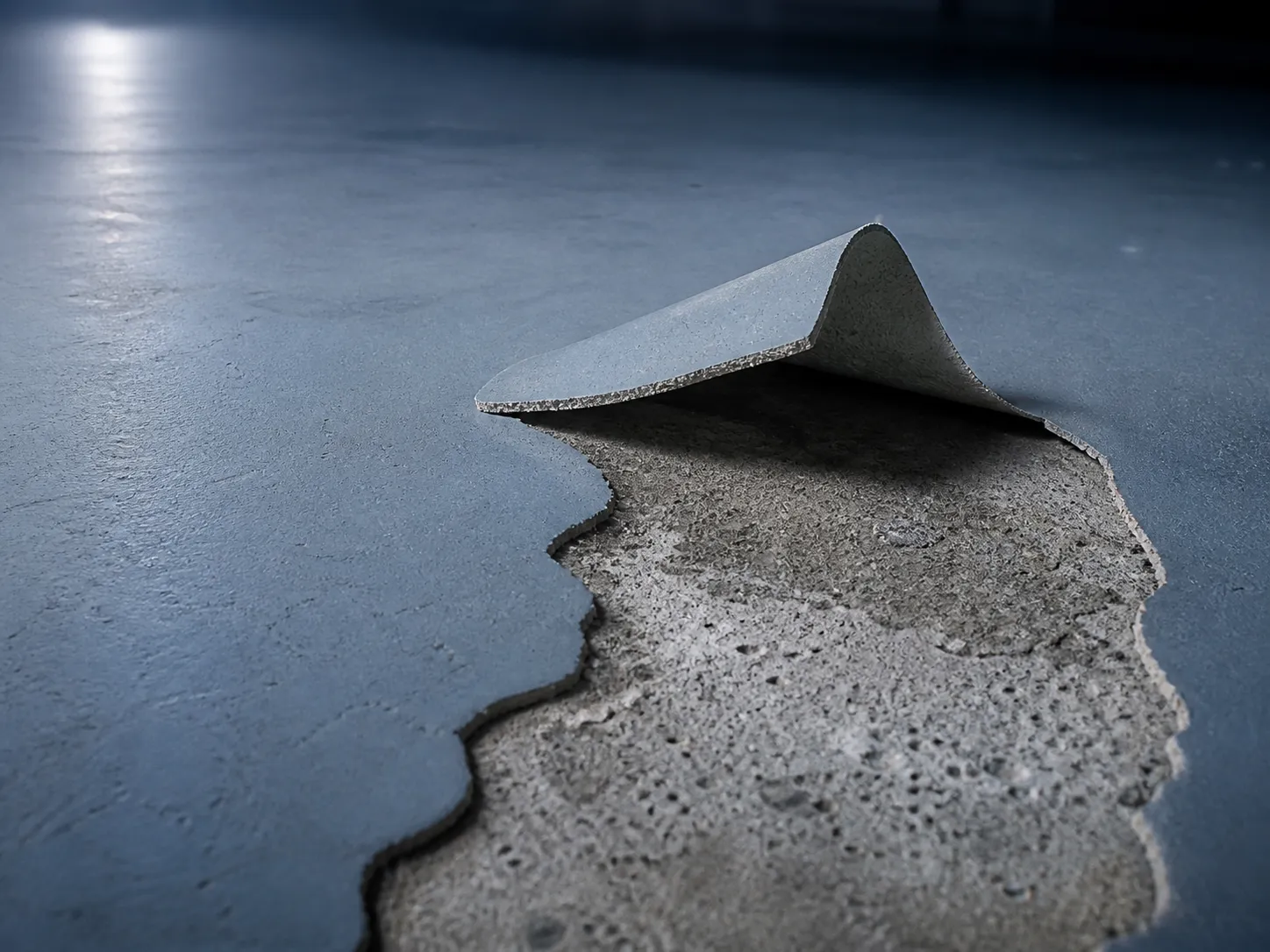
The position of the separation often narrows the investigation faster than the shape of the damaged area.
If concrete remains firmly attached to the underside of the coating, the bond may be stronger than the local substrate. If the underside is clean while the slab is dusty or contaminated, the failure is more likely at the interface. These observations guide testing; they do not replace it.
Before any repair, collect six facts
- Location and scale — isolated impact damage or a repeating pattern across the floor.
- Failure plane — within the concrete, at the substrate interface or between coating layers.
- Moisture condition — including any active leak, ground moisture or wash-down source.
- Operating exposure — traffic, chemicals, temperature, UV and cleaning method.
- Existing system — known products, thickness, age and previous repair history.
- Programme constraint — shutdown window and when the area must return to service.
Testing should be proportionate to the risk. Moisture assessment, adhesion testing, contamination checks or trial preparation may be needed before a repair specification is confirmed.
Repair, recoat or replace?
Consider when damage is isolated and the surrounding system and concrete are demonstrably sound.
Consider when the existing coating is compatible, well bonded and can be mechanically prepared to receive the next layer.
Consider when adhesion loss is widespread or the underlying moisture, contamination or weak substrate remains unresolved.
Repair material such as Rayson MortarBond EM90 can reinstate local profiles where it suits the verified substrate and system. It should not be treated as a substitute for finding the failure mechanism.