Sport and users
Basketball, tennis, multi-use play, recreation and barefoot areas can need different texture, line marking, comfort and maintenance.
Basketball · tennis · multi-use courts · outdoor exposure
Colour wins attention. Drainage, substrate and texture decide whether the court lasts.
Singapore UV, monsoon rain, intensive play and limited closure windows test the same court at once. Define the sport, ponding, cracks, texture and line plan before selecting the coating route.
01 · Start with play and operations
This page helps schools, clubs, facilities teams and consultants frame the operating brief. The sports-surface application page then handles substrate, repairs, texture, colour coat and installation, so the two pages serve different search intent.
Basketball, tennis, multi-use play, recreation and barefoot areas can need different texture, line marking, comfort and maintenance.
Falls, depressions, drains and water entering from outside must be checked before recoating; paint cannot correct poor drainage.
Cracks, hollows, chalking, biological growth and old-coating adhesion decide removal, repair and preparation.
Cleaning, repairs, every coat, line marking, inspection, cure and reopening must fit the facility programme.
02 · Build the court risk map
Zoning turns play, drainage, wear and maintenance into a project brief that can be reviewed before product selection.
Repeated stops, turns, ball contact, footwear friction, colour consistency and shared multi-sport use.
Concentrated turning and take-off wear texture, colour coat and line marking first; inspect and maintain them deliberately.
Rain tracking, leaves, biological growth, barefoot users, seating and interfaces with adjacent surfaces.
Ponding, falls, crack movement, depressions and old repairs directly affect the durability of a new system.
03 · Inspect before coating
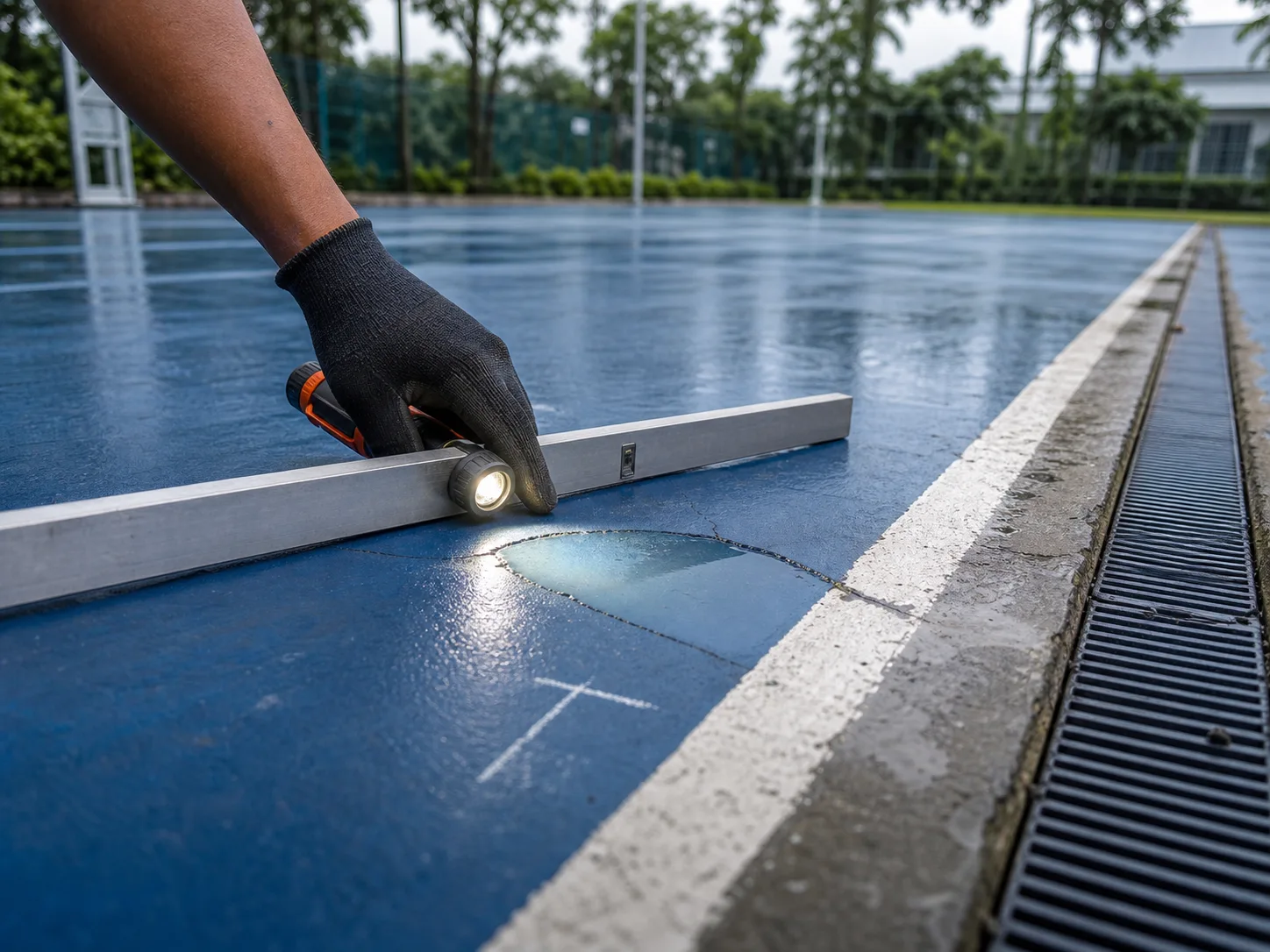
Before discussing a finish, use site measurement and testing to establish drainage, substrate strength, old-coating adhesion, crack condition and contamination. That separates a clean-and-recoat job from local repair or deeper preparation.
Record ponding locations, drainage time, water routes and run-on from outside—not only dry-weather conditions.
Record crack width, location and change. Moving cracks cannot be treated as ordinary cosmetic defects and simply coated over.
Assess chalking, blistering, peeling, adhesion and biological growth before deciding the removal extent.
Review colour, texture, footwear, cleaning and line marking under real light and use conditions.
04 · Enter the right specialist path
Each path answers a different question, keeping industry requirements, application build-up, repairs and slip guidance clear.
Build the route around concrete or screed, repairs, texture, colour coating and line marking.
Open the sports application↗Review contaminants, wet use, texture and cleaning burden where traction is the central question.
Open the anti-slip guide↗Address cracks, spalls, depressions and substrate defects before the coating project begins.
Open the repair guide↗If the court blisters, peels, cracks or wears abnormally, identify the failure mechanism first.
Open the failure guide↗05 · Published technical evidence
The published TDS provides substrate, application, consumption, mixing, drying and limitation data. The project must still confirm the sport, target texture, substrate, weather and reopening requirement.
06 · Build the sports project brief
Six facts turn a general enquiry into a reviewable technical brief. Include wide court views and close photographs of low points, cracks, drains and the old coating.
Send site photos by WhatsApp↗Frequently asked questions
Confirm the sport, substrate, falls, ponding, cracks, old-coating adhesion, biological growth, texture, line plan and available closure window.
No. A coating follows the falls and depressions beneath it. Identify low points, drains and water routes, then complete any necessary correction before coating.
Do not assume so. Traction, ball response, barefoot comfort and cleaning vary by sport, so approve the target texture through a site sample.
The published product information describes a minimum of two coats for a standard court build-up, with a further coat on dull patches. Actual application still depends on substrate, colour and project requirements.
Its 0.5–1.5 mm silicate quartz is factory-blended into a one-pack acrylic binder, creating a consistent textured layer that can receive a colour coat where required.
Reopening depends on weather, substrate, coat sequence and actual cure. Confirm the programme against the TDS and site conditions rather than using an unverified fixed promise.
This page focuses on owner and operator requirements—sport, drainage, scheduling and maintenance. The application page goes deeper into substrate, repair, texture, finish and installation.
Rayson assistant
Answers from Rayson's own product information
Guidance only — confirm specifications with the Rayson technical team.