Chemical schedule
Record the substance, concentration, temperature, contact time and clean-up method.
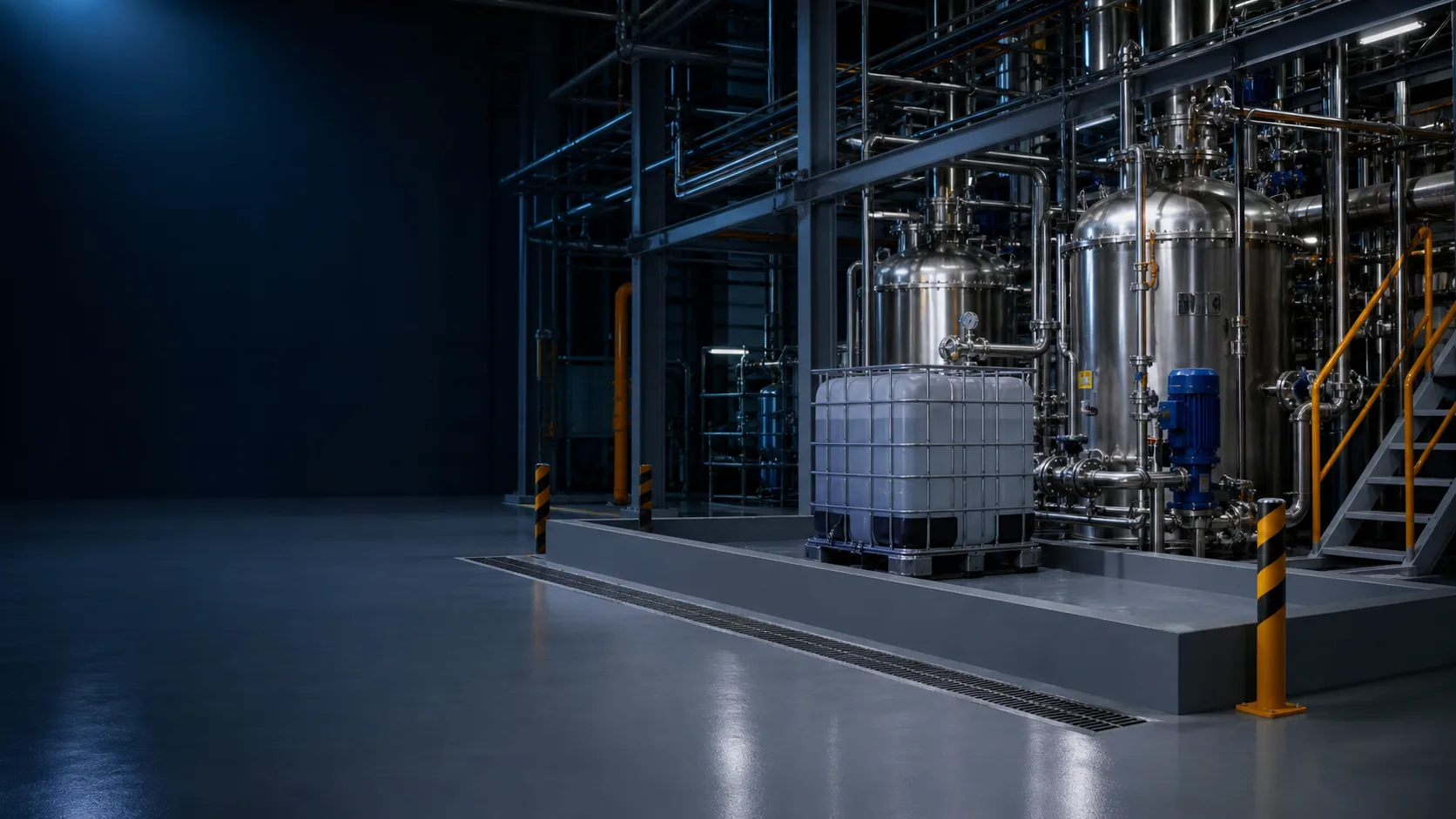
PROCESS LIQUIDS · CONTAINMENT · WASH-DOWN · OPERATIONAL ACCESS
The industry name does not define the exposure.
Transfer and dosing zones, wet process areas, bunds, tank bases and logistics routes face different chemicals, contact times, temperatures, traffic and shutdown constraints. Map the operating risks first, then enter the appropriate specialist technical path.
01 · Start with the process
This industry page helps facilities, EHS, consultants and contractors build one shared project brief. The specialist pages then examine chemical-resistant routes, product combinations and the TDS for each layer.
Record the substance, concentration, temperature, contact time and clean-up method.
Bunds, channels, coves, plinths and penetrations must be assessed as one continuous detail.
Forklifts, drum trolleys, impact, servicing and cleaning change the mechanical duty.
Zoning, ventilation, preparation and return to service must fit the actual access window.
02 · Map the operating risks
These four zones expose missing project information quickly. They are not a remote specification and do not replace site assessment.
Hose connections, drips, concentrated liquids, trolley turning and rapid clean-up.
Repeated wetting, cleaning chemistry, temperature cycling, drainage and wet foot traffic.
Liquid-tight continuity, tank bases, joints, penetrations, ponding and maintenance access.
Forklifts, pallets, dropped loads, turning shear, service work and phased access.
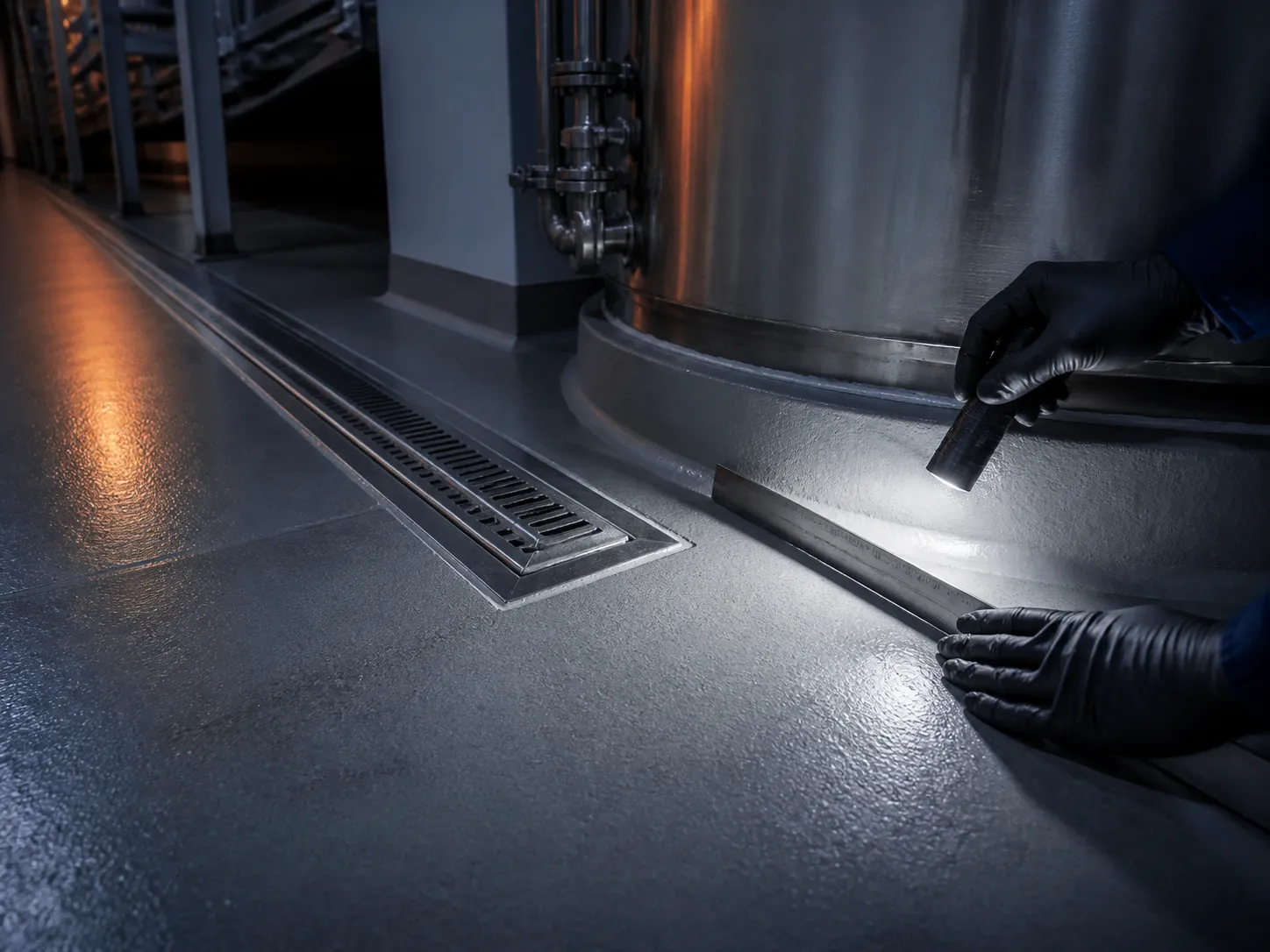
03 · Keep containment dependable
Inspect joints, tank bases, coves and drainage details; record exposure and clean-up; repair before damage creates a path into the substrate. Maintenance requirements belong in the first technical brief.
Check cracks, pinholes, joints, tank bases, channel edges and unusual softening.
Isolate, clean and record the actual substance and contact time under the facility procedure.
Log location, photographs, temperature, clean-up and repeat occurrence.
Establish the substrate and existing-system condition before local treatment and handback.
04 · Enter the right specialist path
Each path answers a different engineering and procurement question, so the industry overview, system selection and failure diagnosis do not compete with one another.
Select by substance, concentration, temperature, contact time and clean-up method.
Open chemical-resistance guide↗Evaluate when wet process, heavier industrial duty or temperature cycling leads the project.
Open PU screed guide↗Use when liquid-tight bunds, tanks, sumps or structural details lead the brief.
Open waterproofing guide↗Use when an existing floor is blistering, peeling, softening or failing for an uncertain reason.
Open failure investigation↗Published technical evidence
These are discussion entry points, not a universal specification. Confirm the final route against the chemical schedule, substrate, temperature, traffic, details, cleaning and relevant TDS.
05 · Build the chemical-process brief
Choose the closest conditions and add the chemistry and access window. The information transfers into the technical project brief. Rayson will provide a first response within one working day.
Ask on WhatsApp first↗Quick technical answers
Different zones can face different substances, concentrations, temperatures, contact times, cleaning and traffic. Define the requirement by zone first.
Record the substance, concentration, temperature, expected contact time, frequency, clean-up method and any combined exposure.
This industry page establishes operations, containment, maintenance and shutdown requirements. The specialist page examines exposure categories, system directions, product roles and TDS.
Provide the contained liquid, likely ponding duration, tank bases, joints, penetrations, drainage method, existing surface and clear photographs.
No. Substrate, thickness, joints, application quality, temperature, traffic, cleaning and the actual contact mode also influence system performance.
Send a zone plan, chemical schedule, existing-surface photographs, drainage and detail conditions, area, traffic and available work window.
Rayson assistant
Answers from Rayson's own product information
Guidance only — confirm specifications with the Rayson technical team.